Email:
[email protected]
Phone:
+91 93135 43530
Address:
133/1 Ground, Mansuri Block, Opp. Dudheshwar Water Tank, Ahmedabad-380004, Gujarat, India
VALVES | FASTENERS | FLANGES | FITTINGS
VALVES | FASTENERS | FLANGES | FITTINGS
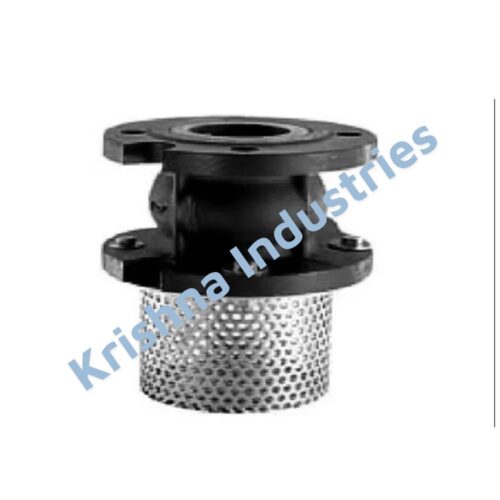
Cast Iron Foot Valve supplier in Ahmedabad, Gujarat. CI (ASTM A126) body — 13% Chromium (CR13) trim — flanged end — ANSI Class 150 / PN10 / PN16 — sizes DN40 to DN300 (1½” to 12″) — integrated SS304 perforated…
Price on Request
Supplier: Krishna Industries (KELOR) – Ahmedabad, Gujarat, India
Established: 2017 | GSTIN: 24AKLPP6499B1ZT | IEC: AKLPP6499B
MOQ: 10 Nos | Body: Cast Iron (CI) | Trim: CR13 (13% Chromium)
Standard: IS 14846 | Sizes: DN40–DN300 | Rating: Class 150 / PN10 / PN16
Krishna Industries (KELOR), based in Ahmedabad, Gujarat, is a B2B supplier of Cast Iron Foot Valves — CI (ASTM A126) body — 13% Chromium (CR13) trim — flanged end — ANSI Class 150 / PN10 / PN16 — sizes DN40 to DN300 (1½” to 12″) — integrated SS304 perforated strainer — IS 14846 compliant — hydrostatic and seat leakage tested — GST invoice — MOQ 10 Nos — Pan India dispatch from Ahmedabad.
A foot valve is a check valve with an integrated strainer, installed at the bottom of the pump suction pipe — submerged in the sump, tank, open channel, or borewell. It serves two functions simultaneously: the check valve prevents backflow when the pump stops, keeping the suction pipe primed so the pump restarts without manual priming; the strainer prevents sand, gravel, leaves, and debris from entering the suction pipe and damaging the pump impeller, seals, and casing. The Cast Iron foot valve with CR13 trim is the standard specification for Indian water supply, irrigation, municipal pumping, and fire fighting installations.
| Feature | Foot Valve | Wafer Check Valve / NRV | Swing Check Valve |
|---|---|---|---|
| Strainer | ✅ Yes — integrated strainer at inlet | ❌ No strainer | ❌ No strainer |
| Installation Position | Bottom of suction pipe — submerged in water source | Anywhere in pipeline — discharge or distribution | Anywhere in pipeline — horizontal only |
| Function | ✅ Prevents backflow + keeps suction primed + debris protection | Prevents backflow in pipeline | Prevents backflow in pipeline |
| End Connection | Flanged or screwed — end-of-pipe device | Wafer — between flanges | Flanged — between flanges |
| Use With | Surface-mounted centrifugal pumps, borewell pumps (with rising main) | Pump discharge, pipeline backflow protection | Pump discharge, low-frequency service |
| Submersible Pump | ❌ Not required — submersible has built-in check | Sometimes at pump outlet header | Sometimes at pump outlet header |
Key point for Indian buyers: A foot valve is always the FIRST component in the suction line — installed at the very bottom, submerged. If you have a wafer check valve or swing NRV installed in the middle of a suction pipeline, that is a pipeline non-return valve, not a foot valve. The integrated strainer in a foot valve is what distinguishes it from a standard check valve — and why it must be at the bottom where debris enters.
Indian water sources — open sumps, agricultural canals, municipal reservoirs, borewells — contain suspended solids, sand, silt, and dissolved minerals that are highly abrasive to soft seating surfaces. Plain cast iron trim (CI disc on CI seat) wears rapidly in these conditions, leading to seat leakage and loss of prime within 6 to 12 months.
13% Chromium (CR13) stainless steel trim provides significantly better wear resistance and moderate corrosion resistance compared to plain CI trim. The harder CR13 disc and seat surface resists scoring from sand and silt particles, extending service life to 3 to 5 years in normal Indian water supply conditions. CR13 is the standard trim specification for Cast Iron foot valves in Indian municipal and irrigation projects.
For higher corrosion resistance — aggressive chemical service, seawater, treated effluent — specify the SS316 Foot Valve. See Stainless Steel Foot Valve page for full specifications.
The strainer basket at the inlet of the foot valve is a perforated SS304 cylinder or basket — perforation size typically 3mm to 6mm — with a strainer open area of 2 to 3 times the pipe bore area. The large strainer area is critical: if the strainer area is too small relative to the pipe, suction losses across the clogged strainer will exceed the pump’s available NPSH (Net Positive Suction Head) and cause cavitation. A correctly sized strainer allows significant debris accumulation before cleaning is required without affecting pump performance.
Strainer cleaning interval: In clean water sources (municipal supply, HVAC closed-circuit tank), inspect annually. In open sumps, canals, and agricultural irrigation with high suspended solids, inspect monthly during peak season. The first indication of a fouled strainer is increased pump noise (cavitation) or reduced flow — do not wait for pump failure before inspecting the foot valve strainer.
| Parameter | Specification |
|---|---|
| Product Type | Foot Valve with Integrated Strainer — Flanged End |
| Body Material | Cast Iron — ASTM A126 Grade B / IS 210 FG260 |
| Trim Material | 13% Chromium Stainless Steel (CR13) |
| Disc Material | CR13 (13% Chromium SS) |
| Seat Material | CR13 / EPDM (on request) |
| Strainer Material | SS304 perforated basket |
| End Connection | Flanged — ANSI Class 150 / PN10 / PN16 |
| Size Range | DN40 to DN300 (1½” to 12″) |
| Pressure Rating | Class 150 / PN10 / PN16 |
| Installation | Vertical — bottom of suction pipe, submerged |
| Design Standard | IS 14846 |
| Testing Standard | API 598 — hydrostatic shell + seat leakage test |
| Flange Drilling | ASME B16.5 / IS 1538 |
| MOQ | 10 Nos |
| HSN Code | 84814000 |
| Feature | Flanged End (This Product) | Screwed End (BSP/NPT) |
|---|---|---|
| Size Range | DN40 to DN300 (1½” to 12″) | DN15 to DN50 (½” to 2″) |
| Connection | Bolted to flanged suction pipe | Screwed onto threaded suction pipe |
| Pressure Rating | ✅ Class 150 — higher pressure | PN10 — lower pressure |
| Application | ✅ Industrial, municipal, fire fighting, large pumps | Domestic, small commercial, small bore irrigation |
| Specify When | Pump suction above DN40, industrial installation, project supply | Small domestic pump, monoblock pump, small borewell |
Position: Install at the very bottom of the suction pipe — the foot valve inlet must be submerged minimum 150mm to 300mm below the lowest expected water level in the sump or tank. If the foot valve is too close to the water surface, air entrainment will occur during pump operation, causing cavitation and loss of prime.
Orientation: Vertical installation only — inlet facing downward, outlet connecting upward to suction pipe. Never install horizontally — the disc will not close reliably under gravity when the pump stops.
Clearance from sump floor: Install minimum 200mm to 300mm above the sump floor — if too close to the bottom, silt and sediment will continuously block the strainer.
Flange gasket: Use appropriate gasket (rubber sheet or compressed fibre) between the foot valve flange and the suction pipe flange. Tighten bolts evenly to prevent flange face distortion.
First operation: After installation, manually fill the suction pipe with water through a priming port before starting the pump — on first start, the foot valve check will have no upstream pressure to hold it closed and requires priming assistance. Subsequently, the foot valve maintains prime automatically on pump stop.
A foot valve is a check valve with an integrated strainer, installed at the bottom of the pump suction pipe — submerged in the water source. A regular check valve (wafer NRV, swing NRV) is installed in the middle of a pipeline without a strainer. The foot valve serves two purposes: preventing backflow to keep the pump primed, and straining debris to protect the pump. A regular NRV serves only the backflow prevention function.
Because it is installed at the “foot” — the bottom — of the suction pipe. It is always the lowest component in the suction line, submerged in the water source.
CR13 is 13% Chromium stainless steel — harder and more corrosion resistant than plain cast iron, and more economical than full SS304 or SS316. In Indian water conditions with sand, silt, and dissolved minerals, CR13 disc and seat resist wear and scoring significantly better than plain CI trim, extending service life to 3–5 years vs 6–12 months for plain CI.
No — submersible pumps have a built-in check valve and are designed to operate submerged. Foot valves are for surface-mounted centrifugal pumps that draw water through a suction pipe from an open sump, tank, canal, or borewell with a rising main.
Minimum 150mm to 300mm below the lowest expected water level. If the foot valve inlet is too close to the water surface, air entrainment causes cavitation. Maintain minimum 200mm clearance from the sump floor as well to prevent silt from blocking the strainer.
Match the foot valve nominal size to the pump suction flange nominal size. DN80 (3″) foot valve for a pump with DN80 suction flange, and so on. Do not use a smaller foot valve than the suction pipe — increased suction velocity across the strainer reduces available NPSH and can cause cavitation.
Yes — CI CR13 flanged foot valves supplied by Krishna Industries comply with IS 14846, the Indian standard for foot valves. Test certificates and compliance documentation available on request for government and municipal tender submissions.
MOQ is 10 Nos. Bulk project supply — 50 to 500+ Nos — handled with competitive pricing and fast dispatch from Ahmedabad.
The Cast Iron Foot Valve with CR13 trim supplied by Krishna Industries (KELOR) is the standard specification for Indian water supply, irrigation, fire fighting, HVAC, and municipal pump suction applications — CI ASTM A126 body — CR13 disc and seat — integrated SS304 strainer — flanged ANSI Class 150 / PN10 / PN16 — DN40 to DN300 — IS 14846 compliant — hydrostatic and seat leakage tested. Fast dispatch from Ahmedabad, GST invoice, IS 14846 test certificates for government tenders. WhatsApp size and quantity for bulk pricing within 2 hours.
Reviews
There are no reviews yet.