Email:
[email protected]
Phone:
+91 93135 43530
Address:
133/1 Ground, Mansuri Block, Opp. Dudheshwar Water Tank, Ahmedabad-380004, Gujarat, India
VALVES | FASTENERS | FLANGES | FITTINGS
VALVES | FASTENERS | FLANGES | FITTINGS
Concentric Disc Rubber Lined Butterfly Valve — Lug Type — supplier in Ahmedabad, Gujarat. Cast Iron (CI) and Ductile Iron (DI) body — concentric disc (resilient seated) — EPDM / NBR / Natural Rubber / Neoprene lining — SS304 /…
Price on Request
Supplier: Krishna Industries (KELOR) – Ahmedabad, Gujarat, India
Established: 2017 | GSTIN: 24AKLPP6499B1ZT | IEC: AKLPP6499B
MOQ: 10 Nos | Body: CI / DI | Disc Design: Concentric (Resilient Seated)
Standard: IS 13095 / EN 593 / API 609 Category A | Sizes: DN40–DN600
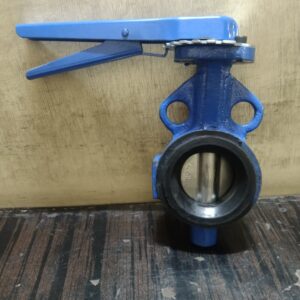
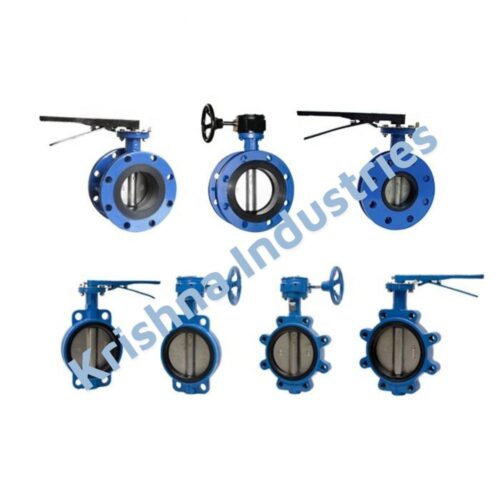
Krishna Industries (KELOR), based in Ahmedabad, Gujarat, is a B2B supplier of Concentric Disc Rubber Lined Butterfly Valves in Lug Type body — Cast Iron (CI) and Ductile Iron (DI) body — concentric disc (resilient seated) — EPDM, NBR, Natural Rubber, and Neoprene seat lining — SS304, SS316, and DI disc — lug body — PN10 / PN16 — DN40 to DN600 — lever, gear, pneumatic, and electric actuated — IS 13095 / EN 593 / API 609 Category A — ISO 5211 mounting pad — GST invoice — MOQ 10 Nos — Pan India dispatch from Ahmedabad.
The concentric disc butterfly valve — also called resilient seated butterfly valve, rubber lined butterfly valve, or zero-offset butterfly valve — is the standard industrial butterfly valve for water supply, HVAC, ETP/STP, irrigation, cooling water, and general chemical utility service at PN10 and PN16. The disc shaft runs through the centre of the disc and the valve bore — the disc is concentric to the rubber seat liner — on closing, the disc presses uniformly against the rubber seat across its full circumference, producing a bubble-tight seal. This page covers the lug body configuration specifically — see related products below for wafer body variants.
| Feature | Concentric Disc (Resilient Seated) This Product |
Double Offset (High Performance HPBV) |
Triple Offset (Metal Seated) |
|---|---|---|---|
| Also Called | Resilient seated, rubber lined, zero offset, Type 1 | High performance butterfly valve, double eccentric, Type 2 | Triple eccentric, fire safe butterfly valve, Type 3 |
| Shaft Position | Centred — concentric with disc and bore | Offset from disc centre AND from bore centreline | Two shaft offsets + cone axis offset |
| Seat Contact During Rotation | Disc rubs on seat through full 90° rotation — seat wear occurs | Disc lifts off seat immediately — no rubbing through most of rotation | ✅ Purely cammed — zero disc-seat contact during rotation |
| Seat Material | Rubber / elastomer (EPDM, NBR, NR) — resilient seated | Metal (SS316, Stellite) or PTFE/RPTFE | Metal — SS316, Stellite, Inconel |
| Shut-off | ✅ Bubble-tight — rubber seat gives zero leakage at low/medium pressure | Good — metal seat allows some leakage (Class IV/V per API 598) | ✅ Bubble-tight — cammed metal seat gives zero leakage |
| Pressure Rating | PN10 / PN16 / Class 150 maximum — rubber seat limits pressure | PN16 to Class 600 — metal seat handles higher pressure | Class 150 to Class 2500 — highest pressure capability |
| Temperature | Up to 120°C (EPDM) — rubber seat limits temperature | Up to 400°C with metal seat | ✅ Up to 600°C+ — metal seat, fire safe |
| Seat Life / Cycle Life | Moderate — rubber seat wears from disc contact through rotation | ✅ Long — minimal seat contact reduces wear | ✅ Excellent — zero contact wear |
| Cost | ✅ Lowest — simple concentric design, rubber seat | Medium — machined eccentric body and disc | Highest — precision machined cone geometry |
| Indian Standards Reference | IS 13095 / EN 593 / API 609 Category A | EN 593 / API 609 Category B | API 609 Category B / special project spec |
| Specify When | ✅ Water supply, HVAC, ETP, irrigation, cooling water, fire fighting, general utility PN10/PN16 — covers 90%+ of Indian industrial butterfly valve applications | High pressure PN25+, high cycle, steam utility, oil and gas, where rubber seat wear unacceptable | Steam, fire safe Class 600+, critical process, high temperature — special order |
For 90% of Indian industrial utility applications at PN10/PN16 — water supply, HVAC, ETP, irrigation, cooling water, fire fighting — the concentric disc rubber lined butterfly valve is the correct and most economical specification. Double offset and triple offset are only justified when the application exceeds the pressure or temperature limits of rubber, or when cycle life is a critical concern.
| Rubber Lining | Temperature | Media Compatibility | Specify For |
|---|---|---|---|
| EPDM | -30°C to +120°C | ✅ Water, steam to 120°C, dilute acid and alkali, ozone, chlorinated water — NOT oil or fuel | ✅ Standard for water supply, HVAC, fire fighting, ETP, irrigation, municipal projects — most common Indian specification |
| NBR (Buna-N / Nitrile) | -20°C to +80°C | ✅ Oil, diesel, fuel, hydraulic fluid, petroleum products — NOT acids, ozone, steam | Oil and fuel service — fuel distribution headers, oil terminal, diesel utility lines |
| Natural Rubber (NR) | -10°C to +65°C | Water, mild abrasive slurry — softer and more flexible than EPDM — good for slurry lining contact | Abrasive slurry service — mining, mineral processing, raw water with suspended solids — softer NR lining absorbs abrasive impact better than EPDM |
| Neoprene (CR / Chloroprene) | -20°C to +90°C | Moderate chemical resistance, outdoor UV and ozone resistance, mild oil | Outdoor installations, mild chemical service, where ozone and UV exposure are concerns |
| Parameter | Specification |
|---|---|
| Disc Design | Concentric — zero offset — resilient seated (rubber lined) |
| Body Style | Lug type — threaded inserts (lugs) in body perimeter |
| Design Standard | IS 13095 / EN 593 / BS 5155 / API 609 Category A |
| Testing Standard | API 598 / EN 12266 — shell test + seat leakage |
| Face-to-Face | EN 558 Series 16 (lug type) |
| Flange Drilling | EN 1092-2 (PN10/PN16) / ASME B16.5 (Class 150) |
| Body Material | Cast Iron CI (IS 210 FG260) / Ductile Iron DI (GGG50) / WCB on request |
| Disc Material | SS304 (standard) / SS316 / DI with nylon coating / Aluminium Bronze |
| Seat / Lining | EPDM (standard) / NBR / Natural Rubber / Neoprene |
| Stem Material | SS410 / SS316 |
| Operation | Lever (DN40–DN150) / Gear operated (DN200+) / Pneumatic / Electric |
| Actuator Mounting | ISO 5211 — upgradeable from lever to actuator in-situ |
| Size Range | DN40 to DN600 (1½” to 24″) |
| Pressure Rating | PN10 / PN16 / Class 150 |
| Temperature | -10°C to +120°C (EPDM) / -20°C to +80°C (NBR) |
| Dead-End / End-of-Line | ✅ Yes — lug body rated for dead-end service |
| MOQ | 10 Nos |
| HSN Code | 84818090 |
The primary reason to specify lug type over wafer type in a concentric disc butterfly valve is dead-end / end-of-line service capability. In a wafer type butterfly valve, the body is held in compression between two pipe flanges by through-bolts — if the downstream pipe flange is removed, the valve body is no longer supported and the upstream pressure will push the wafer body out of position. The valve cannot hold pressure with one side open.
In a lug type butterfly valve, bolts from the upstream pipe flange thread into the valve body lugs on the upstream side independently, and bolts from the downstream pipe flange thread into the lugs on the downstream side independently. The upstream side can hold pressure with the downstream flange completely removed — the valve is rated for dead-end service. This makes lug type the correct specification for:
For standard in-line service where both pipe sides remain in place — wafer type is the correct and more economical specification. Specify lug type only when dead-end or end-of-line capability is a genuine operational requirement.
Concentric disc means the disc shaft runs through the exact centre of the disc and the valve bore — the disc is concentric to (shares the same centre as) the seat. On closing, the disc contacts the rubber seat simultaneously across its entire circumference. This is the simplest butterfly valve design — also called resilient seated or zero-offset. IS 13095, EN 593, and API 609 Category A all describe this design as “resilient seated butterfly valve.” It is the standard for PN10/PN16 water, HVAC, and utility service.
In a concentric disc valve, the shaft is centred — the disc rubs against the rubber seat through the full 90° rotation. This contact causes gradual seat wear over many cycles. In a double offset valve, the shaft is offset from both the disc centre and the pipe centreline — the disc lifts away from the seat almost immediately on opening, eliminating rubbing through most of the rotation. Double offset (high performance) is specified for higher pressure (PN25+), higher cycle frequency, metal seat, and temperature above rubber limits. For standard Indian utility applications at PN16 with moderate cycle frequency, concentric disc is the correct and more economical choice.
Specify lug type when: (1) the valve is at the end of a pipeline and the downstream side must be removable — tank inlet, equipment nozzle, vessel connection; (2) individual pump isolation is required on a multi-pump header without removing downstream piping; (3) fire pump discharge where upstream pressure must be maintained during branch servicing. For standard in-line service with no end-of-line requirement, wafer type is more economical and the correct choice.
EPDM is standard supply — suitable for water, steam to 120°C, dilute chemical, ozone, and chlorinated water. NBR is specified when the media contains oil, diesel, fuel, or petroleum products — EPDM swells in oil contact and fails rapidly. If your application is water service, EPDM. If oil or fuel, NBR. Confirm media before ordering — specifying the wrong rubber lining is the most common butterfly valve selection error.
ISO 5211 is the international standard for actuator mounting interfaces on valves. The mounting pad on the valve stem top matches standard dimensions so that a lever handle, gear operator, pneumatic actuator, or electric actuator can be fitted using the same mounting bolt pattern. This means a valve supplied with lever handle can be upgraded to gear or actuated operation later without removing the valve from the pipeline — just unbolt the lever and bolt on the new actuator. Confirm ISO 5211 compatibility when ordering if future actuation is planned.
MOQ is 10 Nos. Project orders — 20 to 500+ Nos across sizes — with hydro test reports, IS 13095 compliance documentation, and GST invoice. WhatsApp body material, lining, size list, and quantity for project pricing within 2 hours.
The Concentric Disc Rubber Lined Butterfly Valve — Lug Type — supplied by Krishna Industries (KELOR) is the resilient seated butterfly valve for dead-end service, end-of-line installation, and pump header isolation in Indian water supply, HVAC, fire fighting, ETP, irrigation, and industrial utility applications — CI and DI body — EPDM, NBR, Natural Rubber, Neoprene lining — SS304 disc — lug body — PN10 / PN16 / Class 150 — DN40 to DN600 — IS 13095 / EN 593 / API 609 Category A — lever, gear, pneumatic, and electric actuated — ISO 5211 mounting pad. GST invoice, Pan India dispatch from Ahmedabad. WhatsApp body material, rubber lining, size, and quantity for bulk pricing within 2 hours.
Reviews
There are no reviews yet.