Email:
[email protected]
Phone:
+91 93135 43530
Address:
133/1 Ground, Mansuri Block, Opp. Dudheshwar Water Tank, Ahmedabad-380004, Gujarat, India
VALVES | FASTENERS | FLANGES | FITTINGS
VALVES | FASTENERS | FLANGES | FITTINGS
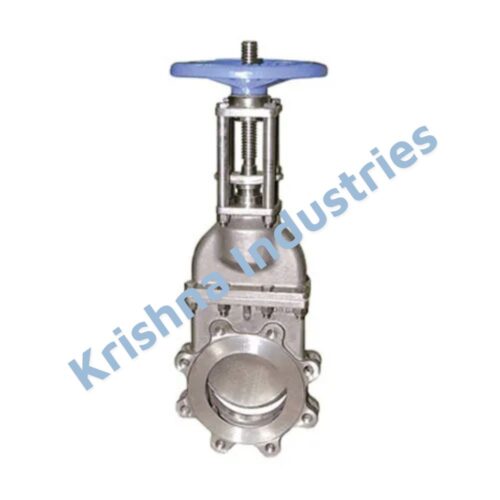
Knife Gate Valve supplier in Ahmedabad, Gujarat. Cast Iron (CI), Ductile Iron (DI), WCB (carbon steel), SS304 (CF8), SS316 (CF8M) body — SS316 knife-edge gate — EPDM / NBR / PTFE / metal-to-metal seat — wiper seals — rising and…
Price on Request
Supplier: Krishna Industries (KELOR) – Ahmedabad, Gujarat, India
Established: 2017 | GSTIN: 24AKLPP6499B1ZT | IEC: AKLPP6499B
MOQ: 10 Nos | Body: CI / DI / WCB / SS304 / SS316
Operator: Manual / Pneumatic / Electric | Sizes: DN50–DN600
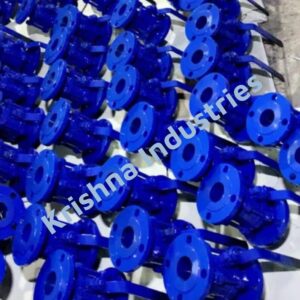
Krishna Industries (KELOR), based in Ahmedabad, Gujarat, is a B2B supplier of Knife Gate Valves — Cast Iron (CI), Ductile Iron (DI), WCB (carbon steel), SS304 (CF8), and SS316 (CF8M) body — SS316 knife-edge gate — EPDM / NBR / PTFE / metal-to-metal seat — wiper seals — rising and non-rising stem — manual handwheel / gear operated / pneumatic actuated / electric actuated — wafer type and flanged — DN50 to DN600 — PN10 / PN16 — GST invoice — MOQ 10 Nos — Pan India dispatch from Ahmedabad.
Knife gate valves are the correct isolation valve for slurry, fibrous pulp, paper stock, sludge, fly ash, mineral tailings, sewage, and any solid-laden fluid where conventional gate valves jam and butterfly valves erode prematurely. The thin flat knife-edge gate slides cleanly through the flow path, cutting through fibrous media and clearing solids from the seat line on every operation — a mechanism specifically designed for the conditions that destroy other valve types.
| Issue in Slurry Service | Conventional Wedge Gate Valve | Butterfly Valve | Knife Gate Valve |
|---|---|---|---|
| Solids accumulation in body | ❌ Wide body cavity — slurry settles in pocket below wedge when valve is open — solids pack around wedge — valve jams on next closure | ❌ Disc rotates in flow path — abrasive particles pack behind disc hub and in seat area — stiff or jammed operation | ✅ No body cavity — thin flat body — gate slides vertically through flow — no pocket for solids to accumulate |
| Fibrous media (pulp, rags, paper stock) | ❌ Wedge cannot cut fibres — fibres wrap around stem and wedge — valve fails to close fully | ❌ Fibres wrap around disc shaft and seat — disc rotation impeded — seat damaged by fibres caught between disc and seat ring | ✅ Knife-edge bottom of gate cuts through fibrous media on closure — wiper seals clean gate surface — reliable shut-off in fibrous slurry |
| Abrasive particles (sand, fly ash, mineral tailings) | ❌ Hard particles scratch seating faces on wedge and body — gate valve becomes leaky after few cycles in abrasive service | ❌ Disc edge and rubber seat erode rapidly in abrasive slurry — short seat life — frequent replacement | ✅ Elastomer seat conforms around particles — gate wipes seat on closure — replaceable seat design — seat replacement without removing valve from line |
| Face-to-face dimension | ❌ Long face-to-face — wedge gate at DN150 is 350-400mm face-to-face — large installation footprint | ✅ Compact — wafer butterfly DN150 is 43mm face-to-face — but not suitable for slurry | ✅ Compact — wafer knife gate DN150 is 100-130mm face-to-face — much shorter than gate valve — fits in tight pipework |
| Seat replacement in service | ❌ Wedge seat integral to body — cannot be replaced without major machining or valve replacement | Limited — seat is moulded into body liner — replacement requires valve removal | ✅ Replaceable elastomer seat — seat removed and replaced on site without removing valve body from piping — reduces maintenance cost significantly in slurry service |
| Body Material | Standard | Specify For | Not Suitable For |
|---|---|---|---|
| Cast Iron (CI) | ASTM A126 Gr B / IS 210 | ✅ Municipal wastewater (ETP/STP sludge lines, raw sewage), water-based slurry, general utility — most economical — widely used in Indian wastewater treatment and water supply projects | Acidic or alkaline slurry — CI corrodes in pH <6 or pH >10. High-abrasive mineral slurry with hard silica particles — CI body erodes faster than DI or WCB |
| Ductile Iron (DI) | ASTM A536 Gr 65-45-12 | ✅ Higher strength than CI — abrasive slurry — coal handling, fly ash, mineral tailings — mining and power plant service — impact resistant for external mechanical loads — also specified for large bore municipal water main isolation | Corrosive acidic/alkaline slurry where SS is required — DI corrodes in aggressive chemical environments similar to CI |
| WCB (Carbon Steel) | ASTM A216 WCB | ✅ Industrial process slurry — power plant ash handling, sugar mill juice, pulp and paper, cement slurry — where CI/DI is inadequate and SS is not required — strongest of the standard alloys — can be internally rubber-lined for abrasion protection | Corrosive chemical slurry — WCB corrodes internally in acid, alkali, and chloride-rich slurry — specify SS316 for these conditions |
| SS304 (CF8) | ASTM A351 CF8 | Mildly corrosive slurry — food processing waste, dilute chemical slurry, pharmaceutical waste streams, DM water slurry — where iron contamination from CI/WCB is not acceptable | Chloride-rich or strongly acidic slurry — SS304 susceptible to pitting corrosion in chloride environments — specify SS316 instead |
| SS316 (CF8M) | ASTM A351 CF8M | ✅ Corrosive slurry — acidic mining slurry, seawater-based slurry, chemical plant aggressive waste, high chloride service — best corrosion resistance in standard alloy range — pharma, food, chemical industry standard | Very high abrasive slurry with hard particles at high velocity — SS316 softer than hardened steel — gate wear increases in severe abrasive service — specify Hardox or hard-faced gate for extreme abrasion |
→ For WCB body knife gate valves: WCB Knife Gate Valve — detailed specifications
→ For SS304/SS316 body knife gate valves: SS Knife Edge Gate Valve — detailed specifications
| Feature | Manual Handwheel / Gear | Pneumatic Actuated | Electric Actuated |
|---|---|---|---|
| Operation | Operator turns handwheel or gear operator directly at valve location | Compressed air (4–6 bar) drives piston — spring return (fail-safe) or double acting | Electric motor drives actuator — 24V DC / 110V AC / 220V AC / 415V AC |
| Remote Operation | ❌ Manual presence at valve required every time | ✅ Remote operation via solenoid valve — 4-20mA or on/off signal from DCS/PLC | ✅ Remote operation — wired signal from control room — suitable where instrument air is not available |
| Fail-Safe | Last operated position — stays open or closed as left | ✅ Spring return: fail-safe closed (FTC) or fail-safe open (FTO) on air failure — for safety isolation in ETP overflow, chemical emergency | Spring return on request — standard electric actuator holds last position on power failure — no inherent fail-safe without spring |
| Operation Speed | Depends on operator — slow for large bore gear-operated | ✅ Fast — 2–15 seconds for full stroke — for process control requiring quick response | Slow — 30–120 seconds for full stroke at large bore — not suitable for rapid cycling |
| Utilities Required | ✅ None — no air or power needed | Instrument air 4–6 bar — FRL unit recommended | Electrical power supply — cable routing to valve location |
| Size Range | ✅ DN50–DN600 — gear operated for DN200+ | DN50–DN400 standard — DN500+ on request | DN50–DN400 standard — DN500+ on request |
| Best For | ✅ Drain isolation, maintenance isolation, low-frequency operation, locations without air or power — most economical | ✅ Automated process plants — DCS/PLC integrated — safety isolation (spring return) — high cycle frequency — ETP/STP automated sludge discharge | ✅ Remote unmanned locations — mining pump stations — where instrument air is unavailable — infrequent remote operation |
| Parameter | Specification |
|---|---|
| Body Material | CI (ASTM A126) / DI (ASTM A536) / WCB (ASTM A216) / CF8 SS304 / CF8M SS316 (ASTM A351) |
| Gate Material | SS316 (standard) / SS304 / Hardox 400 (extreme abrasion on request) |
| Seat Material | EPDM (standard water/sewage) / NBR (oil service) / PTFE (chemical) / Metal-to-metal (high temp) |
| Stem Material | SS316 (standard) / SS304 |
| Wiper Seals | Standard — both sides of gate — EPDM or NBR |
| Gate Design | Rising stem (standard) / Non-rising stem |
| Body Design | Wafer type (standard) / Flanged ends (ANSI / DIN / IS) |
| Pressure Rating | PN10 / PN16 (standard) — PN25 on request |
| Size Range | DN50 (2″) to DN600 (24″) — DN80–DN400 most common |
| Testing Standard | API 598 / EN 12266 — shell test and seat leakage test |
| Operator | Manual handwheel / Gear operator (DN200+) / Pneumatic (spring return or double acting) / Electric (on/off or modulating) |
| Temperature Range | -10°C to +120°C (elastomer seat) / up to +250°C (PTFE seat) / higher with metal seat |
| MOQ | 10 Nos |
| HSN Code | 84818090 |
No — knife gate valves are on/off isolation valves only. In the partially open position, the high-velocity slurry flow passes through the narrow opening at the gate edge and causes rapid erosion of the gate, seat, and body in that zone — the valve fails quickly in throttling service. For flow control in slurry systems, use a pinch valve or an adjustable orifice device designed for throttling in solid-laden service. Knife gate valves must be operated fully open or fully closed.
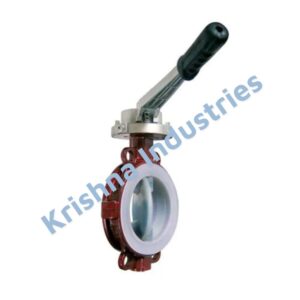
A wafer type knife gate valve has no integral flanges — it is clamped between two pipeline flanges using through-bolts, with gaskets on both faces. It is compact (short face-to-face), economical, and correct for most new installation applications. A flanged knife gate valve has integral flanges that bolt directly to the pipeline flanges — it is easier to install and remove without disturbing the piping, which is important for valves that require frequent removal for maintenance or gate replacement. For large bore DN300+ in high maintenance applications like mineral processing, flanged type is often preferred despite the higher cost.
Spring return (fail-safe) should be specified whenever the safe condition of the process requires the valve to automatically move to a defined position on instrument air failure. For example: an ETP overflow protection knife gate valve should be fail-safe closed — if air fails, valve closes and prevents overflow discharge. A sludge discharge valve on an automated dewatering press should be fail-safe closed — if air fails, process stops rather than running uncontrolled. Double acting (requires air to both open and close) is correct for non-critical process automation where air failure position is not a safety requirement — the valve simply stays in last position on air failure.
The primary failure modes in slurry service are gate erosion (abrasive particles eroding the gate surface), seat erosion (abrasive particles cutting the elastomer seat during closure), and packing leakage (slurry migrating up the stem past the packing gland). Gate erosion is managed by specifying SS316 gate (standard), hardened steel gate, or Hardox-faced gate for severe abrasion. Seat erosion is managed by specifying the correct elastomer (EPDM for water-based slurry, NBR for oil-contaminated, PTFE for chemical) and replacing the seat during planned maintenance — replaceable seats allow gate maintenance without removing the valve body from the pipeline. Packing leakage is managed by periodic gland tightening and repacking during shutdown.
MOQ is 10 Nos. Slurry system project orders — 20 to 200+ Nos across sizes and body materials — with dimensional report, shell and seat test report, MTC on request, and GST invoice. For pneumatic actuated orders: actuator sizing calculation, spring return direction (FTC/FTO), solenoid voltage, and limit switch wiring diagram supplied. WhatsApp body material, gate material, seat material, size list, pressure class, operator type, and quantity for project pricing within 2 hours.
Krishna Industries (KELOR) supplies Knife Gate Valves for slurry, fibrous pulp, paper stock, sludge, fly ash, mineral tailings, sewage, and solid-laden fluid isolation — Cast Iron (CI), Ductile Iron (DI), WCB, SS304 (CF8), SS316 (CF8M) body — SS316 knife-edge gate — EPDM / NBR / PTFE / metal-to-metal seat — wiper seals — rising and non-rising stem — manual handwheel / gear / pneumatic actuated (spring return FTC/FTO or double acting) / electric actuated — wafer type and flanged — DN50 to DN600 — PN10 / PN16. GST invoice, Pan India dispatch from Ahmedabad. WhatsApp full specification and size list for project pricing within 2 hours.
Reviews
There are no reviews yet.