Email:
[email protected]
Phone:
+91 93135 43530
Address:
133/1 Ground, Mansuri Block, Opp. Dudheshwar Water Tank, Ahmedabad-380004, Gujarat, India
VALVES | FASTENERS | FLANGES | FITTINGS
VALVES | FASTENERS | FLANGES | FITTINGS
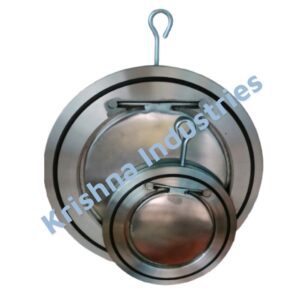
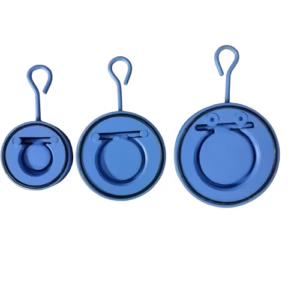
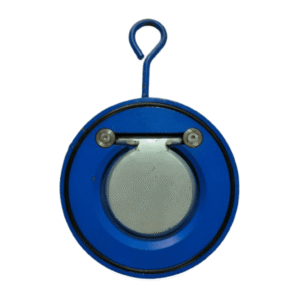
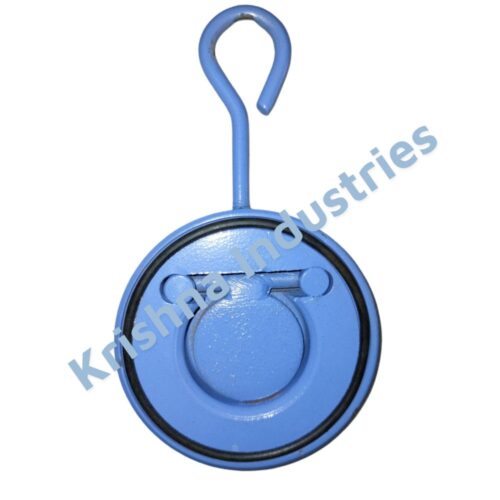
Single Plate Wafer Type Check Valve (Spring Loaded Non Return Valve / NRV) supplier in Ahmedabad, Gujarat. Cast Iron (CI), WCB, SS304 (CF8), SS316 (CF8M) body — SS304 / SS316 disc — EPDM / NBR / PTFE / metal-to-metal seat…
Price on Request
Supplier: Krishna Industries (KELOR) – Ahmedabad, Gujarat, India
Established: 2017 | GSTIN: 24AKLPP6499B1ZT | IEC: AKLPP6499B
MOQ: 10 Nos | Standard: API 594 / BS 5153 / IS 5312 Part 1
Sizes: DN40–DN300 (1½”–12″) | Rating: PN10 / PN16 / Class 150
Krishna Industries (KELOR), based in Ahmedabad, Gujarat, is a B2B supplier of Single Plate Wafer Type Check Valves — spring loaded non-return valves (NRV) — in Cast Iron (CI), WCB, SS304 (CF8), and SS316 (CF8M) body — SS304 and SS316 disc — EPDM, NBR, PTFE, and metal-to-metal seat — PN10, PN16, and Class 150 — DN40 to DN300 (1½” to 12″) — API 594 design — API 598 tested — hydrostatic and seat leakage test before dispatch — GST invoice — MOQ 10 Nos — Pan India supply from Ahmedabad.
The Single Plate Wafer Check Valve is a spring-assisted non-return valve that installs between flanges in wafer sandwich configuration — no separate flanged ends, minimal face-to-face dimension, significantly lighter than a swing check valve or dual plate check valve of the same size. The single spring-loaded disc opens under forward flow pressure and closes instantly on flow reversal — the spring-assisted fast closure is what distinguishes it from a gravity-operated swing check valve and makes it the correct choice for pump discharge lines and vertical pipelines where water hammer is a concern.
| Feature | Single Plate Wafer (This Product) |
Dual Plate Wafer Check Valve |
Swing Check Valve (Flanged) |
|---|---|---|---|
| Disc Design | One disc, one central spring | Two half-discs, two springs | One disc, hinge pin, no spring |
| Closure Speed | ✅ Fast — spring assisted | ✅ Fast — spring assisted | Slow — gravity dependent |
| Water Hammer Risk | ✅ Low — fast spring closure | ✅ Very low — fastest closure | High — slow gravity closure |
| Pressure Drop (Cv) | Moderate | ✅ Lower — higher Cv | ✅ Low when fully open |
| Cracking Pressure | Low — determined by spring | ✅ Very low — softer springs | ✅ Very low — gravity only |
| Size Range | ✅ DN15–DN300 | DN50–DN600+ | DN50–DN600+ |
| Vertical Installation | ✅ Yes — upward vertical flow | ✅ Yes | ❌ No — gravity dependent |
| Face-to-Face Dimension | ✅ Very short — wafer body | ✅ Very short — wafer body | Long — full flanged body |
| Weight | ✅ Light | ✅ Light | Heavy |
| Cost | ✅ Lower than dual plate | Medium | Medium–high |
| Best For | ✅ Pump discharge (small–medium), fire fighting, HVAC, borewell, vertical lines, space-limited installations, DN15–DN200 | Large bore pump discharge, high flow low pressure drop, DN200+ | Low-frequency operation, gravity flow, horizontal only, where low cracking pressure critical |
Rule of thumb for Indian buyers: Single plate wafer NRV for DN15 to DN200 pump discharge and general pipeline service. Dual plate wafer check valve for DN200 and above or where very low pressure drop is required. Swing check valve only where slow closure is acceptable and vertical installation is not needed.
Water hammer is a pressure surge caused by sudden flow reversal — the pressure wave that travels back through the pipeline when a pump trips or a valve closes quickly. In a gravity-operated swing check valve, the disc is slow to close — by the time it seats, the reverse flow has already accelerated, generating a high-pressure slam. In a spring-loaded single plate wafer check valve, the spring begins closing the disc the moment forward flow velocity drops — the disc is already partly closed before reverse flow begins, and the closure pressure surge is significantly lower.
For Indian pump installations — borewell submersible pumps, fire pump discharge, cooling tower pumps, chiller plant secondary pumps — the spring-loaded single plate wafer NRV is the standard correct specification. It protects both the pump and the pipeline from repeated water hammer damage that would otherwise cause premature bearing failure, gasket failure, and pipe joint leakage.
| Body Material | Disc | Seat | Service |
|---|---|---|---|
| Cast Iron (CI) | SS304 | EPDM / NBR | ✅ Municipal water, HVAC chilled water, cooling water, fire fighting — most common and economical |
| WCB (Cast Carbon Steel) | SS304 / SS316 | Metal / EPDM | High pressure steam, boiler feed water, thermic fluid, Class 150 — where CI pressure rating insufficient |
| SS304 / CF8 | SS304 | PTFE / EPDM | Chemical process, food and beverage, pharmaceutical, general corrosive media — where CI corrodes |
| SS316 / CF8M | SS316 | PTFE / FKM | ✅ Aggressive chemical, chloride-containing media, marine service, pharma API — best corrosion resistance |
| Ductile Iron (DI) | SS304 | EPDM / NBR | Water supply infrastructure — stronger than CI, used in municipal projects and large bore water mains |
| Seat Material | Temperature | Media Compatibility | Specify For |
|---|---|---|---|
| EPDM | -30°C to +150°C | Water, steam, dilute acid/alkali, ozone | ✅ Standard for water and steam service — most common in India |
| NBR | -20°C to +80°C | Oil, fuel, hydraulic fluid | Oil and fuel pipeline service |
| PTFE | -40°C to +180°C | Broad chemical resistance — FDA compliant | Chemical, pharma, food service |
| Metal to Metal | Up to 425°C | Steam, thermic fluid, high temp | High temperature steam and thermic fluid — where elastomer seats cannot be used |
| Parameter | Specification |
|---|---|
| Type | Single Plate Spring Loaded Wafer Check Valve (Non Return Valve / NRV) |
| Design Standard | API 594 / BS 5153 / IS 5312 Part 1 |
| Testing Standard | API 598 / BS 6755 |
| Body Material | Cast Iron (CI) / Ductile Iron (DI) / WCB / SS304 (CF8) / SS316 (CF8M) |
| Disc Material | SS304 / SS316 |
| Spring Material | SS304 / SS316 |
| Seat Material | EPDM (standard) / NBR / PTFE / Metal to Metal |
| End Connection | Wafer — sandwich mounting between flanges |
| Face to Face | API 594 / ASME B16.10 |
| Flange Compatibility | ASME B16.5 / PN10 / PN16 |
| Size Range | DN40 to DN300 (1½” to 12″) standard — DN15 to DN32 on request |
| Pressure Rating | PN10 / PN16 / Class 150 |
| Flow Direction | Unidirectional — arrow marked on body |
| Installation | Horizontal and upward vertical flow |
| Testing | Hydrostatic shell test + seat leakage test before dispatch |
| MOQ | 10 Nos |
| HSN Code | 84814000 |
Horizontal installation: Install with hinge pin horizontal — flow direction arrow on body must match pipe flow direction. Verify orientation before bolting between flanges — the valve cannot be reversed once installed in a flanged system without removing it.
Vertical installation — upward flow: Single plate spring-loaded wafer NRV works correctly in upward vertical flow — the spring holds the disc closed when there is no flow, and forward flow pressure pushes it open. This is one of the key advantages over a gravity swing check valve which cannot be installed in vertical lines.
Vertical installation — downward flow: Not recommended for single plate spring-loaded design — the spring and gravity both act to close the disc, making opening pressure very high. Specify a gravity-operated swing check valve for downward vertical flow.
Gaskets: Use appropriate flange gaskets (compressed fibre, spiral wound, or rubber sheet) between the wafer body faces and the pipe flanges. The wafer body is not self-sealing — gaskets are required on both faces.
Bolting: Bolts pass through the wafer body lugs or are positioned around the body. Ensure bolt length is sufficient to accommodate the wafer body thickness plus both flange thicknesses plus both gaskets. Under-length bolts are a common installation error with wafer check valves.
Single plate has one disc and one central spring — simpler construction, lower cost, available from DN15 upward. Dual plate has two half-discs and two springs — higher Cv (lower pressure drop), faster closure, better for DN200 and above. For DN15 to DN150 standard pump discharge and pipeline service, single plate is the correct and more economical choice. For DN200 and above with high flow and low pressure drop requirement, specify dual plate.
Three reasons: faster closure reduces water hammer; works in vertical upward flow (gravity swing cannot); much shorter face-to-face saves space. The only situation where swing check valve is preferred over spring-loaded wafer NRV is where very low cracking pressure is required — spring-loaded valves need slightly more forward pressure to open than a gravity swing valve.
Yes — upward vertical flow only. The spring holds the disc closed at rest, and forward flow pressure opens it normally. Do not install in downward vertical flow — opening pressure becomes very high and the valve may not open at low flow velocities.
Cast Iron (CI) body with SS304 disc and EPDM seat — PN10 or PN16 — is the standard and most economical specification for municipal water, borewell, HVAC, and fire fighting service. Specify WCB for high pressure steam or thermic fluid. Specify SS316 for chemical, pharma, and food service.
Cracking pressure is the minimum upstream pressure required to open the disc against spring tension. For standard spring-loaded single plate wafer NRV, cracking pressure is typically 0.03 to 0.05 bar (300–500 mm WC). This is sufficient for all pump discharge applications. For gravity flow systems with very low pressure head, specify a gravity swing check valve instead.
MOQ is 10 Nos. Standard CI and SS304 sizes DN50 to DN200 typically available from stock — 3 to 5 working days dispatch from Ahmedabad. Larger sizes and WCB/SS316 — 7 to 10 working days subject to stock confirmation. WhatsApp size, material, quantity for immediate stock confirmation and pricing.
The Single Plate Wafer Type Check Valve supplied by Krishna Industries (KELOR) is the correct spring-loaded NRV for pump discharge lines, fire fighting systems, HVAC chilled water, municipal water supply, borewell pumping, and vertical pipeline service — CI, WCB, SS304, and SS316 body — EPDM, NBR, PTFE, and metal seat — DN40 to DN300 — PN10, PN16, Class 150 — API 594 design — API 598 tested — fast closure, water hammer protection, vertical flow capability. Sourced from verified Indian manufacturers, hydrostatic tested, GST invoice, Pan India dispatch from Ahmedabad. WhatsApp size, material, and quantity for bulk pricing within 2 hours.
Reviews
There are no reviews yet.