Email:
[email protected]
Phone:
+91 93135 43530
Address:
133/1 Ground, Mansuri Block, Opp. Dudheshwar Water Tank, Ahmedabad-380004, Gujarat, India
VALVES | FASTENERS | FLANGES | FITTINGS
VALVES | FASTENERS | FLANGES | FITTINGS
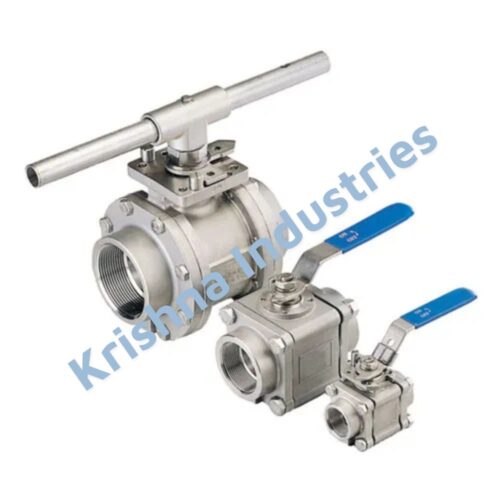
API 6D Ball Valve supplier in Ahmedabad, Gujarat. Floating ball (DN50–DN200) and Trunnion Mounted (DN50–DN1200) — WCB, LCB, WC6, CF8M (SS316), Duplex, Super Duplex body — RPTFE / Nylon / graphite seats — full bore piggable — Double Block and…
Price on Request
Supplier: Krishna Industries (KELOR) – Ahmedabad, Gujarat, India
Established: 2017 | GSTIN: 24AKLPP6499B1ZT | IEC: AKLPP6499B
MOQ: 10 Nos | Standard: API 6D | Fire Safe: API 607 / API 6FA
Design: Floating (DN50–DN200) / Trunnion Mounted (DN50–DN1200) | Class: 150–2500
Krishna Industries (KELOR), based in Ahmedabad, Gujarat, is a B2B supplier of API 6D Ball Valves — floating ball (DN50–DN200) and trunnion mounted (DN50–DN1200) — WCB, LCB, WC6, CF8M (SS316), Duplex (F51), Super Duplex (F53) body — RPTFE, Nylon, graphite seats — full bore piggable — Double Block and Bleed (DBB) — fire safe API 607 / API 6FA — anti-static device — stem blow-out proof — sealant injection fittings — flanged ASME B16.5 / butt weld ASME B16.25 — Class 150 to Class 2500 — API 6D / API 598 tested — 3rd party inspection (EIL / PDIL / Lloyds / BV / DNV) — MTC, API 6D certificate, fire safe certificate supplied — GST invoice — MOQ 10 Nos — Pan India dispatch from Ahmedabad.
Every API 6D ball valve material requisition specifies either floating ball or trunnion mounted design. The selection is determined by bore size, pressure class, and operating torque requirement — not by preference.
| Feature | Floating Ball Valve (FBV) | Trunnion Mounted Ball Valve (TMBV) |
|---|---|---|
| Ball Support | Ball floats between two seats — held by seats, not shaft bearings — axially free | ✅ Ball fixed on trunnion shaft — bearings in top and bottom of body carry load — ball does not move axially |
| Sealing Mechanism | Upstream pressure pushes ball against downstream seat — self-energising — sealing force increases with pressure | Spring-loaded seats pushed toward fixed ball — seating force independent of line pressure — consistent torque at all pressures |
| Operating Torque at High Pressure | ❌ Torque increases significantly with pressure — at DN150+ and Class 300+, torque can be very high — oversized actuator required | ✅ Torque remains low and consistent regardless of line pressure — trunnion bearings carry pressure load, not seats |
| Double Block and Bleed (DBB) | Single downstream seat seals under pressure — upstream seat does not seal — NOT true DBB | ✅ Both upstream and downstream seats are spring-energised and independent — true DBB — body cavity can be bled to confirm both seats sealed |
| Size Range | ✅ DN50–DN200 (2″–8″) — standard for small and medium bore pipeline valves | ✅ DN50–DN1200 (2″–48″) — standard for DN200+ — required at large bore |
| Pressure Class | Class 150–600 standard — Class 900+ not recommended due to torque and seat load | ✅ Class 150–2500 — trunnion design handles high pressure classes at all bore sizes |
| Cost | ✅ Lower — simpler construction, fewer components | Higher — trunnion shaft, bearings, spring-loaded seat assemblies — more complex construction |
| Specify For | ✅ Small bore pipeline block valves DN50–DN200, Class 150–600 — metering station inlet/outlet, branch block valves, instrument isolation, small bore gas line isolation | ✅ Main line block valves DN200+ — any Class 150–2500 application requiring DBB — actuated valves requiring predictable low torque — all large bore pipeline applications |
An API 6D ball valve is not simply a ball valve tested to a higher standard — it has specific mandatory design features that general industrial ball valves do not have. Every feature below will be verified by the purchasing engineer or 3rd party inspector on Indian pipeline project tenders.
| API 6D Requirement | What It Is | Why It Matters |
|---|---|---|
| Full Bore (FB) Design | Ball bore diameter equals pipe internal diameter — no restriction in flow path | ✅ Pipeline cleaning pig, smart ILI inspection pig, and pressure pig can pass through valve without restriction — mandatory for piggable pipeline sections |
| Anti-Static Device | Spring-loaded electrical contact between ball/stem and body — provides continuous electrical continuity across valve | ✅ Prevents static charge buildup on ball that could ignite hydrocarbon gas — mandatory for gas pipeline service — API 6D Clause 6.9 |
| Stem Blow-Out Proof | Stem design prevents ejection from body under full line pressure even if packing gland fails completely | ✅ Catastrophic stem blow-out is a fatal incident — API 6D requires stem shoulder to be retained inside body under pressure — API 6D Clause 6.7 |
| Fire Safe Design | Metal-to-metal backup seat between ball and body — graphite stem packing — valve provides shut-off after soft seat burns in fire — tested and certified | ✅ Fire safe certificate to API 607 or API 6FA from accredited 3rd party lab (not self-certified) — mandatory for ONGC, GAIL, IOCL, HPCL, and all hydrocarbon pipeline project tenders in India |
| Sealant Injection Fittings | Injection points on seat and stem — allow field injection of sealant compound to restore sealing without removing valve from line | Emergency field repair of leaking seat without pipeline shutdown — reduces maintenance cost and downtime — standard on all API 6D valves DN100+ |
| Pressure Equalisation Hole | Small hole in ball — relieves body cavity pressure to upstream or downstream when valve is open | Prevents over-pressure of body cavity due to thermal expansion of trapped liquid between closed seats (LPE — locked pressure elimination) — mandatory API 6D requirement |
| Locking Device | Padlock provision on operator — valve can be locked in open or closed position | Locked-open for pigging operations — locked-closed for isolation during maintenance — pipeline operations permit requirement |
| Double Block and Bleed | Trunnion mounted: both seats seal independently — body bleed valve — confirms both seats hold before maintenance | ✅ Positive isolation for permit-to-work — ONGC PTW system requires DBB confirmed before hot work or entry — single seat valve does NOT satisfy DBB requirement |
| Body Material | Standard | Pressure Class | Specify For |
|---|---|---|---|
| WCB | ASTM A216 WCB | Class 150–600 | ✅ General hydrocarbon gas and liquid pipeline — crude oil, natural gas, refined products — most common Indian pipeline specification — GAIL, IOCL, HPCL city gas and cross-country pipeline |
| LCB | ASTM A352 LCB | Class 150–600 | Low temperature service — LPG, propane, ethylene, LNG — Charpy impact tested to -46°C — mandatory for cryogenic service |
| WC6 / WC9 | ASTM A217 WC6/WC9 | Class 300–1500 | High temperature process pipeline above 400°C — refinery hot oil, steam injection — Cr-Mo alloy for creep resistance |
| CF8M (SS316) | ASTM A351 CF8M | Class 150–600 | Corrosive service — acid gas, wet CO2, sour service (mild H2S+CO2) — chemical pipeline, pharma utility — where WCB corrodes internally |
| Duplex F51 | ASTM A890 4A | Class 150–900 | Offshore subsea, seawater injection, high chloride, moderate sour (H2S) — superior pitting resistance vs CF8M — standard for Indian offshore pipeline (ONGC, RIL offshore) |
| Super Duplex F53 | ASTM A890 6A | Class 150–1500 | Severe sour service (high H2S+CO2+Cl), offshore production risers, subsea manifolds — highest strength and corrosion resistance in the standard alloy range |
| Parameter | Floating Ball | Trunnion Mounted |
|---|---|---|
| Design Standard | API 6D (latest edition) | |
| Testing Standard | API 598 — shell hydro test, seat leak test, backseat test | |
| Fire Test | API 607 / API 6FA — 3rd party certificate | |
| Pressure-Temp Rating | ASME B16.34 | |
| Flanged Ends | ASME B16.5 (Class 150–2500) / ASME B16.47 (large bore) | |
| Butt Weld Ends | ASME B16.25 | |
| Face-to-Face | API 6D / ASME B16.10 | |
| Body Material | WCB / LCB / WC6 / WC9 / CF8M / F51 Duplex / F53 Super Duplex | |
| Ball Material | SS316 (standard) / Duplex / Stellite hard face (erosive service) | |
| Stem Material | SS316 / SS410 / Inconel (on request) | |
| Seat Material | RPTFE (standard) / Nylon / Graphite (fire safe backup) | |
| Stem Packing | Graphite (standard) / PTFE (low temp) | |
| Bore Type | Full Bore (FB) — standard for piggable service | |
| DBB | Downstream seat only — not true DBB | ✅ Both seats independent — true DBB with body bleed |
| Anti-Static | ✅ Standard — spring contact ball/stem to body | |
| Stem Blow-Out Proof | ✅ Standard — API 6D Clause 6.7 | |
| Sealant Injection | On request | ✅ Standard — seat and stem injection fittings |
| Locking Device | ✅ Standard — padlock provision on operator | |
| ISO 5211 Pad | Yes — actuator ready | |
| Size Range | DN50–DN200 (2″–8″) | DN50–DN1200 (2″–48″) |
| Pressure Class | Class 150–600 | Class 150–2500 |
| 3rd Party Inspection | EIL / PDIL / Lloyds / BV / DNV / TUV on request | |
| MOQ | 10 Nos | |
| HSN Code | 84818090 | |
API 6D is the design and manufacturing standard for pipeline valves — it covers dimensions, materials, design features, and testing requirements for the valve itself. API 6FA is a fire test standard — it defines the test procedure to verify that a valve provides acceptable sealing performance after exposure to fire. A valve that is manufactured to API 6D and fire tested to API 6FA carries both certificates — they address different aspects: design vs fire performance. Indian pipeline tenders typically require both: “valve to API 6D, fire tested to API 6FA (or API 607).”
Double Block and Bleed (DBB) means the valve has two independent seats that each seal against pipeline pressure, with a bleed port between them that can be opened to vent the body cavity to atmosphere. Before any maintenance or hot work downstream of the valve, the operator closes the valve, opens the body bleed, and confirms no fluid is passing through either seat into the body cavity. If the bleed shows no flow, both seats are confirmed holding — positive isolation is established. Indian pipeline operations (ONGC, GAIL, IOCL) permit-to-work systems require confirmed DBB isolation before issuing a hot work permit. A single-seat valve cannot satisfy this requirement.
Full bore (FB) means the ball bore diameter equals the internal diameter of the connecting pipe — there is no restriction through the valve. A pipeline pig — a device that travels through the pipeline pushed by line pressure for cleaning, batching, or inline inspection — must be able to pass through every valve on the pipeline without restriction. A reduced bore valve has a smaller ball bore and would trap or damage a pig. All mainline block valves on piggable pipeline sections must be full bore. Reduced bore (RB) is only acceptable on non-piggable branch connections and instrument tapping points.
An anti-static device is a spring-loaded electrical contact built into the valve — it maintains electrical continuity between the ball, stem, and body at all times, even when the PTFE seats electrically isolate the ball from the body. Without this device, the ball can accumulate static charge from flowing hydrocarbon gas. In gas service, a static discharge from the ball to the body or to a person performing maintenance could ignite a gas leak. API 6D requires anti-static devices on all valves in gas service — the resistance across the device must be 10 ohms or less, verified by test certificate.
MOQ is 10 Nos. Pipeline project orders — typically 20 to 500+ Nos across a size and class range — with full documentation package: MTC, API 6D cert, API 598 test reports, fire safe cert, anti-static cert, dimensional report, 3rd party inspection release note (EIL/PDIL/Lloyds/BV/DNV). WhatsApp valve type (floating or trunnion), body material, bore type (FB/RB), Class, size list, end connection, operator type, and documentation requirement for project pricing and lead time within 4 hours.
Krishna Industries (KELOR) supplies API 6D Ball Valves — floating ball (DN50–DN200) and trunnion mounted (DN50–DN1200) — WCB, LCB, WC6, CF8M, Duplex, Super Duplex body — RPTFE/Nylon/graphite seats — full bore piggable — Double Block and Bleed (DBB) — fire safe API 607 / API 6FA — anti-static device — stem blow-out proof — sealant injection fittings — flanged ASME B16.5 / butt weld ASME B16.25 — Class 150 to Class 2500 — API 6D / API 598 tested — complete documentation package including MTC, fire safe certificate, anti-static certificate, and 3rd party inspection. City gas distribution, cross-country pipeline, crude and product pipeline, offshore, refinery, LPG/LNG terminal. GST invoice, Pan India dispatch from Ahmedabad. WhatsApp full specification and size list for project pricing within 4 hours.
Reviews
There are no reviews yet.