Email:
[email protected]
Phone:
+91 93135 43530
Address:
133/1 Ground, Mansuri Block, Opp. Dudheshwar Water Tank, Ahmedabad-380004, Gujarat, India
VALVES | FASTENERS | FLANGES | FITTINGS
VALVES | FASTENERS | FLANGES | FITTINGS
Manual Butterfly Valve For Cement Supplier from Ahmedabad.
Price on Request
Manual Butterfly Valve for Cement – Heavy Duty Industrial Valve for Indian Cement Plants
Introduction
In the Indian cement industry, reliability, rugged construction, and long service life are non-negotiable requirements. Cement handling involves abrasive dust, fine powder, clinker particles, and high-temperature process conditions that demand specially engineered flow control solutions. A Manual Butterfly Valve for Cement is designed precisely to meet these challenges, offering dependable shut-off and flow regulation in cement plants, bulk material handling systems, silos, hoppers, pneumatic conveying lines, and material transfer ducts.
Krishna Industries, based in Ahmedabad, Gujarat, India, is a trusted supplier of manual butterfly valves for cement applications across India. With deep understanding of cement plant operations and Indian industrial conditions, Krishna Industries supplies robust, cost-effective, and application-specific manual butterfly valves suitable for cement dust, fly ash, clinker, limestone powder, and other abrasive media. Our valves are widely used in cement manufacturing units, grinding plants, batching plants, RMC plants, and material handling systems throughout India.
This product page provides a detailed overview of the Manual Butterfly Valve for Cement, covering design, construction, working principle, materials, applications, advantages, installation considerations, maintenance practices, and buying guidance specifically for Indian buyers. Related industrial products such as wafer butterfly valves, lug type butterfly valves, rotary airlock valves, knife gate valves, and dust control valves are also closely associated with cement plant operations and are often used alongside manual butterfly valves.
Product Overview
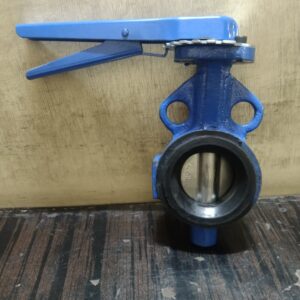
A Manual Butterfly Valve for Cement is a quarter-turn rotary valve used to start, stop, or regulate the flow of cement and cement-based materials in pipelines and ducts. The valve consists of a circular disc mounted on a shaft, which rotates within the valve body. By turning the manual lever or gearbox, the disc moves from fully open to fully closed position.
In cement applications, these valves are typically installed in dust-laden and abrasive environments. Therefore, they are engineered with thick valve bodies, wear-resistant discs, robust shafts, and high-quality sealing arrangements to withstand continuous operation and harsh conditions. Manual operation makes these valves simple, economical, and reliable, especially in locations where automation is not required or where power supply is limited.
Krishna Industries supplies manual butterfly valves that are specifically selected and tested for cement plant usage, ensuring durability, ease of operation, and long operational life.
Key Features of Manual Butterfly Valve for Cement
The Manual Butterfly Valve for Cement offered by Krishna Industries is designed with features that suit Indian industrial usage:
Heavy-duty construction suitable for abrasive cement dust
Quarter-turn manual operation for quick opening and closing
Simple design with minimal moving parts
Low maintenance requirement
Compact and lightweight compared to gate valves
Economical solution for large diameter lines
Easy installation between flanges or on ducts
Suitable for on-off as well as throttling service
Designed for Indian cement plant operating conditions
Design and Construction Details
Valve Body
The valve body is generally manufactured from cast iron, ductile iron, or fabricated mild steel, depending on size and application. For cement plants, fabricated MS bodies are often preferred for larger sizes and ducting systems, while cast iron or ductile iron bodies are used for pipeline installations. The body is designed to handle cement dust pressure, vibration, and mechanical stress commonly found in cement plants.
Disc
The disc is a critical component in cement service. It is usually made from cast iron, ductile iron, or stainless steel, and in some cases hard-faced or coated for additional wear resistance. The disc profile is optimized to reduce dust build-up and minimize wear during operation.
Shaft
The shaft is manufactured from high-strength carbon steel or stainless steel, providing excellent torsional strength and resistance to bending. Precision machining ensures smooth rotation and long bearing life.
Seat and Sealing
For cement applications, the sealing arrangement is selected carefully. Seats may be made from high-temperature rubber, synthetic elastomers, or metal-to-metal designs depending on operating conditions. Proper sealing prevents cement dust leakage, improves plant cleanliness, and reduces material loss.
Manual Operation Mechanism
Manual butterfly valves are operated using a lever or worm gearbox. Smaller sizes usually come with a hand lever with locking positions, while larger sizes are fitted with a gearbox for easy operation and controlled torque. This ensures operator safety and smooth valve movement even in dusty environments.
Working Principle
The working principle of a manual butterfly valve is simple and efficient. When the manual lever or gearbox is turned, the shaft rotates the disc inside the valve body. In fully open position, the disc aligns with the flow direction, allowing cement or air-cement mixture to pass through with minimal obstruction. In fully closed position, the disc is perpendicular to the flow, blocking passage and stopping material movement.
For throttling applications, the disc can be positioned at intermediate angles to regulate flow. In cement plants, butterfly valves are commonly used in fully open or fully closed positions to control material transfer between equipment.
Applications in Cement Industry
Manual Butterfly Valves for Cement are widely used in various sections of cement plants and related industries across India:
Cement silo discharge lines
Pneumatic conveying systems
Dust collection and bag filter outlets
Fly ash handling systems
Clinker transfer lines
Raw material handling ducts
Bulk cement loading and unloading systems
Grinding unit pipelines
Ready mix concrete plants
Cement packing and dispatch systems
These valves are suitable for dry cement, cement dust, fly ash, limestone powder, and similar abrasive materials.
Advantages for Indian Cement Plants
Indian cement plants operate in challenging environments with high dust levels, variable temperatures, and continuous duty cycles. Manual butterfly valves offer several advantages:
Cost-effective solution for large diameters
Simple design reduces downtime
Easy availability of spares in India
Low operating torque
Quick shut-off for process control
Suitable for retrofitting in existing systems
Minimal space requirement
Reliable performance in dusty conditions
Why Manual Operation is Preferred
In many Indian cement plants, manual butterfly valves are preferred due to their simplicity and reliability. Manual operation eliminates dependency on electricity or compressed air, making the system robust and less prone to failure. It also reduces initial investment cost and ongoing maintenance expenses. For non-critical or infrequently operated lines, manual valves are the most practical choice.
Material Compatibility
The Manual Butterfly Valve for Cement supplied by Krishna Industries is compatible with:
Dry cement powder
Fly ash
Clinker dust
Limestone powder
Gypsum powder
Coal dust (limited applications)
Proper material selection ensures reduced wear and extended service life.
Sizes and Pressure Ratings
Manual butterfly valves for cement are available in a wide range of sizes to suit Indian plant requirements. Common sizes range from small diameters used in auxiliary lines to large sizes used in main material transfer ducts. Pressure ratings are selected based on system design and operating conditions, typically suitable for low to medium pressure applications common in cement handling systems.
Installation Guidelines
Proper installation is essential for optimal valve performance. Important points include:
Ensure correct alignment with pipeline or duct
Clean mating flanges before installation
Use appropriate gaskets suitable for cement dust service
Tighten bolts evenly to avoid distortion
Check valve operation before commissioning
Krishna Industries provides guidance to ensure correct installation practices are followed at site.
Maintenance and Service Life
Manual butterfly valves require minimal maintenance. Periodic inspection of disc, seat, and shaft is recommended to ensure smooth operation. In cement plants, dust accumulation should be cleaned during routine shutdowns. Proper lubrication of gearbox or lever mechanism extends service life.
With correct selection and maintenance, manual butterfly valves can provide years of trouble-free service in Indian cement plants.
Quality Assurance and Supply Capability
Krishna Industries follows strict quality checks before supplying manual butterfly valves. Each valve is inspected for dimensional accuracy, operational smoothness, and overall workmanship. Our supply capability covers bulk requirements for cement plants, EPC contractors, OEMs, and maintenance teams across India.
Minimum Order Quantity
Minimum Order Quantity for Manual Butterfly Valve for Cement is 10 numbers. This MOQ is suitable for project requirements, maintenance spares, and bulk procurement by cement plants and industrial buyers across India.
Positioning Krishna Industries
Krishna Industries is a reliable supplier of Manual Butterfly Valves for Cement from Ahmedabad, Gujarat, India. We cater exclusively to Indian buyers, understanding local standards, plant practices, and commercial expectations. Our experience in supplying industrial valves to cement plants, material handling systems, and process industries makes us a preferred sourcing partner.
We work closely with Indian cement manufacturers, EPC contractors, traders, and maintenance departments to ensure timely supply, consistent quality, and competitive pricing.
Buying Guidance for Indian Buyers
When selecting a manual butterfly valve for cement application, Indian buyers should consider:
Type of cement or material handled
Operating temperature and pressure
Valve size and connection type
Installation location and duty cycle
Ease of operation and maintenance
Krishna Industries assists buyers in selecting the most suitable valve configuration based on application requirements.
Frequently Asked Questions
1. What is a manual butterfly valve used for in cement plants
A manual butterfly valve is used to control or stop the flow of cement, cement dust, or related materials in pipelines and ducts within cement plants.
2. Is this valve suitable for abrasive cement dust
Yes, the valve is designed with robust materials and construction suitable for abrasive cement dust and powder handling.
3. Can manual butterfly valves be used in pneumatic conveying systems
Yes, they are commonly used in pneumatic conveying lines for cement and fly ash in Indian cement plants.
4. What sizes are available for cement applications
Manual butterfly valves are available in a wide range of sizes suitable for small pipelines to large cement ducts.
5. Why choose manual operation instead of automatic
Manual operation is cost-effective, reliable, and ideal for locations where automation is not required or power supply is limited.
6. What materials are used for valve construction
Valve bodies are typically cast iron, ductile iron, or fabricated mild steel, with discs made from cast iron or stainless steel depending on application.
7. What is the minimum order quantity
The minimum order quantity is 10 numbers for this product.
8. Are these valves suitable for Indian cement plants
Yes, they are specifically selected and supplied keeping Indian cement plant conditions in mind.
9. Does Krishna Industries supply across India
Yes, Krishna Industries supplies manual butterfly valves for cement to buyers across India from Ahmedabad, Gujarat.
10. Can these valves be used for throttling cement flow
Yes, manual butterfly valves can be used for limited throttling applications, although they are primarily used for on-off service.
Conclusion
The Manual Butterfly Valve for Cement is an essential component in modern Indian cement plants, offering reliable flow control, rugged construction, and economical operation. With its simple design, low maintenance requirement, and suitability for abrasive cement materials, it remains one of the most widely used valves in the cement industry.
Krishna Industries, Ahmedabad, Gujarat, India, stands as a dependable supplier of manual butterfly valves for cement applications, serving Indian buyers with quality products, application knowledge, and consistent supply. For cement plants, EPC contractors, and industrial buyers looking for a robust and cost-effective valve solution, the Manual Butterfly Valve for Cement from Krishna Industries is a proven choice.


Reviews
There are no reviews yet.