Email:
[email protected]
Phone:
+91 93135 43530
Address:
133/1 Ground, Mansuri Block, Opp. Dudheshwar Water Tank, Ahmedabad-380004, Gujarat, India
VALVES | FASTENERS | FLANGES | FITTINGS
VALVES | FASTENERS | FLANGES | FITTINGS
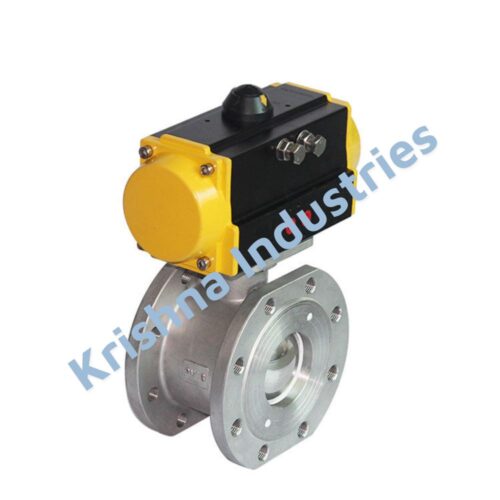
Pneumatic Wafer Type Floating Ball Valve supplier in Ahmedabad, Gujarat. SS316 (CF8M) and Cast Iron body — SS316 ball — PTFE seat — spring return (fail-safe closed / fail-safe open) and double acting actuator — solenoid valve 24V DC /…
Price on Request
Supplier: Krishna Industries (KELOR) – Ahmedabad, Gujarat, India
Established: 2017 | GSTIN: 24AKLPP6499B1ZT | IEC: AKLPP6499B
MOQ: 10 Nos | Body: SS316 (CF8M) / Cast Iron
Actuator: Spring Return / Double Acting | Solenoid: 24V DC / 220V AC | Sizes: DN15–DN150
Krishna Industries (KELOR), based in Ahmedabad, Gujarat, supplies Pneumatic Wafer Type Floating Ball Valves as complete factory-assembled and tested automated valve assemblies — SS316 (CF8M) or Cast Iron body — SS316 ball — PTFE seat — spring return (fail-safe) or double acting actuator — solenoid valve 24V DC / 220V AC — limit switch position feedback — DN15 to DN150 — PN10 / PN16 / Class 150 — API 598 tested — GST invoice — MOQ 10 Nos — Pan India dispatch from Ahmedabad.
Each assembly is supplied complete: valve body + pneumatic actuator + solenoid valve + limit switch box — factory assembled, pneumatically cycled, electrically tested, and dispatched as a ready-to-install unit. No site assembly of actuator to valve required. Wiring diagram and assembly datasheet supplied with each order.
The single most important decision when specifying a pneumatic ball valve is the actuator type — and the answer is determined by your plant’s safety requirement, not preference. The wrong choice results in a valve that opens or stays open when it should close during an emergency.
| Feature | Spring Return (Fail-Safe) Single Acting |
Double Acting |
|---|---|---|
| How It Works | Air supply to ONE port — spring provides return force in opposite direction — valve moves to spring position when air supply fails or solenoid de-energises | Air supply to TWO ports — air opens AND closes — no spring — valve stays in last position when air fails |
| Fail-Safe Position | ✅ Defined fail-safe position — either fully closed (spring to close) or fully open (spring to open) — specified at ordering | ❌ No inherent fail-safe — valve stays wherever it was when air or power failed |
| Fail-Safe Closed (Spring to Close) |
✅ Valve closes automatically on air failure, power failure, or solenoid trip — correct for: chemical dosing isolation, fuel gas isolation, hazardous fluid lines, process shutdown valves — safety default is CLOSED | N/A |
| Fail-Safe Open (Spring to Open) |
✅ Valve opens automatically on air failure — correct for: cooling water supply (must stay open if power fails to prevent overheating), emergency vent, fire suppression water supply — safety default is OPEN | N/A |
| Air Consumption | Lower — spring provides one direction of movement — air only needed to work against spring | ✅ Higher but balanced — air provides both open and close torque |
| Actuator Size | Larger than double acting at same torque — spring adds bulk and weight | ✅ More compact at same torque — no spring mechanism |
| Operating Torque | Spring force assists closure (spring to close) — ensures positive seating even at low air pressure | ✅ Higher and equal torque in both directions — better for larger bore DN80–DN150 |
| Best For | ✅ Process safety valves, chemical isolation, fuel and gas lines, ESD (emergency shutdown) — any application where a defined safe position is required on power or air failure | ✅ High cycle applications, larger bore DN80–DN150, applications where speed in both directions is important and no fail-safe position is required |
| Solenoid Type | 3/2 way solenoid — applies air to open (or close) port — spring handles return | 5/2 way solenoid — directs air alternately to open port and close port |
Quick rule for Indian plant engineers: if the valve is on a chemical, fuel, gas, or hazardous fluid line — specify spring return fail-safe closed. If the valve is on a cooling water or utility water line where flow must be maintained during power failure — specify spring return fail-safe open. If neither safety case applies and the valve is purely for remote convenience operation — double acting is acceptable and more compact.
| Component | Standard Supply | Function |
|---|---|---|
| Wafer Floating Ball Valve | SS316 or CI body — SS316 ball — PTFE seat — SS316 stem — wafer between flanges | Flow isolation — bubble-tight Class VI shut-off in open/close service |
| Pneumatic Actuator | Aluminium alloy rack-and-pinion — spring return or double acting — ISO 5211 mounting pad | Converts compressed air to 90° rotary torque — opens and closes valve |
| Solenoid Valve | 3/2 way (spring return) or 5/2 way (double acting) — 24V DC (standard) / 220V AC — G¼” air ports | Receives electrical signal from PLC/DCS — controls air flow to actuator — on/off switching |
| Limit Switch Box | Two microswitches — OPEN + CLOSED position — 24V DC / 220V AC — IP65 enclosure | Sends position feedback signal to PLC/DCS — confirms valve fully open or fully closed — enables interlocking and alarm |
| Assembly Hardware | Actuator-to-valve mounting bracket + stem coupler — factory assembled | Eliminates site alignment errors — ensures correct travel and torque transmission |
| Documentation | Wiring diagram — assembly datasheet — test report | Required for PLC/DCS panel wiring, commissioning, and maintenance records |
| Body Material | Ball / Stem | Seat | Specify For |
|---|---|---|---|
| SS316 (CF8M) | SS316 | PTFE | ✅ Chemical plant — corrosive media, acids, alkalis, solvents — pharma PW/WFI distribution automation — food and beverage process lines — coastal and marine utility — DM water — anywhere CI body corrodes internally or externally |
| Cast Iron (CI) | SS316 | PTFE | ✅ Water treatment, HVAC chilled water, cooling tower, utility water, fire water — general non-corrosive service where SS316 premium is not justified — most economical automated ball valve for water and utility service |
| Parameter | Specification |
|---|---|
| Valve Type | Wafer type floating ball valve — full bore |
| Body Material | SS316 (CF8M ASTM A351) / Cast Iron (ASTM A126) |
| Ball Material | SS316 |
| Seat Material | PTFE (standard) — reinforced PTFE on request |
| Stem Material | SS316 |
| End Connection | Wafer — between EN 1092-1 (PN) / ASME B16.5 (Class) flanges |
| Size Range | DN15 (½”) to DN150 (6″) |
| Pressure Rating | PN10 / PN16 / Class 150 |
| Leakage Class | API 598 Class VI (bubble-tight) |
| Actuator Type | Rack-and-pinion pneumatic — spring return / double acting |
| Actuator Body | Aluminium alloy epoxy coated (standard) / SS on request |
| Air Supply Pressure | 4–6 bar (standard) — minimum 2.5 bar |
| Solenoid Voltage | 24V DC (standard) / 220V AC — 3/2 or 5/2 way |
| Limit Switch | 2× microswitch OPEN + CLOSED — IP65 — 24V DC / 220V AC |
| Hazardous Area | ATEX flameproof solenoid / NAMUR proximity sensor on request |
| ISO 5211 Pad | Yes — standard on valve body |
| Operating Temperature | -20°C to +150°C (PTFE seat standard) |
| MOQ | 10 Nos |
| HSN Code | 84818090 |
The most common cause of pneumatic valve failure in Indian plants is contaminated compressed air reaching the solenoid valve. Indian compressor systems frequently carry moisture, rust particles, and compressor oil — a solenoid valve orifice is typically 0.8–1.2mm diameter and blocks easily with particulate contamination.
Always install a Filter-Regulator-Lubricator (FRL) unit upstream of each pneumatic valve or valve group:
A FRL unit costing ₹800–₹2,000 protects a pneumatic valve assembly costing ₹8,000–₹50,000. This is the single most effective maintenance investment for Indian pneumatic valve installations.
If your valve is on a chemical line, fuel line, gas line, or any hazardous fluid where the safe condition is valve closed — specify spring return fail-safe closed. If your valve is on a cooling water or utility water line where the safe condition is valve open (flow must continue during power failure) — specify spring return fail-safe open. If neither safety case applies and the valve is purely for remote operation convenience — double acting is acceptable and more compact. When in doubt, spring return fail-safe closed is the conservative and more common choice in Indian chemical and process plants.
24V DC is the standard for all modern Indian PLC and DCS systems — specify 24V DC for any new installation or Industry 4.0 upgrade. 220V AC is used only for legacy relay-controlled systems where a 24V DC supply is not available at the valve location. If your control panel uses a 24V DC PLC output card, specify 24V DC solenoid — most common for new Indian plant automation projects.
The limit switch box on the actuator contains two microswitches — one trips when the valve reaches fully open, one when fully closed. These send a 24V DC (or 220V AC) signal back to the PLC/DCS confirming actual valve position. This feedback is used for: (a) pump start interlock — confirm valve fully open before starting pump, (b) DCS alarm — alert if valve does not reach commanded position within timeout (stuck valve or actuator failure), (c) ESD interlock — confirm shutdown valve fully closed before initiating safe shutdown sequence. Without limit switch feedback, your PLC knows it sent the open/close command but has no confirmation the valve actually moved.
No — a pneumatic on-off ball valve is for full open / full close service only. A ball valve in intermediate (partially open) position causes turbulence-induced erosion of the ball and PTFE seat, leading to rapid wear and leakage. For automated throttling service, specify a pneumatic globe valve with positioner or a pneumatic butterfly valve with positioner. For on-off automated service only, the pneumatic ball valve is the correct and most economical choice.
MOQ is 10 Nos. Automation project orders — 20 to 500+ Nos across sizes (DN25, DN40, DN50, DN80 are the most common Indian plant automation sizes) — with test reports, wiring diagrams, and GST invoice. WhatsApp body material (SS316 or CI), actuator type (spring return fail-safe closed / open, or double acting), solenoid voltage (24V DC or 220V AC), size list, and quantity for project pricing within 2 hours.
The Pneumatic Wafer Type Floating Ball Valve supplied by Krishna Industries (KELOR) is a complete factory-assembled automated valve assembly — SS316 (CF8M) or Cast Iron body — SS316 ball — PTFE seat — spring return (fail-safe closed or open) or double acting actuator — solenoid valve 24V DC / 220V AC — limit switch position feedback — DN15 to DN150 — PN10 / PN16 / Class 150 — API 598 bubble-tight Class VI — ready-to-install for PLC/DCS integration. Chemical plant, pharmaceutical, water treatment, HVAC, food processing, textile, and utility automation. ATEX flameproof solenoid and NAMUR proximity sensor on request for hazardous area. GST invoice, wiring diagram supplied, Pan India dispatch from Ahmedabad. WhatsApp body material, actuator type, solenoid voltage, size list, and quantity for project pricing within 2 hours.
Reviews
There are no reviews yet.