Email:
[email protected]
Phone:
+91 93135 43530
Address:
133/1 Ground, Mansuri Block, Opp. Dudheshwar Water Tank, Ahmedabad-380004, Gujarat, India
VALVES | FASTENERS | FLANGES | FITTINGS
VALVES | FASTENERS | FLANGES | FITTINGS
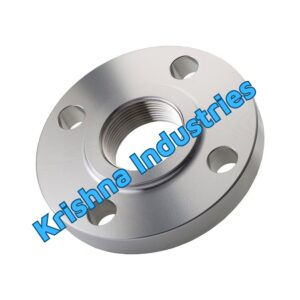
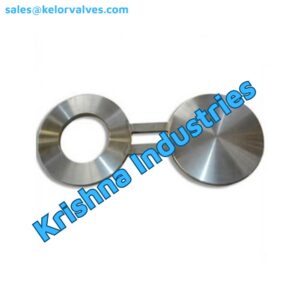
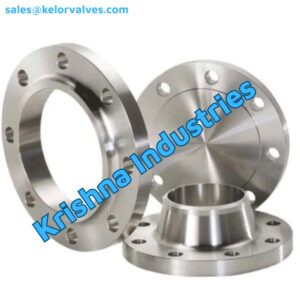
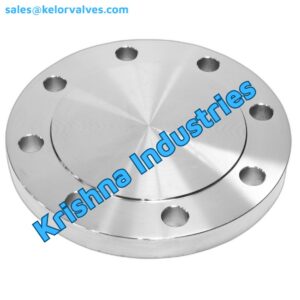
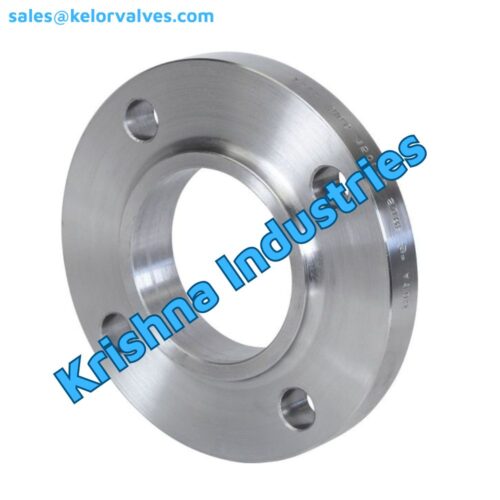
SS Slip-On Flange supplier in Ahmedabad, Gujarat. ASTM A182 F304 (SS304) / F316 (SS316) / F316L (SS316L) / F304L forged stainless steel — slip-on design (pipe slides through bore, two fillet welds — inside and outside) — raised face (RF)…
Price on Request
Supplier: Krishna Industries (KELOR) – Ahmedabad, Gujarat, India
Established: 2017 | GSTIN: 24AKLPP6499B1ZT | IEC: AKLPP6499B
MOQ: 10 Nos | Material: ASTM A182 F304 / F316 / F316L / F304L
Standard: ASME B16.5 / DIN 2576 | Sizes: DN15–DN600 | Pressure: Class 150–600
Krishna Industries (KELOR), based in Ahmedabad, Gujarat, is a B2B supplier of Stainless Steel Slip-On Flanges — ASTM A182 F304 (SS304) / F316 (SS316) / F316L (SS316L) / F304L forged — slip-on bore (pipe slides through, two fillet welds inside and outside) — raised face (RF) standard / flat face (FF) on request — Class 150 / 300 / 600 — DN15 (½”) to DN600 (24″) — ASME B16.5 / DIN 2576 — Schedule 10S / 40S / 80S bore — MTC ASTM A182 heat certificate — GST invoice — MOQ 10 Nos — Pan India dispatch from Ahmedabad.
The SS slip-on flange is the correct and economical flange choice for low to medium pressure SS utility piping — water, HVAC cooling water, DM water, food processing utility, and general chemical process piping at Class 150 and Class 300 — where weld neck flanges are over-specified and slip-on flanges deliver adequate structural integrity and corrosion performance at lower material cost and with easier site installation and alignment.
Slip-on and weld neck flanges are not simply cheap vs expensive alternatives — they are designed for different service conditions. Specifying slip-on where weld neck is required is a code violation and a safety risk. Specifying weld neck where slip-on is adequate unnecessarily increases project cost and installation time.
| Factor | Slip-On Flange ✅ Specify When | Weld Neck Flange — Specify Instead When |
|---|---|---|
| Pressure Class | ✅ Class 150 and Class 300 — slip-on is rated for these classes per ASME B16.5 — adequate for the vast majority of SS utility piping in Indian water, HVAC, and food plant applications | Class 600 and above — or any class in lethal, hydrogen, or high-cycle fatigue service — weld neck tapered hub is required for stress distribution at higher pressure |
| Weld NDT Requirement | ✅ Where piping class does NOT require RT or UT of all welds — slip-on fillet welds cannot be radiographed — acceptable for utility and general process piping Class 150/300 where NDT is not mandatory | Where piping class specifies 100% RT or UT of butt welds — only full-penetration butt welds (weld neck) are RT/UT testable — refinery, petrochemical, lethal service piping classes |
| Cyclic / Fatigue Loading | ✅ Non-cyclic service — steady pressure, no significant pulsation, no thermal cycling — water mains, HVAC, static process piping — slip-on fillet welds adequate for non-cyclic loading | Cyclic service — pressure pulsation from reciprocating pumps or compressors, thermal cycling in steam systems, vibration — weld neck tapered hub provides significantly better fatigue life |
| Installation Alignment | ✅ Where alignment flexibility is needed — pipe slides through bore and rotates freely before welding — easy adjustment on site — no need to cut pipe to exact length before fitting flange | Weld neck is fixed once butted against pipe end — less alignment tolerance — pipe must be cut to correct length and squared accurately before fitting |
| Crevice Concern | ✅ For service where internal crevice (annular gap between pipe OD and flange bore) is not a corrosion or hygiene concern — water, HVAC, general utility — BOTH inside and outside fillet welds must be made to seal the crevice | Where no internal crevice is acceptable — pharma GMP product-contact piping (ASME BPE standard hygienic flanges required) — aggressive chemical service where crevice corrosion in the annular gap is a concern even with inside weld |
| Cost | ✅ 30–50% lower cost than weld neck at same pressure class and size — correct choice where weld neck’s structural advantages are not required by service conditions | Higher cost — justified when service conditions require the tapered hub, RT-testable butt weld, and absence of internal crevice |
The most common installation error with SS slip-on flanges on Indian construction sites is omitting the inside fillet weld. ASME B31.3 Process Piping Code Para 328.5.2 explicitly requires both fillet welds on slip-on flanges — the outside weld for mechanical strength and the inside weld to seal the annular crevice between pipe OD and flange bore. Omitting the inside weld has three serious consequences:
| Consequence | Detail |
|---|---|
| Crevice Corrosion | The unsealed annular gap between pipe OD and flange bore becomes a crevice corrosion site. In SS piping, crevice corrosion in chloride environments or aggressive chemical service can perforate the flange hub from the inside within months. Even F316L loses its corrosion resistance in the oxygen-depleted, chloride-concentrated environment of an unsealed crevice. The outside of the flange shows no corrosion; the failure is invisible until the joint leaks. |
| Code Violation | ASME B31.3 requires both welds. A piping inspection team performing a construction quality audit will flag a slip-on flange with only the outside weld as a code non-conformance — the joint must be reworked or replaced. For Indian chemical and petrochemical projects with third-party inspection, this is a common rework item that delays commissioning. |
| Bacterial Contamination (Food/Pharma) | In food and pharmaceutical utility piping, the unsealed annular crevice harbours bacteria and is impossible to clean by CIP (Clean-in-Place). Even with inside weld, standard slip-on flanges are not acceptable for product-contact pharma GMP piping — ASME BPE hygienic flanges are required for product contact. For utility service (cooling water, steam, nitrogen), inside-welded slip-on flanges with both welds complete are acceptable. |
Installation sequence for SS slip-on flange: Slide flange onto pipe → position pipe end 1.5mm back from flange face → tack weld in position → complete inside fillet weld first (access through flange bore before pipe end is fully enclosed) → complete outside fillet weld → pickle and passivate weld area to restore SS passive film → inspect both welds visually and by dye penetrant test (PT) if required by piping class.
| Grade | Specify For | Key Limitation |
|---|---|---|
| ASTM A182 F304 | ✅ DM water piping, HVAC chilled and hot water, food processing non-chloride utility, pharma non-GMP utility, mild chemical service — most economical SS slip-on flange — correct for non-chloride low-medium pressure utility | Not for chloride-containing service — pitting corrosion. Not for welded piping in aggressive environments — sensitisation risk at weld HAZ |
| ASTM A182 F316 | Chloride-containing utility water, seawater cooling, coastal industrial utility piping, aggressive chemical plant utility | Sensitisation risk in welded piping in aggressive chemical service — specify F316L for welded SS piping in corrosive environments |
| ASTM A182 F316L | ✅ Welded SS piping in corrosive service — pharma GMP utility (even non-product-contact) — food processing where GMP certification requires 316L documentation — chemical plant low-pressure welded SS utility — most conservative and widely specified Indian SS slip-on flange for chemical and pharma utility | Slightly lower strength at elevated temperature above 450°C — not relevant for standard utility service |
| ASTM A182 F304L | Welded non-chloride SS piping where sensitisation prevention needed and Mo of F316L is not required — cryogenic welded SS piping | No Mo — pitting in chloride service same as F304 |
For full explanation of SS grade selection and weld sensitisation mechanism, see the SS Weld Neck Flange page.
| Parameter | Specification |
|---|---|
| Flange Type | Slip-on — pipe slides through bore — two fillet welds (inside and outside) per ASME B31.3 |
| Material | ASTM A182 F304 / F316 / F316L / F304L — forged stainless steel |
| Standard | ASME B16.5 (DN15–DN600) / DIN 2576 (metric — on request) |
| Pressure Classes | Class 150 / 300 / 600 |
| Size Range | DN15 (½”) to DN600 (24″) |
| Facing | Raised Face (RF) standard — 2mm raised ring, 125–250 AARH surface finish / Flat Face (FF) on request |
| Bore | Schedule 10S / Schedule 40S (standard) / Schedule 80S / custom bore on request — bore = pipe OD + 1–2mm clearance for sliding fit |
| Flange Drilling | ASME B16.5 bolt circle and bolt hole pattern per pressure class and size |
| Material Certification | MTC — ASTM A182 heat certificate — chemical composition + mechanical properties + heat number |
| MOQ | 10 Nos per line item |
| HSN Code | 73072100 |
Both welds are mandatory — ASME B31.3 Para 328.5.2 requires both the inside and outside fillet welds on all slip-on flanges. The outside weld alone is a code violation regardless of the pressure class or service. The inside weld seals the annular crevice between the pipe OD and the flange bore — without it, this crevice becomes a site for crevice corrosion in SS piping, particularly in chloride-containing environments or where aggressive chemicals contact the joint. On Indian construction sites, the inside weld is frequently omitted because it requires careful technique (welding inside the narrow flange bore before the pipe end is fully enclosed) — but it is non-negotiable. A piping inspection team performing a construction quality audit will flag slip-on flanges with only the outside weld as code non-conformances requiring rework.
Specify flat face (FF) when the mating equipment flange is cast iron (CI) or ductile iron (DI). CI and DI flanges are always flat face — their faces are not raised. If a raised face SS flange is bolted to a flat face CI flange, the raised ring contacts the CI face only at the raised ring circle — the bolt load bends the CI flange face, which can crack the brittle cast iron. The solution is to specify flat face on the SS slip-on flange and use a full face gasket that covers the entire face including the bolt holes. This is the standard approach when connecting SS piping to CI pumps, CI butterfly valves, CI gate valves, and CI strainers in Indian industrial systems. If both mating flanges are SS, specify raised face — it is the standard and provides better sealing per unit bolt load.
Class 150 and Class 300 flanges have the same face dimensions and bolt hole pattern in ASME B16.5 for the same nominal pipe size — the difference is in the flange thickness and the bolt circle diameter, which are heavier for Class 300. Class 150 ASTM A182 F316 slip-on flange is rated approximately 20 bar at ambient temperature — adequate for most Indian HVAC, water treatment, and food utility piping operating at 4–10 bar. Class 300 is rated approximately 52 bar at ambient — specify Class 300 when: operating pressure exceeds 15 bar (to maintain adequate safety margin), the mating valve or equipment flange is Class 300, the project piping class document specifies Class 300 for the service, or the fluid is steam at elevated temperature where the Class 150 P-T rating drops below operating pressure (check ASME B16.5 P-T table for F316 at operating temperature).
Specify ASME B16.5 for all Indian industrial, chemical, pharma, and oil and gas projects — it is the dominant flange standard in India for process piping. DIN 2576 is a European standard (PN10/PN16 metric flanges) — specify DIN 2576 when the project uses European equipment with DIN flanged connections, or when connecting to DIN-flanged imported equipment (German, Italian, or Swiss process equipment is commonly DIN-flanged in Indian pharma and food plants). ASME B16.5 Class 150 and DIN PN16 are not dimensionally interchangeable at most sizes — a DIN PN16 flange bolted to an ASME B16.5 Class 150 flange may not align bolt holes correctly and the gasket seating area may differ. Always match the flange standard to the equipment or piping system standard.
MOQ is 10 Nos per line item. Full BOM supply across multiple sizes, grades, and pressure classes in one consolidated order. Documents: MTC (ASTM A182 heat certificate — chemical composition and mechanical properties with heat number), dimensional inspection report confirming ASME B16.5 dimensions, GST invoice with HSN 73072100. TPI (Lloyds, BV, DNV) on request for EPC project quality requirements. WhatsApp grade (F304/F316/F316L), pressure class, size list, pipe schedule, facing (RF/FF), and quantity for project pricing within 2 hours.
Krishna Industries (KELOR) supplies SS Slip-On Flanges for water supply, HVAC, DM water, food processing, chemical plant utility, and general SS process piping — ASTM A182 F304 / F316 / F316L / F304L forged — slip-on bore (both inside and outside fillet welds per ASME B31.3) — raised face (RF) standard / flat face (FF) on request — Class 150 / 300 / 600 — DN15 (½”) to DN600 (24″) — ASME B16.5 / DIN 2576 — Schedule 10S / 40S / 80S bore — MTC ASTM A182 heat certificate — GST invoice — Pan India dispatch from Ahmedabad. WhatsApp grade, pressure class, size list, pipe schedule, facing, and quantity for project pricing within 2 hours.
Reviews
There are no reviews yet.