Email:
[email protected]
Phone:
+91 93135 43530
Address:
133/1 Ground, Mansuri Block, Opp. Dudheshwar Water Tank, Ahmedabad-380004, Gujarat, India
VALVES | FASTENERS | FLANGES | FITTINGS
VALVES | FASTENERS | FLANGES | FITTINGS
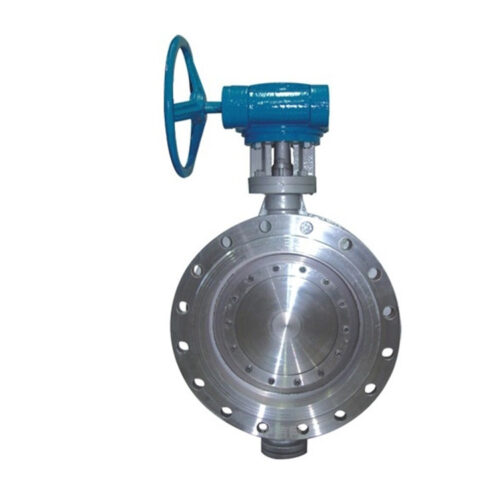
Triple Eccentric Butterfly Valve (Triple Offset Butterfly Valve) supplier in Ahmedabad, Gujarat. WCB, CF8M (SS316), Duplex, Super Duplex body — SS316 metal laminated seat / Stellite hard face / PTFE seat ring / Inconel on request — API 609 Category…
Price on Request
Supplier: Krishna Industries (KELOR) – Ahmedabad, Gujarat, India
Established: 2017 | GSTIN: 24AKLPP6499B1ZT | IEC: AKLPP6499B
MOQ: 10 Nos | Body: WCB / CF8M / Duplex / Super Duplex
Standard: API 609 Category B | Fire Safe: API 607 / API 6FA | Sizes: DN50–DN1200
Krishna Industries (KELOR), based in Ahmedabad, Gujarat, is a B2B supplier of Triple Eccentric Butterfly Valves (Triple Offset Butterfly Valves) — WCB, CF8M (SS316), Duplex, Super Duplex body — SS316 metal laminated seat (standard), Stellite hard face, PTFE seat ring, Inconel on request — API 609 Category B — fire safe to API 607 / API 6FA — ISO 15848 fugitive emissions — double flanged, lug, wafer type — DN50 to DN1200 — Class 150 / Class 300 / Class 600 — ASME B16.34 — API 598 tested — GST invoice — MOQ 10 Nos — Pan India dispatch from Ahmedabad.
The triple eccentric butterfly valve is the metal-seated, high-performance butterfly valve for power plant, refinery, petrochemical, steel plant, and offshore service — zero leakage metal-to-metal seating, fire safe construction, cam-action closure with no seat wear throughout the 90° travel, suitable for steam to 450°C, high pressure Class 600, and corrosive process media where conventional rubber or PTFE seated butterfly valves fail.
The performance of a triple eccentric butterfly valve is entirely defined by its three geometric offsets. Understanding these offsets explains why this valve achieves zero leakage with a metal seat — which no concentric or double eccentric butterfly valve can achieve.
The shaft does not pass through the centreline of the disc — it is offset to one side. When the shaft rotates, only one half of the disc face contacts the seat at any time during the stroke. This halves the seating surface area in contact at any moment, reducing friction and wear compared to a concentric design where the full disc circumference rubs against the seat throughout the entire 90° travel.
The shaft axis sits behind the sealing face of the disc. As the disc begins to open from the closed position, the sealing face immediately moves away from the seat in an arc, breaking contact cleanly at the start of the opening stroke. Combined with the first eccentricity, the disc virtually lifts away from the seat from the first degree of rotation — no dragging, no scraping.
This is the defining characteristic of the triple eccentric design. The sealing surface is not a simple right-angle cone but an oblique cone — the cone axis is inclined at an angle to the pipe centreline. As the disc closes, its sealing face traces the geometry of this oblique cone and approaches the seat ring in a cam action — contacting the seat only at the very final degree of closure, not during any earlier part of the 90° rotation.
The result: there is no sliding contact between disc and seat throughout the entire 90° travel. Contact occurs only at the final seating moment — like a cone being pressed into a matching socket. This cam action is what makes metal-to-metal seating possible without wear — no elastomer required, no rubbing to erode the seat, no leakage path developing over time.
| Feature | Concentric BFV (Standard) |
Double Eccentric BFV (High Performance) |
Triple Eccentric BFV (This Product) |
|---|---|---|---|
| Eccentricities | Zero — disc centreline = shaft centreline = pipe centreline | Two — shaft offset from disc and from pipe centreline | ✅ Three — shaft offsets + oblique cone sealing surface |
| Disc-Seat Contact During Travel | Full rubbing throughout entire 90° | Reduced — disc clears seat faster but still some rubbing | ✅ Zero rubbing — contact only at final seating moment (cam action) |
| Seat Type | Elastomer (EPDM / NBR / PTFE) — soft seat only | PTFE or reinforced elastomer — soft seat standard | ✅ Metal-to-metal (SS316 + graphite laminated) — Stellite optional — no elastomer required |
| Max Temperature | 180°C (EPDM) / 200°C (PTFE) | 250°C (PTFE reinforced) | ✅ 450°C (SS316/graphite seat) / 593°C (Cr-Mo body, Stellite seat) |
| Pressure Class | PN10 / PN16 / Class 150 | Class 150 / Class 300 | ✅ Class 150 / 300 / 600 — PN16 to PN40 |
| Leakage Class | Bubble-tight (soft seat only) | API 598 Class VI (soft seat) | ✅ API 598 Class VI (metal seat — cam action provides zero leakage) |
| Fire Safe | ❌ Seat burns in fire — total leakage | ❌ Soft seat burns — limited fire safety without metal backup | ✅ API 607 / API 6FA — metal body + metal seat provides fire safe shut-off after seat material burns |
| API Standard | API 609 Category A | API 609 Category A (high performance) | ✅ API 609 Category B |
| Seat Wear Over Time | High — full rubbing throughout travel — elastomer wears quickly at high cycles | Moderate — reduced rubbing — PTFE wears slowly | ✅ Near zero — cam action, no sliding contact — metal seat service life measured in decades |
| Replaces | Standard utility isolation — water, HVAC, ETP | Moderate pressure chemical service | ✅ Gate valve and globe valve replacement at large bore Class 150–600 — power plant, refinery, petrochemical |
| Body Material | Disc / Seat | Service | Specify For |
|---|---|---|---|
| WCB ASTM A216 WCB |
SS316 disc + SS316/graphite seat | General process — steam, BFW, condensate, hydrocarbons, utility — Class 150/300 | ✅ Standard specification for Indian power plant auxiliary services, refinery process utility, chemical plant headers — most economical TOBV specification |
| WCB ASTM A216 WCB |
SS316 disc + Stellite 6 hard face seat | Erosive / abrasive — HP steam, letdown service, high velocity | Power plant HP heater drain, turbine bypass, steam letdown — Stellite resists erosion from wet steam and flash service |
| CF8M ASTM A351 CF8M |
SS316 disc + SS316/graphite seat | Corrosive process media, aggressive chemicals, DM water, pharma | Chemical plant corrosive service headers, pharmaceutical clean steam, DM water — where WCB corrodes internally |
| Duplex SS ASTM A890 4A/5A |
Duplex disc + SS316/graphite or Stellite seat | High chloride, seawater, offshore, sour service (mild H2S) | Offshore platform seawater utility, coastal chemical plant high chloride service, FGD (flue gas desulphurisation) in power plants — superior pitting resistance vs CF8M |
| Super Duplex ASTM A890 6A |
Super Duplex disc + Inconel or Stellite seat | Severe sour service, offshore subsea, very high chloride | Offshore production risers, sour gas (high H2S+CO2+Cl) process, FPSO utility — highest strength and corrosion resistance |
| WCB / CF8M | SS316 disc + PTFE seat ring | Class 150 / PN16 — bubble tight at moderate temperature | Chemical process Class 150 where bubble-tight closure required — combines cam action with PTFE resilience — max temp limited to 180°C |
| WC6 / WC9 Cr-Mo alloy |
SS316 or Stellite disc + Stellite seat | Very high temperature steam above 400°C — Class 300/600 | Power plant main steam (up to 593°C), HP turbine isolation, HRSG — Cr-Mo body required above 400°C where WCB creeps |
| Parameter | Specification |
|---|---|
| Valve Type | Triple Eccentric / Triple Offset Butterfly Valve |
| Design Standard | API 609 Category B / EN 593 / BS 5155 |
| Pressure-Temperature Rating | ASME B16.34 |
| Testing Standard | API 598 / EN 12266 |
| Fire Test | API 607 / API 6FA / BS EN ISO 10497 |
| Fugitive Emissions | ISO 15848 Class A/B (on request) |
| Body Style | Double Flanged (standard) / Lug / Wafer |
| Face-to-Face | API 609 / EN 558 Series 13/14 |
| Flange Drilling | ASME B16.5 (Class) / EN 1092-1 (PN) |
| Body Material | WCB / CF8M / Duplex / Super Duplex / WC6 / WC9 / LCB |
| Disc Material | SS316 / Duplex / Stellite 6 hard face / Inconel 625 (on request) |
| Seat | SS316 + Graphite laminated / Stellite hard face / PTFE ring |
| Stem Material | SS316 / SS410 / Inconel (on request) |
| Stem Seal | Graphite packing (standard) / PTFE (low temp) |
| ISO 5211 Pad | Yes — standard — actuator ready |
| Size Range | DN50 to DN1200 — DN150–DN600 most common project range |
| Pressure Class | Class 150 / Class 300 / Class 600 — PN16 / PN25 / PN40 |
| Temperature Range | -29°C to 450°C (WCB/CF8M) — up to 593°C (WC6/WC9 body) |
| Leakage Class | API 598 Class VI (zero leakage metal seat) |
| MOQ | 10 Nos |
| HSN Code | 84818090 |
Large bore gate valves at DN300 to DN600, Class 150/300 are the traditional isolation valve in Indian power plants and refineries. The case for replacing them with triple eccentric butterfly valves is now well established in Indian EPC project specifications:
Indian EPC contractors for NTPC, BHEL, IOCL, and HPCL projects increasingly specify TOBV in plant layouts at Class 150 DN300+ where gate valves were previously standard. Enquiries for these projects can specify body material, seat material, Class, size range, and API 609 Category B with fire safe certificate for direct quotation.
API 609 Category A covers concentric and double eccentric butterfly valves — soft seated (elastomer or PTFE) — generally limited to Class 150/300 and temperatures below 250°C. API 609 Category B covers triple eccentric butterfly valves with metal-to-metal seating — Class 150 through Class 600 — temperatures to 593°C — fire tested to API 607 or API 6FA. Indian refinery, power plant, and petrochemical project specifications that require fire safe butterfly valves will always specify API 609 Category B — this is the standard for any hydrocarbon or high temperature butterfly valve application.
Yes — inherently fire safe. In a fire, any PTFE or rubber seat material burns, but the metal body and metal seat ring remain intact. The cam-action metal-to-metal contact continues to provide shut-off after the non-metallic elements have been consumed. Fire safe test certificates to API 607 or API 6FA can be provided. Indian oil and gas and petrochemical project specifications — ONGC, IOCL, HPCL, BPCL, GAIL — require fire safe certification for all hydrocarbon butterfly valves. This certificate distinguishes triple eccentric from any concentric or double eccentric butterfly valve, which cannot pass the fire test with a soft seat alone.
SS316 metal seat is adequate for most clean fluid service up to 400°C. Stellite 6 (a cobalt-chromium alloy, HRC 40+) is specified for erosive or abrasive service — HP steam with entrained moisture, wet steam flash service, high velocity letdown, dirty or particle-laden process streams. In power plant HP heater drain and turbine bypass service, wet steam at high velocity erodes the SS316 seating surface progressively over cycles. Stellite resist erosion and galling far better than SS316 — significantly extending valve service life in these applications.
Yes — and this is increasingly the standard specification for Indian thermal power plant auxiliary services at DN300 and above, Class 150/300. WCB body, SS316/graphite laminated seat, double flanged, gear operated, API 609 Category B, API 598 tested, ISO 5211 pad — this is the standard TOBV specification replacing gate valves on NTPC, BHEL, and private IPP project auxiliary steam, condensate, and cooling water headers. The cost, weight, and space savings at DN300–DN600 are substantial. WhatsApp size list, Class, and service for project pricing.
MOQ is 10 Nos total. Power plant or refinery project orders — 20 to 200+ Nos across sizes — with API 609 Category B certification, API 598 test reports, fire safe certificate (API 607 / API 6FA), material test reports (MTR), and GST invoice. Specify body material, disc/seat material, Class, size list, end connection, and actuator requirement for project pricing within 4 hours.
The Triple Eccentric Butterfly Valve supplied by Krishna Industries (KELOR) is the API 609 Category B metal-seated butterfly valve for Indian power plant, refinery, petrochemical, steel plant, and offshore service — WCB, CF8M, Duplex, Super Duplex body — SS316/graphite laminated seat (standard), Stellite hard face, PTFE seat ring, Inconel on request — zero leakage cam-action metal-to-metal closure — fire safe API 607 / API 6FA — ISO 15848 fugitive emissions — double flanged, lug, wafer — DN50 to DN1200 — Class 150 / 300 / 600 — API 598 tested — MTR on request. GST invoice, Pan India dispatch from Ahmedabad. WhatsApp body material, disc/seat, Class, size list, and fire safe certificate requirement for project pricing within 4 hours.
Reviews
There are no reviews yet.