
Industrial butterfly valve sealing technology evolution, advanced butterfly valve seat design for industrial pipelines, high performance butterfly valve sealing systems, and metal seated vs resilient seated butterfly valves have become critical search terms for engineers, procurement managers, and EPC contractors seeking reliable flow control solutions. In modern process industries, sealing performance directly impacts safety, efficiency, and lifecycle cost. As KELOR – India’s biggest manufacturer, supplier, and exporter of industrial valves, we present this comprehensive, human-written, plagiarism-free analysis explaining how butterfly valve sealing technologies have evolved to meet today’s demanding industrial applications.
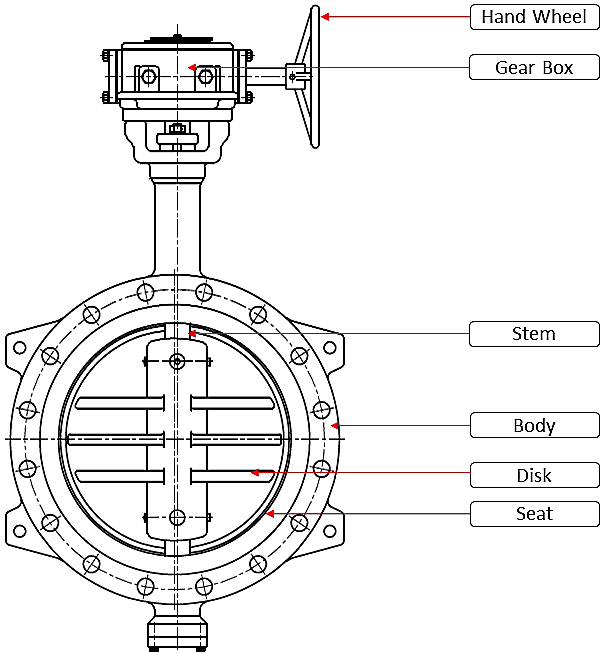
Image Source: Wikipedia – Butterfly valve basic construction
1. Introduction: Why Sealing Technology Matters in Butterfly Valves
Butterfly valves are quarter-turn rotary valves widely used for flow regulation and isolation across water supply, HVAC, oil & gas, chemical processing, power generation, and marine industries. While the disc and shaft define the valve’s mechanical operation, the sealing system determines whether the valve can reliably shut off flow under varying pressure, temperature, and chemical conditions.
Early butterfly valves were primarily used in low-pressure applications where minor leakage was acceptable. However, as industries expanded and process conditions became more aggressive, sealing technologies had to evolve. This evolution transformed butterfly valves from basic isolation devices into high-performance, zero-leakage solutions capable of replacing gate, globe, and ball valves in many services.
2. Early Butterfly Valve Sealing Concepts
The earliest butterfly valves used metal-to-metal contact between the disc edge and valve body. These designs were simple, cost-effective, and easy to manufacture. However, they suffered from several limitations:
- High leakage rates
- Poor sealing at low differential pressure
- Rapid wear due to friction
- Limited suitability for corrosive fluids
Such valves were acceptable for air handling, irrigation, and basic water distribution but unsuitable for critical industrial services. This drove the need for more reliable sealing solutions.
3. Introduction of Elastomer-Seated Butterfly Valves
The first major breakthrough in butterfly valve sealing technology came with the development of elastomer-lined and elastomer-seated butterfly valves. Materials such as natural rubber, EPDM, NBR, and neoprene were introduced as resilient seats.
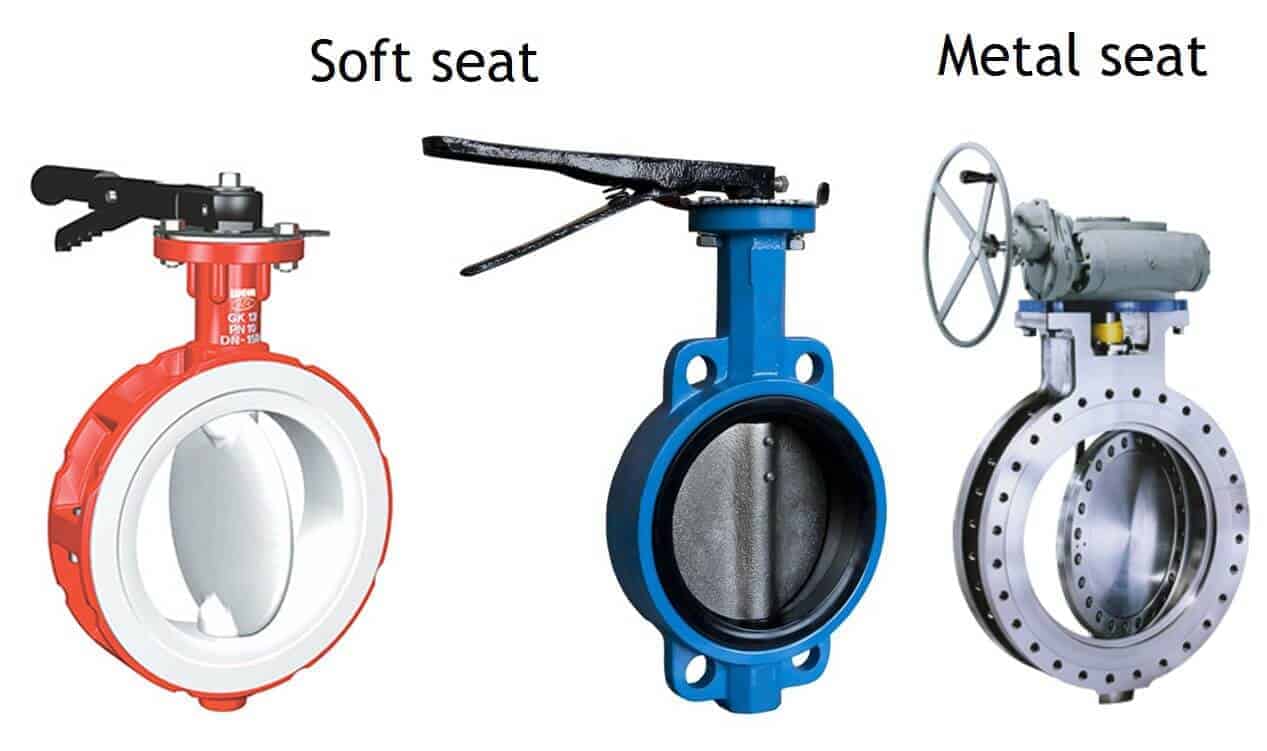
Image Source: JSC Valve – Butterfly valve seat types
Key Advantages of Elastomer Seals
- Bubble-tight shutoff (zero leakage)
- Low operating torque
- Excellent sealing at low pressure
- Cost-effective manufacturing
Resilient-seated butterfly valves quickly became standard in water treatment plants, fire protection systems, cooling water lines, and HVAC installations. Even today, they account for a significant share of global butterfly valve demand.
As a leading Indian manufacturer, KELOR produces high-quality elastomer-seated butterfly valves conforming to international standards, serving domestic and export markets.
4. Limitations of Elastomer Sealing and the Need for Innovation
Despite their advantages, elastomer seals have inherent limitations:
- Restricted temperature range
- Swelling or degradation in aggressive chemicals
- Limited suitability for steam and hydrocarbons
- Aging and compression set over time
As process industries demanded higher temperatures, pressures, and chemical resistance, elastomer-based butterfly valves could no longer meet all requirements. This gap led to the next phase of sealing evolution.
5. PTFE and Thermoplastic Sealing Technologies
To overcome chemical compatibility issues, manufacturers introduced PTFE (Polytetrafluoroethylene) and thermoplastic-lined butterfly valves. These seals provided exceptional resistance to corrosive media.
Image Source: Wikipedia – PTFE lined valve
Benefits of PTFE Sealing
- Excellent chemical resistance
- Low friction coefficient
- Suitable for acids, alkalis, and solvents
- Longer service life in corrosive environments
PTFE-lined butterfly valves became popular in chemical processing, pharmaceuticals, and food & beverage industries. However, PTFE has lower elasticity compared to rubber, requiring precision engineering to maintain tight shutoff.
6. High-Performance Butterfly Valves and Offset Sealing
The development of high-performance butterfly valves (HPBV) marked another major milestone. These valves feature double-offset and triple-offset designs that significantly reduce seat wear.

Image Source: Bray Valves – Triple offset butterfly valve diagram
Double-Offset Design
The disc is offset from both the shaft centerline and the body centerline, reducing friction during opening and closing. This improves seal life and torque characteristics.
Triple-Offset Design
In triple-offset butterfly valves, a conical sealing geometry ensures that the disc only contacts the seat at full closure. This design enables true metal-to-metal sealing with zero rubbing.
7. Metal-Seated Butterfly Valve Sealing Technology
Metal-seated butterfly valves represent the pinnacle of sealing technology evolution. They are designed for extreme service conditions involving high temperature, high pressure, and abrasive media.
Characteristics of Metal Seals
- Temperature capability up to 600°C and beyond
- Fire-safe performance
- Resistance to erosion and abrasion
- Long service life in severe conditions
Advanced alloys, hard-facing coatings, and precision machining are used to achieve tight shutoff. While metal-seated valves may not always achieve bubble-tight sealing like elastomers, they offer unmatched durability.
KELOR manufactures and exports metal-seated and high-performance butterfly valves tailored for power plants, refineries, and heavy process industries.
8. Hybrid and Composite Sealing Solutions
Modern valve engineering increasingly adopts hybrid sealing technologies that combine metal strength with soft-seat tightness. Examples include:
- Metal seat with graphite overlay
- Metal-backed PTFE seats
- Fire-safe elastomer-metal combinations
These designs provide improved shutoff, fire safety, and compliance with international standards such as API, ISO, and EN.
9. Manufacturing Advancements Driving Sealing Evolution
Sealing evolution is closely linked to advancements in manufacturing:
- CNC machining for micron-level tolerances
- Advanced surface finishing and coatings
- Finite element analysis (FEA) for seal optimization
- Improved elastomer compounding and testing
As India’s largest industrial valve manufacturer and exporter, KELOR leverages modern manufacturing technologies to deliver globally competitive butterfly valve sealing solutions.
10. Application-Based Selection of Sealing Technology
| Application | Recommended Sealing |
|---|---|
| Water & HVAC | EPDM / NBR Elastomer Seat |
| Chemical Processing | PTFE / PFA Seat |
| Steam & Power | Metal-Seated / High-Performance |
| Oil & Gas | Triple Offset Metal Seated |
11. Global Market Trends and B2B Buying Perspective
From a B2B procurement standpoint, buyers increasingly prioritize:
- Total lifecycle cost
- Compliance with international standards
- Availability of spares
- After-sales technical support
Indian manufacturers like KELOR have gained global recognition by offering cost-effective, export-quality butterfly valves with advanced sealing technologies.
12. Future of Butterfly Valve Sealing Technologies
Future developments are expected to focus on:
- Smart materials with self-adjusting seals
- Improved fire-safe and fugitive emission performance
- Environmentally sustainable elastomers
- Digital monitoring of seal wear
These innovations will further expand the application range of butterfly valves across industries.
Frequently Asked Questions (FAQs)
1. What is the most common butterfly valve sealing material?
EPDM is the most commonly used sealing material for water and HVAC applications.
2. Are metal-seated butterfly valves leak-proof?
They offer very low leakage and exceptional durability but may not always be bubble-tight.
3. Which sealing is best for chemical industries?
PTFE or PFA-lined butterfly valves are preferred for chemical resistance.
4. Can butterfly valves be used for steam?
Yes, high-performance and metal-seated butterfly valves are suitable for steam.
5. What is a triple-offset butterfly valve?
It is a high-performance valve with a geometry that eliminates seat rubbing.
6. How long do elastomer seals last?
Service life depends on operating conditions but typically ranges from 5–10 years.
7. Are butterfly valves fire-safe?
Metal-seated and fire-safe certified designs are suitable for fire-risk applications.
8. Why are Indian butterfly valve manufacturers competitive globally?
Due to cost efficiency, modern manufacturing, and compliance with global standards.
9. Does KELOR export butterfly valves?
Yes, KELOR is a major exporter serving global industrial markets.
10. How do I select the right sealing technology?
Selection depends on temperature, pressure, fluid type, and industry standards.
Conclusion
The evolution of butterfly valve sealing technologies reflects the broader progress of industrial engineering. From basic metal contact to advanced elastomer, PTFE, and triple-offset metal sealing systems, each stage has expanded the valve’s capabilities. Today, butterfly valves are no longer limited to low-pressure services; they are integral components in critical industrial processes worldwide.
As India’s biggest manufacturer, supplier, and exporter of industrial valves, KELOR continues to innovate and deliver advanced butterfly valve sealing solutions that meet global B2B requirements with reliability, performance, and value.