
Butterfly valve material selection for industrial applications, best butterfly valve material for chemical plants, SS butterfly valve vs cast iron butterfly valve, and industrial butterfly valve material guide are among the most searched topics by engineers, procurement managers, and EPC contractors today. Choosing the correct butterfly valve material directly impacts system safety, service life, corrosion resistance, operating cost, and overall plant efficiency.
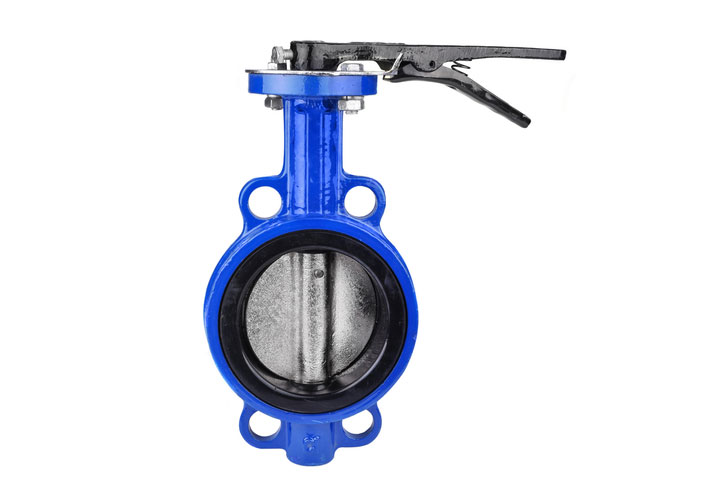
1. Introduction to Butterfly Valves
A butterfly valve is a quarter-turn rotary motion valve used to regulate, isolate, or throttle flow in pipelines. The valve consists of a disc mounted on a rotating shaft. When the disc is parallel to the flow, the valve is fully open; when perpendicular, it is fully closed.
Butterfly valves are widely preferred because of:
- Compact design
- Lightweight construction
- Lower cost compared to gate and ball valves
- Fast operation
- Wide material availability
The performance of a butterfly valve depends largely on the materials used for its body, disc, stem, and seat.

2. Why Butterfly Valve Material Selection Is Critical
Material selection is not just a design choice; it is a risk management decision. Incorrect material selection can lead to corrosion, leakage, premature failure, downtime, and safety hazards.
Key factors influencing material selection include:
- Fluid type (water, steam, chemicals, gas, slurry)
- Operating temperature
- Pressure rating (PN10, PN16, ANSI Class 150, 300, etc.)
- Corrosion and erosion resistance
- Hygienic or food-grade requirements
- Budget and lifecycle cost
KELOR engineers assist B2B customers in selecting the optimal butterfly valve material based on real operating conditions rather than generic assumptions.
3. Butterfly Valve Body Materials Explained
3.1 Cast Iron Butterfly Valves
Cast Iron (CI) is one of the most commonly used materials for butterfly valve bodies, especially in water distribution and HVAC systems.
Key Properties:
- Economical
- Good machinability
- Suitable for low to medium pressure
Typical Applications:
- Municipal water supply
- Fire protection systems
- Cooling water lines
Cast iron butterfly valves are cost-effective but not suitable for highly corrosive or high-temperature applications.

3.2 Ductile Iron Butterfly Valves
Ductile Iron (DI) offers improved mechanical strength and impact resistance compared to cast iron.
Advantages:
- Higher tensile strength
- Better pressure handling
- Longer service life
Industries:
- Water treatment plants
- Desalination plants
- Infrastructure projects
KELOR supplies DI butterfly valves with epoxy coating and WRAS-approved linings for potable water applications.
4. Stainless Steel Butterfly Valve Materials
4.1 Stainless Steel 304 (SS 304)
SS 304 butterfly valves are widely used where moderate corrosion resistance and hygienic conditions are required.
- Good corrosion resistance
- Excellent surface finish
- Easy cleaning
Applications:
- Food and beverage
- Pharmaceutical utilities
- Light chemical processing
4.2 Stainless Steel 316 (SS 316)
SS 316 contains molybdenum, providing superior resistance to chlorides and aggressive chemicals.
Key Benefits:
- High corrosion resistance
- Suitable for marine and coastal environments
- Excellent chemical compatibility
Industries:
- Chemical plants
- Oil & gas
- Pharmaceutical manufacturing
KELOR is a leading exporter of SS 316 butterfly valves, supplying to Middle East, Africa, and Southeast Asia.

5. Carbon Steel Butterfly Valves
Carbon steel butterfly valves are preferred for high-pressure and high-temperature applications.
Characteristics:
- High strength
- Excellent pressure resistance
- Cost-effective compared to stainless steel
Typical Applications:
- Steam pipelines
- Power plants
- Oil refineries
These valves require proper surface treatment or lining to resist corrosion.
6. Exotic Alloy Butterfly Valve Materials
6.1 Duplex & Super Duplex Stainless Steel
Duplex steels offer a balance of strength and corrosion resistance.
- High resistance to stress corrosion cracking
- Used in offshore and marine industries
6.2 Hastelloy, Monel, and Inconel
These materials are used in extreme chemical and high-temperature environments.
- Highly corrosion resistant
- Used in specialty chemical processing
- Higher initial cost but long lifecycle
KELOR manufactures butterfly valves in special alloys on request for EPC and OEM projects.
7. Butterfly Valve Disc Materials
The disc is in direct contact with the fluid, making its material selection equally important.
- CI / DI Disc – economical
- SS 304 / SS 316 Disc – corrosion resistant
- Nylon Coated Disc – abrasion resistance
- Aluminum Bronze Disc – seawater service
8. Seat and Liner Materials
- EPDM – water and wastewater
- NBR – oil and fuel
- PTFE – chemicals and high purity fluids
- Viton – high temperature and aggressive media
9. Industry-Wise Butterfly Valve Material Recommendation
| Industry | Recommended Material |
|---|---|
| Water Supply | DI Body, EPDM Seat |
| Chemical | SS 316 / PTFE Lined |
| Oil & Gas | Carbon Steel / SS 316 |
| Food & Pharma | SS 304 / SS 316 |
| Power Plant | Carbon Steel |
10. Why Choose KELOR Butterfly Valves
KELOR stands as India’s biggest manufacturer, supplier, and exporter of industrial valves, offering:
- Complete in-house manufacturing
- Strict quality control
- Customized material options
- Bulk supply capability
- Global export experience
Our butterfly valves meet international standards such as API, ISO, BS, DIN, and AWWA.
11. Frequently Asked Questions (FAQs)
FAQ 1: Which butterfly valve material is best for chemicals?
SS 316 or PTFE-lined butterfly valves are ideal for chemical applications.
FAQ 2: Can cast iron butterfly valves be used for steam?
No, carbon steel is recommended for steam service.
FAQ 3: What is the most economical butterfly valve material?
Cast iron or ductile iron is the most cost-effective.
FAQ 4: Are stainless steel butterfly valves food-grade?
Yes, SS 304 and SS 316 are widely used in food and pharma industries.
FAQ 5: What seat material is best for water?
EPDM is most commonly used for water applications.
FAQ 6: Which material suits seawater applications?
SS 316 or aluminum bronze disc valves are preferred.
FAQ 7: Does KELOR offer customized materials?
Yes, KELOR provides customized material options for project requirements.
FAQ 8: What is the lifespan of SS butterfly valves?
With proper selection, SS butterfly valves can last 15–25 years.
FAQ 9: Are butterfly valves suitable for high pressure?
Yes, especially double offset and triple offset designs in carbon steel.
FAQ 10: Does KELOR export butterfly valves?
Yes, KELOR exports butterfly valves worldwide.