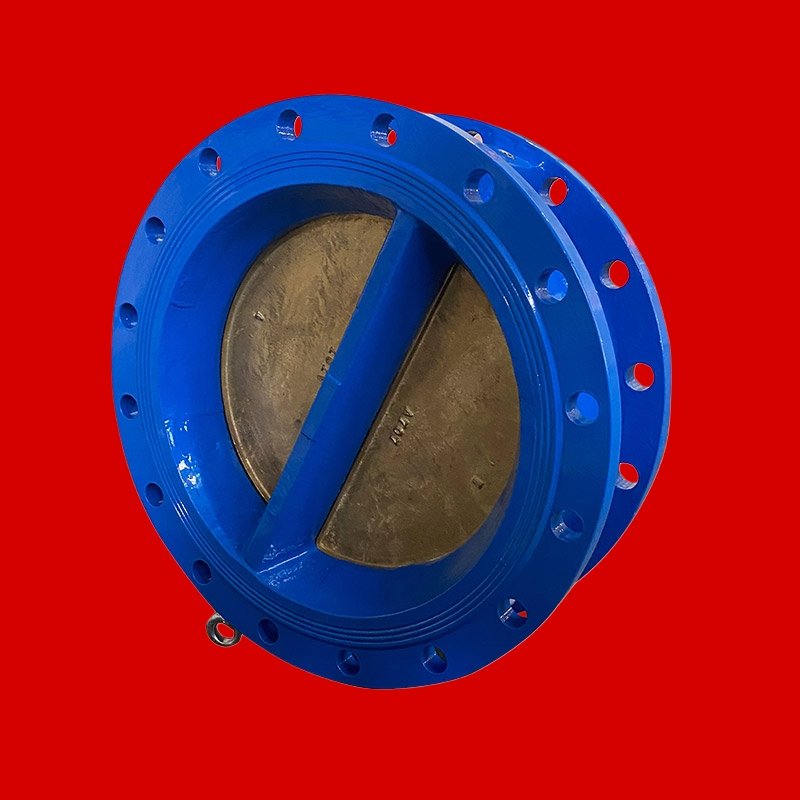
Cast Iron Dual Wafer Plate Check Valve

Cast Iron Dual Wafer Plate Check Valve Supplier India | KELOR

Cast Iron Dual Wafer Plate Check Valve — Supplier in India | KELOR

Krishna Industries (KELOR), based in Ahmedabad, Gujarat, supplies Cast Iron Dual Wafer Plate Check Valves in PN10, PN16, and ANSI Class 150 pressure ratings — spring-loaded non-slam design — sizes 50mm to 600mm (2″ to 24″) — EPDM, NBR, and PTFE seat options — cast iron body with stainless steel hinge pins and springs — API 594 and DIN 3202 standards — water, wastewater, HVAC, fire protection, pump discharge — from ₹800/piece — MOQ 5 Pcs — Pan India dispatch from Ahmedabad.

GST invoice with HSN 8481 80 90 for all check valve dispatches. WhatsApp specifications for pricing within 2 hours during business hours.

⚡ Quick Reference

SupplierKrishna Industries (KELOR) — Ahmedabad, Gujarat
Valve TypeDual Wafer Plate Check Valve (NRV)
Pressure RatingPN10 / PN16 / ANSI Class 150
End ConnectionWafer Type (Between Flanges)
Body MaterialCast Iron (GG25 / FC250)
Size Range50mm to 600mm (2″ to 24″)
StandardsAPI 594 / DIN 3202
MOQ5 Pieces per size

What Is a Dual Wafer Plate Check Valve?

A dual wafer plate check valve (also called a double-door check valve, twin-plate check valve, or silent check valve) is a non-return valve that permits fluid flow in one direction and automatically prevents reverse flow. Unlike conventional swing check valves that use a single disc hinged at the top of the body, the dual plate design uses two spring-loaded plates mounted on a central hinge pin inside a compact wafer body. When forward flow enters the valve, the pressure differential overcomes the spring force and both plates fold open symmetrically, creating an unobstructed passage for the fluid. When flow stops or begins to reverse, the stainless steel torsion springs immediately push both plates back to the closed position, sealing against the body seat rings.

The wafer design means the valve has no flanges of its own — it is installed by sandwiching the valve body between two pipe flanges, which are then bolted together through the valve. This eliminates the need for independent flange connections on the valve itself, resulting in a significantly lighter and more compact valve compared to flanged swing or lift check valves. For example, a DN100 dual plate wafer check valve has a face-to-face dimension of only 65 mm (DIN 3202 short pattern), compared to approximately 229 mm for a flanged swing check valve of the same size. This compact profile makes dual plate check valves the preferred choice for retrofit installations where space between existing flanges is limited, for high-rise building risers where weight savings matter, and for pump stations where multiple check valves must be installed in close proximity.

KELOR supplies cast iron dual wafer plate check valves designed and constructed in accordance with API 594 (Wafer and Wafer-Lug Check Valves) and DIN 3202 (Face-to-Face Dimensions) standards. The cast iron body provides the mechanical strength required for industrial service, while the stainless steel internal components — hinge pins, torsion springs, and optional SS disc plates — ensure corrosion resistance and reliable operation over thousands of opening and closing cycles. These valves are supplied across India for water supply, wastewater treatment, HVAC chilled water and heating systems, fire protection networks, pump discharge lines, chemical process piping, and general industrial applications.

How It Works — Spring-Loaded Non-Slam Mechanism

The operating principle of a dual plate check valve centres on the interaction between two spring-loaded plates, a central hinge pin, and the fluid dynamics within the valve body. Understanding this mechanism is essential for correctly specifying the valve for your application and for troubleshooting operational issues such as chattering, excessive pressure drop, or premature seat wear. The following step-by-step description covers the complete operating cycle from fully closed through fully open and back to fully closed.

1

Forward Flow Opens the Plates

When fluid flows in the forward direction, the velocity pressure (dynamic head) pushes against both plates, overcoming the closing force of the stainless steel torsion springs. Both plates swing open simultaneously on the central hinge pin, folding into the body cavities on either side of the flow passage.

2

Full Bore Flow Passage

When fully open, the plates are approximately parallel to the flow direction and recessed into the body cavities. This creates an unobstructed flow passage with a pressure drop of approximately 30 to 40 percent lower than a single plate swing check valve of the same nominal size, reducing energy losses across the valve.

3

Flow Deceleration Triggers Closure

When the pump stops or flow velocity decreases, the dynamic pressure on the plates drops. The torsion springs begin pushing the plates toward the closed position. Because the plates travel only a short angular distance (approximately 60 to 70 degrees), closure begins rapidly even before flow fully stops.

4

Spring-Seated Shutoff (Non-Slam)

The torsion springs drive both plates to seat simultaneously against the body seat rings (EPDM, NBR, or PTFE). Closure occurs in milliseconds, well before reverse flow can develop any significant velocity. This spring-assisted rapid closure is the defining characteristic that eliminates water hammer and earns these valves the name “non-slam” or “silent” check valves.

⚡ Why Spring-Loaded Closure Matters

In a swing check valve or a single plate wafer check valve without springs, the disc relies entirely on reverse flow velocity to push it shut. This means the valve remains open for a measurable time after forward flow stops, allowing a reverse flow column to build up momentum before the disc finally slams closed against the seat. That slam creates a pressure spike (water hammer) that can damage pipes, fittings, pumps, and supports. The spring-loaded mechanism in a dual plate check valve eliminates this problem entirely by initiating closure the instant flow velocity drops below the cracking pressure threshold. The spring force — not reverse flow — closes the valve. This makes dual plate check valves essential for pumping stations with frequent starts and stops, long discharge pipelines, and installations where water hammer protection is a primary design concern.

Water Hammer Prevention

Water hammer is one of the most damaging phenomena in industrial piping systems. It occurs when the momentum of a fluid column in a pipe is suddenly stopped or reversed, creating a pressure surge that can exceed the normal working pressure by 5 to 10 times. In severe cases, water hammer can burst pipes, fracture valve bodies, loosen pipe supports, and damage pump casings. The root cause is almost always a check valve that closes too slowly, allowing reverse flow to develop before the valve finally seats.

The dual plate check valve addresses this problem through three design features that work together. First, the spring-loaded mechanism actively closes the valve rather than passively waiting for reverse flow. The torsion springs store energy while the valve is open and release it immediately when the flow velocity drops, driving both plates to the seated position. Second, the short stroke of the dual plate design (approximately 60 to 70 degrees of plate rotation compared to 90 degrees or more for swing check valves) means the plates traverse a smaller angular distance to reach the closed position, reducing the time from flow cessation to full closure to milliseconds. Third, the dual plate design provides two independent sealing surfaces that close simultaneously, distributing the seating load and reducing the impact force on any single seat point.

⚠ Water Hammer Risk Factors

Water hammer severity increases with longer pipe runs, higher flow velocities, and faster-acting pumps (especially VFD-driven pumps that can stop rapidly). The following conditions indicate elevated water hammer risk and make a dual plate non-slam check valve the correct selection: pump discharge lines longer than 50 metres, pipelines with flow velocities above 2.5 metres per second, pumping stations with multiple pumps and check valves, systems with rapid pump start–stop cycles, and installations with vertical risers (high-rise buildings, cooling towers). In these applications, using a swing or single plate check valve without spring assistance creates a significant risk of repeated water hammer events that will progressively damage the piping system over time.

Dual Plate vs Single Plate Wafer Check Valve

When selecting a wafer type non-return valve, engineers commonly choose between the single plate (swing disc) design and the dual plate (double door) design. While both are wafer-mounted between flanges and serve the same basic function of preventing reverse flow, their internal mechanisms, performance characteristics, and suitability for different applications differ significantly. The following comparison table covers the key technical and operational differences to help you make the correct selection for your piping system.

Dual Plate Single Plate
ParameterDual Plate Check ValveSingle Plate Check Valve
Closure Mechanism Spring-loaded torsion springs actively push plates closed Gravity or reverse flow pressure pushes disc closed — no spring assistance
Water Hammer Non-slam closure — plates close before reverse flow develops — minimal water hammer risk Slam closure — disc closes only after reverse flow has developed — significant water hammer risk on pump discharge lines
Pressure Drop Low (30 to 40 percent less than single plate) — plates recess into body cavities when open Higher — single disc remains partially in the flow stream even when fully open
Response Time Fast — spring force closes valve in milliseconds when flow decelerates Slow — depends on reverse flow velocity and disc weight to drive closure
Sealing Two independent sealing surfaces (both plates) close simultaneously Single sealing surface — one disc presses against one seat
Face-to-Face (DN100) 65 mm (DIN 3202 short pattern) 70 to 80 mm (varies by standard)
Weight Lighter than single plate of equivalent size due to compact wafer profile Heavier — larger disc and body mass
Noise Level Silent operation — spring absorbs closing impact, called “silent check valve” Noticeable slamming noise when disc closes, especially at higher pressures
Cracking Pressure Higher (typically 0.1 to 0.3 bar due to spring force) — requires minimum forward flow velocity to open Lower (depends on disc weight, typically 0.03 to 0.1 bar) — opens at very low flow velocities
Service Life Longer — spring-cushioned closing reduces seat and disc wear from impact Shorter in cycling service — repeated slam impact degrades seat over time
Best For Pump discharge, water hammer sensitive systems, HVAC, fire protection, frequent cycling Gravity-fed lines, low-velocity systems, applications where lowest possible cracking pressure is needed

💡 Selection Rule

For pump discharge lines, water distribution systems, HVAC circuits, fire protection networks, and any application with frequent pump starts and stops, the dual plate check valve is the correct choice because its spring-loaded non-slam mechanism prevents water hammer and provides silent operation. For gravity-fed drainage lines, low-velocity overflow circuits, and applications where the fluid column has very low inertia, a single plate check valve may be adequate because the reverse flow velocity will be too low to cause significant water hammer. When in doubt, the dual plate design provides superior performance in nearly all industrial applications at a modestly higher unit cost.

Material of Construction

The dual plate wafer check valve is a precision assembly where each component serves a specific function. The body provides structural integrity and the mating surface for the wafer installation between flanges. The disc plates provide the moving closure element. The seat rings provide the sealing interface. The hinge pin provides the rotation axis for the plates. The torsion springs provide the active closing force. Selecting the correct material for each component based on the service media, temperature, and pressure ensures reliable long-term operation.

ComponentMaterialFunction and Notes
Body Cast Iron (GG25 / FC250) Provides structural rigidity for wafer mounting between flanges — machined seating surfaces for the disc plates — compact wafer profile with central bore and plate cavities
Disc / Plate Cast Iron or Stainless Steel (SS304/SS316) Two plates mounted on the central hinge pin — SS plates specified for corrosion resistance in chemical or outdoor installations — CI plates for economical general service
Seat EPDM / NBR / PTFE (replaceable inserts) Elastomeric or PTFE seat rings bonded into the body — provide the sealing surface against the disc plates — selected based on media compatibility and temperature
Hinge Pin Stainless Steel (SS304 / SS316) Central pin on which both plates rotate — stainless steel prevents corrosion and galling at the pin–plate interface — critical for smooth plate movement over thousands of cycles
Torsion Springs Stainless Steel Two torsion springs (one per plate) provide the active closing force — spring force calibrated to close the valve before reverse flow develops while keeping cracking pressure within acceptable limits
Retainer / Cover Cast Iron or Ductile Iron Retains the spring and hinge pin assembly inside the body — bolted to the body with gasket sealing — removable for inspection and seat replacement

Seat Material Selection Guide

The seat material determines the chemical compatibility, temperature range, and sealing performance of the dual plate check valve. Since the seat rings are the replaceable wearing component, selecting the correct material at the time of ordering directly affects valve service life, maintenance frequency, and overall system reliability. KELOR supplies three standard seat material options to cover the range of industrial service conditions encountered in Indian piping systems.

Seat MaterialTemp RangeBest ForAvoid
EPDM -10°C to +120°C Water supply, municipal water, HVAC chilled and hot water, fire protection, general industrial water circuits — excellent resistance to water, weathering, ozone, and diluted acids/alkalis — the most commonly specified seat material for CI dual plate check valves Petroleum oils, hydrocarbons, concentrated acids, solvents — EPDM swells and degrades in oil and petrochemical environments
NBR -10°C to +150°C Oil and petroleum product pipelines, industrial water with traces of oil, lubricating oil circuits, fuel handling systems — good oil and fuel resistance — moderate chemical resistance Prolonged outdoor exposure (ozone degrades NBR), ketones, esters, chlorinated solvents — NBR has limited weathering resistance compared to EPDM
PTFE -10°C to +150°C (higher for special grades) Chemical process piping, aggressive media, pharmaceutical, food-grade applications — widest chemical compatibility of all seat options — excellent temperature resistance Applications requiring very soft conformability (PTFE is harder than elastomers and may require higher seating force) — higher cost than EPDM or NBR

Standard Dimensions

The following table shows the standard dimensions for Cast Iron Dual Wafer Plate Check Valves conforming to DIN 3202 short-pattern face-to-face dimensions. These dimensions ensure interchangeability between valves from different suppliers. The dimension A represents the face-to-face thickness (the distance between the two flange faces when the valve is installed). The dimension ₽B represents the maximum outside diameter of the valve body. KELOR supplies valves with dimensions as per DIN 3202 for PN10/PN16 ratings and API 594 for ANSI Class 150 ratings.

Nominal Size (DN)InchA — Face-to-Face (mm)₽B — Body OD (mm)
50 2″ 55 97
65 2½″ 55 110
80 3″ 64 129
100 4″ 65 160
125 5″ 72 192
150 6″ 79 215
200 8″ 98 272

Technical Specifications

ParameterDetails
Valve Type Dual Wafer Plate Check Valve (Non-Return Valve)
Body Material Cast Iron (GG25 / FC250)
Pressure Rating PN10 / PN16 / ANSI Class 150
End Connection Wafer Type — Installed Between Standard Flanges
Size Range 50mm to 600mm (2″ to 24″)
Design Standard API 594 / DIN 3202
Temperature Range -10°C to +120°C (EPDM) / -10°C to +150°C (NBR / PTFE)
Seat Options EPDM / NBR / PTFE
Flow Direction Unidirectional / Non-Return
Cracking Pressure 0.1 to 0.3 bar (spring dependent)

Applications Across Indian Industries

Dual plate wafer check valves are among the most versatile non-return valve types in industrial piping, suitable for a wide range of media, pressures, and temperatures. Their compact wafer design, spring-loaded non-slam operation, and low pressure drop make them the default check valve choice for many piping applications across Indian industrial, municipal, and commercial sectors. The following are the primary application areas where KELOR supplies cast iron dual plate wafer check valves.

Water Treatment and Distribution

Municipal water treatment plants, pumping stations, distribution mains, and booster pump discharge lines. The non-slam closure prevents water hammer during frequent pump starts and stops, protecting pipeline integrity and reducing maintenance costs.

Wastewater and Sewage

Sewage pumping stations, effluent treatment plants, and drainage discharge lines. The dual plate design handles the variable flow conditions and solids-laden fluids encountered in wastewater systems, with replaceable seat inserts for easy maintenance.

HVAC and Building Services

Chilled water circuits, heating hot water loops, cooling tower fill lines, and condensate return systems in commercial buildings, hospitals, IT parks, and industrial facilities. The compact wafer profile is ideal for tight mechanical room spaces.

Fire Protection Systems

Fire hydrant networks, sprinkler system risers, fire water pump discharge lines, and jockey pump circuits. Reliable non-return operation ensures that fire water remains available at system pressure at all times and prevents backflow during pump cycling.

Pump Discharge Protection

Installed directly at the discharge of centrifugal pumps in water supply, process, and utility systems. The check valve protects the pump from reverse flow and backspin when the pump stops, preventing internal damage and reducing restart torque requirements.

Chemical Process Plants

Chemical dosing lines, neutralisation circuits, and process piping handling non-aggressive to mildly aggressive fluids. PTFE seats provide broad chemical compatibility. Cast iron body with SS internals offers adequate corrosion resistance for many chemical plant services.

Industrial Cooling Water

Process cooling water circuits, heat exchanger supply and return lines, cooling water distribution headers, and once-through cooling systems. The low pressure drop of the dual plate design reduces pumping energy costs in continuous cooling water circulation.

Irrigation and Agriculture

Lift irrigation pump discharge lines, canal outlet valves, agricultural water distribution networks, and drip irrigation main lines. The economical cost and robust cast iron construction suit large-scale irrigation infrastructure across India.

Installation Guidelines

Correct installation of a dual plate wafer check valve is critical for achieving reliable non-return operation, preventing water hammer, and maximising seat life. The compact wafer design means the valve is sandwiched between two pipe flanges, and the installation orientation directly affects the valve’s ability to open and close properly. The following guidelines cover the essential installation practices for cast iron dual plate wafer check valves in both horizontal and vertical piping configurations.

  • Verify flow direction — every dual plate check valve has a flow direction arrow cast or stamped on the body. The arrow must point in the direction of intended forward flow. Installing the valve backwards will prevent it from opening and will block flow entirely.
  • Install horizontally with hinge pin vertical — the preferred installation orientation is horizontal with the hinge pin in the vertical plane. This ensures both plates open symmetrically and close evenly under spring force.
  • Vertical installation with upward flow only — if horizontal installation is not possible, the valve may be installed vertically with flow entering from below (upward). The flow direction arrow must point upward. Vertical downward flow installation is not permitted.
  • Provide 5 pipe diameters upstream — maintain at least 5 nominal pipe diameters of straight pipe upstream of the check valve. This allows the flow profile to develop uniformly so both plates open symmetrically. Turbulent or asymmetric flow causes uneven plate opening and premature wear.
  • Provide 2 pipe diameters downstream — maintain at least 2 nominal pipe diameters of straight pipe downstream to prevent flow disturbances from affecting the valve closure.
  • Clean pipeline before installation — flush the pipeline to remove all debris, welding slag, and construction material. Particulate matter trapped between the plates and seats is the most common cause of leakage in newly installed check valves.
  • Use proper flange gaskets — full-face gaskets are recommended for wafer installation. The gasket must not protrude into the valve bore, which would obstruct the plates and cause operational failure.
  • Tighten flange bolts evenly — tighten bolts in a criss-cross pattern gradually and evenly. Uneven bolt tightening can distort the valve body, misalign the seats, and prevent proper plate closure.
  • Do not weld near the valve — heat from nearby welding can damage the elastomeric seats and degrade the torsion springs. If welding is required on the adjacent piping, remove the valve or provide adequate heat shielding.
  • Do not use as a isolation valve — a check valve is not designed for positive shut-off against forward pressure. Install an isolation valve (gate valve, butterfly valve, or ball valve) upstream of the check valve for system isolation during maintenance.

⚡ Minimum Pipe Straight Lengths

For a 100mm (4 inch) dual plate check valve: provide at least 500 mm of straight pipe upstream and 200 mm downstream. For a 200mm (8 inch) valve: provide at least 1000 mm upstream and 400 mm downstream. If these straight lengths cannot be achieved due to space constraints (for example, an elbow immediately upstream), consider installing a flow straightener or relocating the check valve to a position with adequate straight pipe. Inadequate upstream straight length is the single most common installation error and results in uneven plate opening, chattering, vibration, and premature seat failure.

Why Choose KELOR

🛠

Industrial Valves, Fasteners, Gaskets and Safety Equipment

KELOR sources and supplies a comprehensive range of industrial products — check valves, gate valves, butterfly valves, ball valves, solenoid valves, gaskets, fasteners, and safety equipment — from verified vendors under one roof.

Pan India Dispatch from Ahmedabad

All dual plate check valve orders are dispatched from the Ahmedabad warehouse via reliable transport networks. Standard sizes in PN10/PN16 are dispatched within 5 to 7 working days. Express dispatch available for urgent project requirements.

💰

Competitive Pricing — From ₹800/Piece

Starting from ₹800/piece for standard sizes in PN10/PN16. Bulk project pricing, OEM blanket rates, and annual contract pricing available. GST invoice under HSN 8481 80 90 provided with every dispatch.

📦

MOQ 5 Pieces, Project BOM Orders Welcome

Minimum order quantity of 5 pieces per size and pressure rating. Project BOM orders combining multiple sizes and specifications are supplied together with one GST invoice and single shipment.

📞

Response Within 2 Hours During Business Hours

WhatsApp your specifications — size, pressure rating, seat material, and quantity — and receive pricing within 2 hours. Technical queries and datasheet requests handled by the KELOR sales team.

👥

Dedicated Sales Support for Every Order

From enquiry to delivery, KELOR provides single-point contact for order tracking, documentation, and after-sales support. Email communication and WhatsApp updates keep you informed at every stage.

Commercial Information

Pricing, Delivery and Terms

Starting Price₹800 / Piece (PN10, standard sizes)
Price BasisEx-Ahmedabad Warehouse
Payment TermsAdvance Payment
DeliveryReady Stock / Fast Dispatch
MOQ5 Pieces per size and rating
HSN Code8481 80 90
PackagingStandard industrial packing for transport
GST InvoiceProvided with every dispatch

Need a Quote for Cast Iron Dual Wafer Plate Check Valves?

WhatsApp your specifications — size, pressure rating, seat material, quantity — and get pricing within 2 hours during business hours. Response within 24 hours on email enquiries.

💬 Get Price on WhatsApp ✉ Email for Quote

Frequently Asked Questions

What is the difference between a dual plate and single plate wafer check valve?
A single plate wafer check valve uses one disc that swings open on a hinge pin to allow forward flow, and closes by gravity or line back-pressure when flow reverses. It has a larger stroke, slower closing speed, and higher pressure drop compared to dual plate designs. A dual plate wafer check valve uses two spring-loaded plates that fold together symmetrically when flow enters. The spring mechanism enables rapid closure before reverse flow develops, which significantly reduces water hammer and slamming. Dual plate valves also have approximately 30 to 40 percent lower pressure drop than single plate valves of the same size, meaning less energy is lost across the valve. The dual plate design provides two independent sealing surfaces for better shutoff. For pump discharge lines, water distribution systems, and applications with frequent pump cycling, dual plate check valves are the preferred choice because of their fast non-slam closing action and compact wafer profile that fits between standard flanges without requiring additional piping space.
How does a dual plate check valve prevent water hammer?
Water hammer occurs when reverse flow develops in a pipeline before the check valve closes, causing a sudden pressure surge when the valve finally seats. A dual plate check valve prevents water hammer through its spring-loaded mechanism. When forward flow stops or begins to decelerate, the stainless steel torsion springs immediately push both plates toward the closed position. Because the plates travel only a short distance from fully open to fully closed (the plate angle changes by approximately 60 to 70 degrees), closure happens in milliseconds, well before reverse flow can build up velocity. This rapid spring-assisted closure is why dual plate check valves are also called non-slam or silent check valves. The result is that the valve is fully seated before the fluid column in the pipe reverses direction, eliminating the sudden impact that causes water hammer pressure spikes. For pumping stations with frequent starts and stops, or systems with long discharge pipelines, dual plate check valves provide superior water hammer protection compared to swing or single plate designs that rely on gravity for closure.
Can a dual plate wafer check valve be installed vertically?
Yes, a dual plate wafer check valve can be installed vertically, but only with upward flow direction. In a vertical installation, the flow must enter from below and exit upward. This is critical because the spring-loaded plates rely on forward flow velocity to overcome the spring force and open, and they rely on the spring to close when flow stops. In vertical downward flow, the plates would remain closed because the flow would be working against both the spring and gravity. For vertical upward flow installation, the hinge pin must be in the horizontal plane, and the flow direction arrow cast on the valve body must point upward. Always verify that the pipeline is clean and free of debris before installation, as particulate matter can lodge between the plates and seats, preventing full closure. Horizontal installation is generally preferred because it provides the most consistent flow profile across both plates.
What is the standard face-to-face dimension for a 100mm dual plate check valve?
The face-to-face dimension for a 100mm (DN100 or 4 inch) dual plate wafer check valve is approximately 65 mm per DIN 3202 (short pattern) for PN10/PN16 ratings. For the same size in API 594 Class 150, the face-to-face dimension is typically 65 mm as well. These compact dimensions are one of the primary advantages of dual plate wafer check valves — they are significantly shorter than swing check valves of the same size, which typically require 229 mm face-to-face for DN100. The wafer design means the valve is sandwiched directly between two flanges without any independent flange connections of its own. This compact profile makes dual plate check valves ideal for retrofit installations where space between existing flanges is limited, and for new installations where reducing piping length and weight is a design priority.
Which seat material should I select for a dual plate check valve in a water pipeline?
For water supply and distribution pipelines, EPDM (Ethylene Propylene Diene Monomer) is the recommended seat material. EPDM provides excellent resistance to water, weathering, and ozone, and it maintains flexibility and sealing performance over a wide temperature range from minus 10 degree Celsius to plus 120 degree Celsius. EPDM also has good resistance to diluted acids and alkalis, making it suitable for treated municipal water and many industrial water circuits. NBR (Nitrile Butadiene Rubber) is an alternative for water lines where the water may contain traces of oil or petroleum products, as NBR has better oil resistance than EPDM. However, NBR is not recommended for prolonged exposure to sunlight or ozone. PTFE (Teflon) seats are used for chemical process applications or where the widest possible chemical compatibility is required, but PTFE has higher cost and slightly less conformability than elastomeric seats. For the majority of water and HVAC applications in India, EPDM seats provide the best balance of sealing performance, temperature range, service life, and cost.
What is the minimum pipe length required before and after a dual plate check valve?
Industry practice and most valve manufacturers recommend a minimum of 5 pipe diameters of straight pipe length upstream (before) the check valve and a minimum of 2 pipe diameters downstream (after) the check valve. For example, for a 100mm (4 inch) dual plate check valve, provide at least 500 mm of straight pipe upstream and at least 200 mm downstream. The upstream straight length allows the flow profile to develop uniformly, ensuring that both plates of the dual plate valve open symmetrically and evenly. Turbulent or asymmetric flow entering the valve can cause one plate to open more than the other, leading to uneven wear, premature seat damage, and potential vibration. If 5 diameters of straight pipe cannot be provided upstream due to space constraints, a flow straightener or pipe spool can be installed to reduce turbulence. These recommendations apply to horizontal installations; vertical installations require the same straight pipe lengths with upward flow direction.
What is the MOQ and delivery time for CI dual wafer plate check valves from KELOR?
MOQ is 5 pieces per size and specification. Project BOM orders combining multiple sizes and pressure ratings in a single order are supplied together with one GST invoice under HSN 8481 80 90. Standard sizes from 50mm (2 inch) to 200mm (8 inch) in PN10 and PN16 are dispatched within 5 to 7 working days from the Ahmedabad warehouse. Sizes above 200mm and ANSI Class 150 ratings may require 10 to 15 working days depending on stock availability. WhatsApp the size, pressure rating, seat material, and quantity for pricing within 2 hours during business hours. KELOR supports project orders, OEM bulk requirements, and export enquiries with documentation tailored to buyer specifications.
What standards govern the design of dual plate wafer check valves?
Dual plate wafer check valves are designed and constructed to several international standards depending on the pressure class and market requirements. API 594 is the primary standard for dual plate check valves and covers design, materials, face-to-face dimensions, wall thickness, and pressure-temperature ratings for wafer, wafer-lug, and double flanged check valves. DIN 3202 specifies face-to-face dimensions for the European market in PN10, PN16, PN25, and PN40 pressure ratings. API 598 covers inspection and pressure testing requirements for check valves. ASME B16.34 covers pressure-temperature ratings, materials, and dimensional requirements for flanged, threaded, and welding-end valves. For the Indian market, IS 515 covers cast iron gate, globe, and check valves. KELOR supplies dual plate check valves conforming to API 594 and DIN 3202 standards with dimensions interchangeable between different suppliers.

Krishna Industries (KELOR) supplies Cast Iron Dual Wafer Plate Check Valves in PN10, PN16, and ANSI Class 150 from Ahmedabad, Gujarat — sizes 50mm to 600mm — spring-loaded non-slam design — EPDM / NBR / PTFE seats — API 594 / DIN 3202 — starting from ₹800/piece — MOQ 5 Pcs — Pan India dispatch with GST-compliant documentation. WhatsApp specifications for pricing within 2 hours during business hours.

0000000