
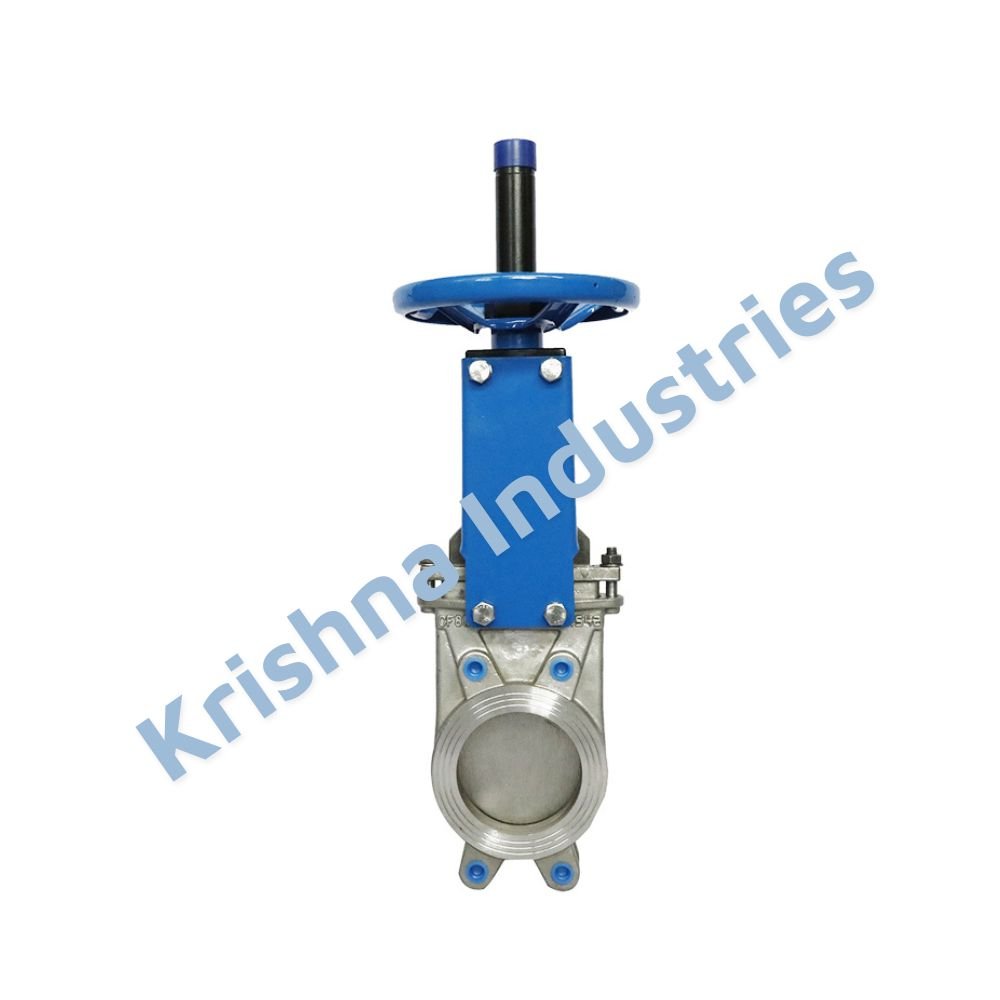
The Ultimate Guide to Knife Edge Gate Valves: Working Principle, Applications & Selection
When dealing with thick, abrasive, or highly viscous media, traditional valves often fail, leading to clogging, leakage, and costly downtime. This is where the Knife Edge Gate Valve (also known as a knife gate valve) shines.
Designed specifically to cut through heavy slurry, pulp, and powders, this valve is an indispensable component in demanding industrial environments. At Kelor Valves, we engineer high-performance knife edge gate valves to ensure zero leakage, maximum durability, and seamless flow control.
In this comprehensive guide, we will break down exactly what a knife edge gate valve is, how it works, where it is used, and why it outperforms traditional gate valves.
What is a Knife Edge Gate Valve?
A Knife Edge Gate Valve is a type of linear motion valve designed to start or stop the flow of media, particularly those that are thick, abrasive, or contain suspended solids.
Unlike standard gate valves, the gate (or disc) in a knife edge gate valve features a sharpened, beveled edge. This sharp edge allows the gate to slice through dense media (like slurry, pulp, or wastewater) as it closes, preventing material buildup and ensuring a tight, bubble-tight shutoff against the resilient seat.
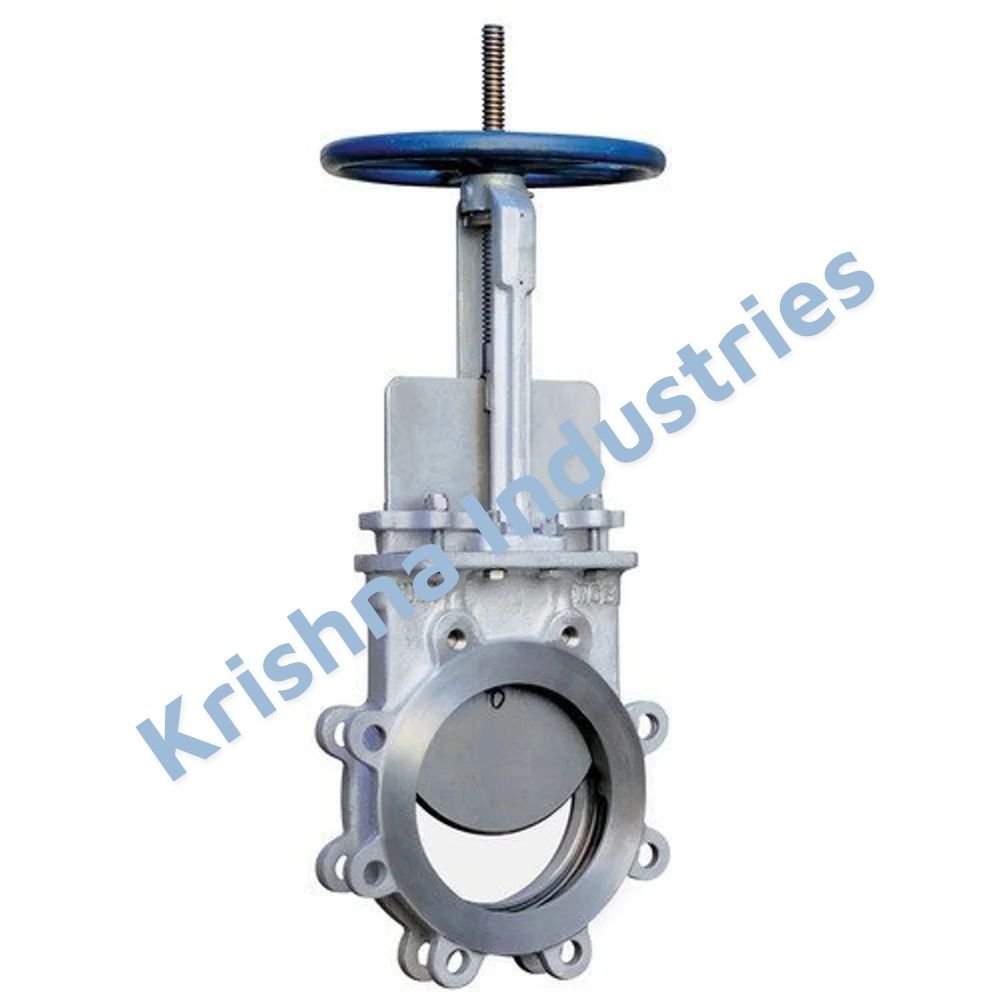
How Does a Knife Edge Gate Valve Work?
The working principle of a knife edge gate valve is straightforward yet highly effective:
- Open Position: The gate is fully retracted into the bonnet, allowing media to flow through the valve with minimal pressure drop (full port design).
- Closing Action: As the handwheel, pneumatic cylinder, or electric actuator is engaged, the sharpened gate moves downward.
- Cutting Through Media: The knife-like edge slices through thick slurry, fibers, or powders, clearing a path and preventing clogging.
- Sealing: The gate presses firmly against a flexible, resilient seat (often made of PTFE, EPDM, or Urethane), creating a tight seal that prevents leakage, even in low-pressure systems.
Pro Tip: Because of their design, knife edge gate valves are primarily designed for on/off service, not for throttling or flow regulation. Using them for throttling can cause vibration and premature wear on the gate and seat.
Key Components & Materials of Construction
At Kelor Valves, we build our knife edge gate valves to withstand harsh environments. The key components include:
- Body: Typically made from Cast Iron, Carbon Steel (WCB), or Stainless Steel (CF8/CF8M) for corrosion resistance.
- Gate: The heart of the valve. Made from high-grade Stainless Steel (304 or 316) with a precision-ground, sharpened edge.
- Seat: Resilient materials like EPDM, NBR, PTFE, or Viton, chosen based on the chemical compatibility of the media.
- Stem: A threaded or smooth stainless steel stem that connects the actuator/handwheel to the gate.
- Packing: Adjustable gland packing (e.g., PTFE V-ring) to prevent fugitive emissions and external leakage around the stem.
Types of Knife Edge Gate Valves
Choosing the right valve depends on your pipeline and operational needs. The main types include:
- Uni-Directional vs. Bi-Directional:
- Uni-directional valves seal pressure from one side only (clearly marked with a flow arrow).
- Bi-directional valves can seal pressure from either direction, offering greater installation flexibility.
- Wafer vs. Lug Style:
- Wafer valves are sandwiched between two pipeline flanges, making them lightweight and cost-effective.
- Lug valves have threaded inserts, allowing them to be bolted to one flange, which is ideal for end-of-line service or easy maintenance.
- Actuation Methods: Available in Manual (handwheel/lever), Pneumatic (for fast, automated cycling), and Electric (for precise remote control) configurations.
Top Industries & Applications
Due to their ability to handle difficult media, Kelor Valves’ knife edge gate valves are trusted across multiple sectors:
- Wastewater & Water Treatment Plant: Perfect for sludge, raw sewage, and effluent lines where clogging is a major risk.
- Pulp & Paper Mill Plant: It can easily handle rough wood chips, pulp, and chemical mixtures.
- Mining & Mineral Processing Unit : Ideal for tailings, fly ash, and heavy mineral slurries.
- Chemical & Petrochemical: Manages corrosive powders and viscous chemical compounds.
- Food & Beverage Plants: Sanitary-grade stainless steel options are available for handling food pulps, sugars, and wastewater.
- Cement & Power Plants: Excellent for dry powder handling, fly ash, and abrasive bulk materials.
Knife Edge Gate Valve vs. Traditional Gate Valve
Many buyers wonder how a knife edge gate valve differs from a standard gate valve. Here is a quick comparison:
| Feature | Knife Edge Gate Valve | Traditional Gate Valve |
|---|---|---|
| Media Type | Slurry, pulp, powders, viscous fluids | Clean water, oil, gas, steam |
| Gate Design | Thin, sharpened edge to cut through media | Thick, wedge-shaped solid gate |
| Pressure Rating | Low to medium pressure | Medium to high pressure |
| Clogging Risk | Very low (self-cleaning action) | High (cavities can trap solids) |
| Weight & Space | Lightweight, compact face-to-face dimension | Heavy, bulky |
| Primary Use | On/Off control in abrasive services | On/Off control in clean fluid services |
Maintenance & Best Practices
To maximize the lifespan of your knife edge gate valve, follow these best practices:
- Cycle Regularly: Even if the valve is normally left open or closed, cycle it occasionally to prevent the gate from seizing or packing from hardening.
- Check the Packing: The gland packing is adjustable. If you notice minor stem leakage, gently tighten the gland nuts. Do not tighten too much, as this could harm the stem.
- Inspect the Seat: For abrasive services, periodically inspect the resilient seat for wear and replace it if the seal is compromised.
- Keep it Clean: Ensure the exposed stem is free of dried slurry or debris, which can score the stem and cause packing failure.
Why Choose Kelor Valves for Your Knife Edge Gate Valves?
At Kelor Valves, we don’t just manufacture valves; we engineer reliable flow solutions. Here is why industries trust us:
- Premium Materials: We use only certified, high-grade materials to ensure corrosion resistance and longevity.
- Customization: Need a specific face-to-face dimension, special alloy, or unique actuator? We tailor our valves to your exact project specifications.
- Rigorous Quality Control: Every valve undergoes strict pressure and seat leakage testing before dispatch. We also welcome third-party inspections (TPI).
- Expert Support Team by KELOR: Our engineering team is always ready to help you choose the right solution.
Frequently Asked Questions (FAQs)
Q1: Can a knife edge gate valve be used for throttling?
No. Knife edge gate valves are designed for full open or full closed (on/off) service. Using them for throttling can cause vibration, cavitation, and rapid wear of the gate and seat.
Q2: What is the maximum pressure rating for a knife edge gate valve?
They are generally designed for low to medium-pressure applications, typically up to PN10 or PN16 (Class 150), depending on the size and material.
Q3: How do I know if I need a uni-directional or bi-directional valve?
If the pressure in your pipeline only comes from one direction, a uni-directional valve is cost-effective. If flow or pressure can reverse, you must specify a bi-directional valve.
Ready to Optimize Your Flow Control?
Don’t let clogged valves and costly downtime disrupt your operations. Choose a Knife Edge Gate Valve engineered for reliability and performance.
Explore our complete range of industrial valves or speak directly with our engineering team to find the perfect solution for your application.
👉 Contact Kelor Valves Today for a Free Quote
📞 Call us: +91 93135 43530 | ✉️ Email: sales@kelorvalves.com