
resilient seat butterfly valve manufacturer in India, booted seat butterfly valve supplier, molded seat butterfly valve exporter, cartridge seat butterfly valve selection guide – Resilient seat butterfly valves are among the most widely used flow control valves in water, HVAC, fire protection, chemical processing, and general industrial applications. Their compact design, cost-effectiveness, and reliable shut-off performance make them the preferred choice for low to medium pressure services.
At KELOR, recognized as India’s biggest manufacturing, supplier and exporter of industrial valves, we engineer and supply a complete range of resilient seated butterfly valves in booted seat, molded seat, and cartridge seat designs, meeting global standards and diverse application needs.
What Is a Resilient Seat Butterfly Valve?
A resilient seat butterfly valve is a quarter-turn rotary valve that uses an elastomer-lined seat to provide tight shut-off against the valve disc. Unlike metal-seated butterfly valves, resilient seated designs rely on rubber or polymer materials such as EPDM, NBR, Viton, Neoprene, or PTFE to achieve bubble-tight sealing.
These valves are extensively used in:
- Water supply and distribution networks
- Wastewater and sewage treatment plants
- Fire protection and sprinkler systems
- HVAC and chilled water pipelines
- Chemical and process industries
The seat design is the most critical component influencing performance, durability, maintenance, and cost. The three most common resilient seat configurations are Booted Seat, Molded Seat, and Cartridge Seat.
Types of Resilient Seat Butterfly Valve Designs
1. Booted Seat Butterfly Valve
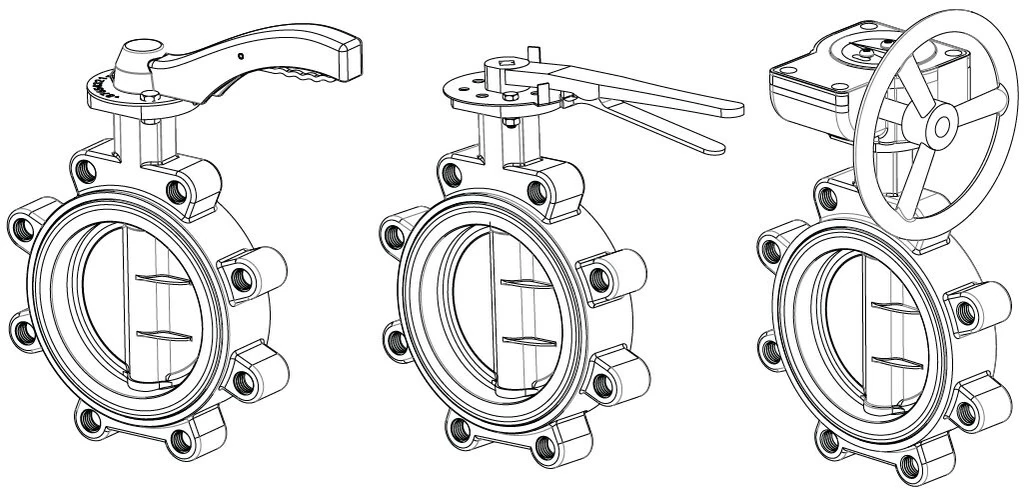
A booted seat butterfly valve features an elastomer seat that extends (or “boots”) over the valve body and flanges. This design fully isolates the valve body from the flowing media.
Key Characteristics of Booted Seat Design
- Seat covers internal body and flange faces
- Excellent corrosion protection
- Leak-proof sealing at flanges
- Commonly used in wafer-type butterfly valves
Advantages
- Prevents body corrosion in water and wastewater service
- Excellent sealing even with minor flange misalignment
- Lower manufacturing cost
Limitations
- Seat replacement usually requires valve replacement
- Not ideal for abrasive or high-temperature media
Typical Applications
- Potable water pipelines
- Municipal water supply
- Fire fighting systems
- HVAC systems
KELOR manufactures booted seat butterfly valves using premium-grade EPDM and NBR, complying with IS, DIN, BS, ANSI, and AWWA standards.
2. Molded Seat Butterfly Valve
In a molded seat butterfly valve, the elastomer seat is permanently bonded or molded directly into the valve body. This design is structurally robust and commonly used in standard industrial butterfly valves.
Key Characteristics of Molded Seat Design
- Seat vulcanized or bonded to valve body
- Uniform sealing surface
- Compact and lightweight construction
Advantages
- Cost-effective for high-volume applications
- Reliable shut-off performance
- Low torque requirement
Limitations
- Seat cannot be replaced independently
- Limited flexibility for aggressive chemicals
Typical Applications
- Industrial water lines
- Cooling water systems
- Low-pressure process pipelines
Molded seat butterfly valves from KELOR are widely supplied to OEMs, EPC contractors, and industrial distributors across India, the Middle East, Africa, and Southeast Asia.
3. Cartridge Seat Butterfly Valve
A cartridge seat butterfly valve uses a removable, replaceable elastomer or PTFE seat fitted into a machined groove inside the valve body. This design is preferred for demanding industrial and chemical applications.
Key Characteristics of Cartridge Seat Design
- Replaceable seat without changing valve body
- High chemical compatibility
- Extended service life
Advantages
- Lower long-term maintenance cost
- Suitable for corrosive and abrasive media
- Available in PTFE, EPDM, Viton options
Limitations
- Higher initial cost compared to molded or booted seat
- Slightly higher torque requirement
Typical Applications
- Chemical processing plants
- Pharmaceutical industries
- Acids, alkalis, and solvent services
KELOR cartridge seat butterfly valves are engineered for export markets, meeting stringent international specifications and long service expectations.
Comparison Table: Booted vs Molded vs Cartridge Seat Butterfly Valves
| Parameter | Booted Seat | Molded Seat | Cartridge Seat |
|---|---|---|---|
| Seat Replaceable | No | No | Yes |
| Corrosion Protection | Excellent | Moderate | Excellent |
| Initial Cost | Low | Low | High |
| Maintenance Cost | Low | Low | Low (Long Term) |
| Best For | Water, HVAC | General Industry | Chemical & Process |
How to Select the Right Resilient Seat Butterfly Valve
Selecting the correct seat design depends on several operational and commercial factors:
1. Media Type
Water and neutral fluids suit booted or molded seats, while chemicals require cartridge or PTFE-lined seats.
2. Temperature & Pressure
Higher temperatures and pressures favor cartridge seat designs due to superior material options.
3. Maintenance Philosophy
If downtime is critical, cartridge seat valves allow quick seat replacement without changing the valve body.
4. Budget & Lifecycle Cost
Booted and molded seats offer low upfront cost, while cartridge seats provide long-term savings.
Why Choose KELOR Resilient Seat Butterfly Valves?
- India’s biggest industrial valve manufacturing and export brand
- ISO-certified production facilities
- Wide range from DN40 to DN1200
- Wafer, Lug, and Double Flanged designs
- Bulk supply capability for projects and exports
KELOR supplies butterfly valves to water boards, infrastructure projects, EPC contractors, OEMs, and global distributors.
Frequently Asked Questions (FAQs)
1. What is the most common seat material for butterfly valves?
EPDM is the most commonly used seat material for water applications.
2. Are cartridge seat butterfly valves repairable?
Yes, the seat can be replaced without changing the valve body.
3. Which seat design is best for chemical service?
Cartridge seat with PTFE lining is recommended.
4. Do booted seat valves protect the valve body?
Yes, the seat fully isolates the body from the media.
5. Are molded seat valves cost-effective?
Yes, they are economical for standard industrial use.
6. Can resilient seat valves achieve bubble-tight shutoff?
Yes, when properly selected and installed.
7. What standards does KELOR follow?
IS, DIN, ANSI, BS, and AWWA standards.
8. Are KELOR valves suitable for export?
Yes, KELOR exports to over 25 countries.
9. Which seat design has the longest service life?
Cartridge seat designs offer the longest operational life.
10. Can KELOR supply valves in bulk quantities?
Yes, KELOR specializes in bulk manufacturing and project supplies.
Conclusion
Understanding the differences between booted, molded, and cartridge seat butterfly valves is essential for selecting the right valve for your application. Each design serves a specific operational and commercial need.
As India’s biggest manufacturer, supplier, and exporter of industrial valves, KELOR offers expert guidance, reliable products, and competitive pricing for all resilient seat butterfly valve requirements.