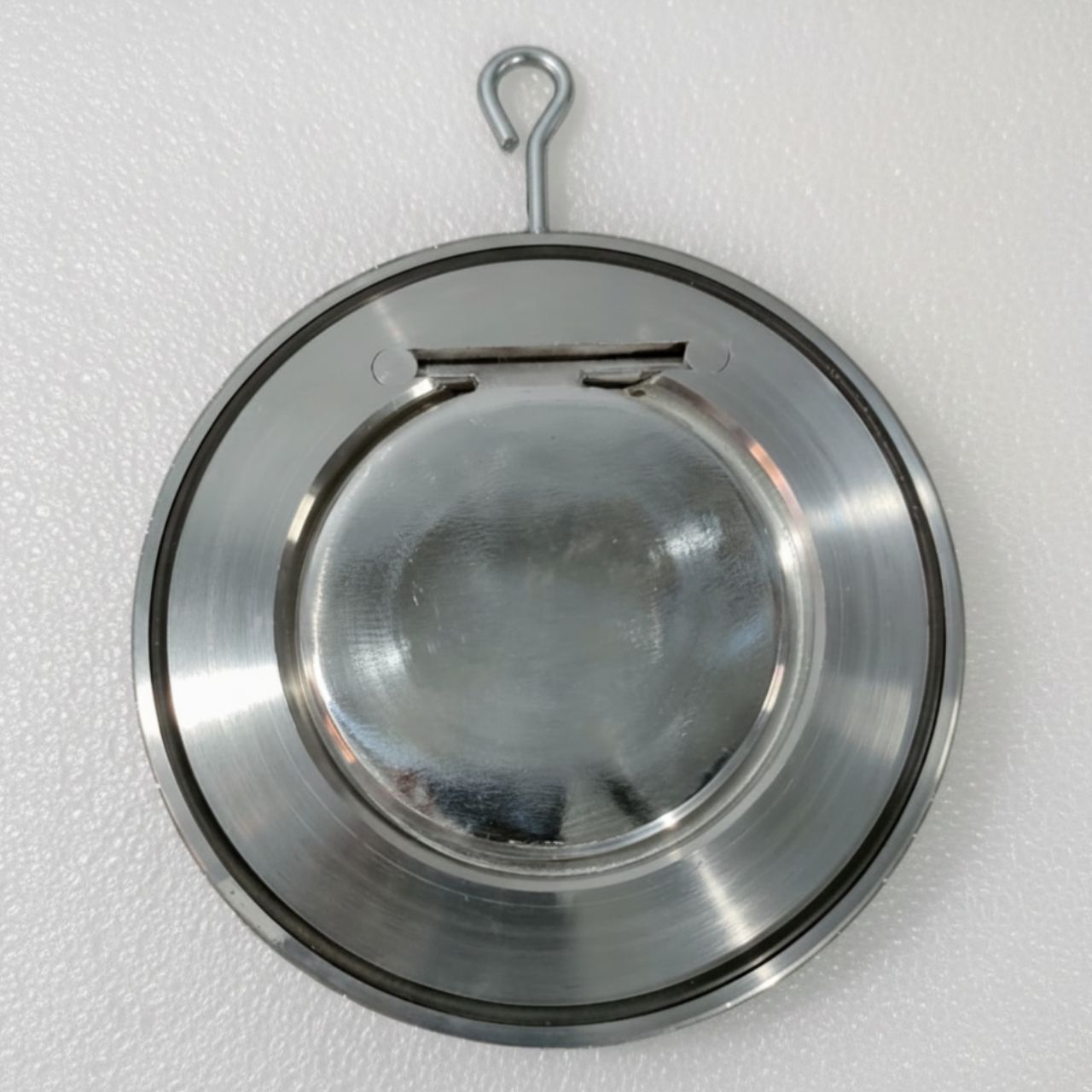
Single Plate Check Valve for Water Treatment Plants in India | KELOR

Single Plate Check Valve for Water Treatment Plants in India | KELOR

Single Plate Check Valve for Water Treatment Plants in India — SS304 Wafer Type | KELOR

Krishna Industries (KELOR), Ahmedabad, supplies SS304 Single Plate Wafer Check Valves for water treatment plants across India — DN50 to DN300 — PN10, PN16, PN25 pressure classes — raw water intake, filtration, chlorination, STP, ETP, RO desalination, and potable water distribution — API 598 hydrostatically tested — MTC 3.1 certified — IS 10500 compliant for drinking water — MOQ 10 Nos — Pan India dispatch from Ahmedabad.

GST invoice with HSN 84818090 for all dispatches. WhatsApp specifications for project pricing within 2 hours during business hours.

⚡ Quick Reference

SupplierKrishna Industries (KELOR) — Ahmedabad, Gujarat
Valve TypeSingle Plate Wafer Check Valve
Body MaterialSS304 (ASTM A182 F304 / AISI 304)
Disc / HingeSS304 disc, SS304 hinge pin
SeatSS304 body seat — metal-to-metal
Pressure ClassPN10 / PN16 / PN25
Size RangeDN50 (2″) to DN300 (12″)
End ConnectionWafer type — between flanges
ApplicationWater treatment: STP, ETP, RO, Potable
TestingAPI 598 hydrostatic shell test
CertificationMTC 3.1 per EN 10204
MOQ10 Pieces per size

Role of Check Valves in Water Treatment Plants

Check valves are among the most critical components in any water treatment plant, serving as automatic non-return devices that protect pumps, pipelines, treatment equipment, and treated water quality from the damaging effects of reverse flow. In a water treatment plant, reverse flow can occur whenever a pump trips, when the power supply is interrupted, when a pump in a parallel configuration starts and creates a pressure differential, or when a pipeline section is drained for maintenance. Without check valves at strategic locations, reverse flow can cause water hammer that damages pipe supports and fittings, reverse rotation of pump impellers that destroys mechanical seals and bearings, back-contamination of treated water with raw or partially treated water, and flooding of low-lying treatment sections.

The single plate wafer check valve is the most widely specified non-return valve for water treatment plant applications in India because of its compact wafer design that installs between standard flanges without requiring additional pipe length, its lightweight SS304 construction that provides corrosion resistance without the cost of full SS316, its rapid response to flow reversal that protects pumps during sudden shutdowns, and its low pressure drop that minimises the energy consumption of treatment plant pumping systems. For water treatment plants processing capacities from 1 MLD (million litres per day) to 500 MLD, single plate wafer check valves are installed at dozens of critical locations throughout the treatment train, from raw water intake to final treated water discharge.

KELOR supplies SS304 single plate wafer check valves from verified manufacturing sources for water treatment projects across India, including municipal water supply schemes, industrial STP and ETP installations, RO desalination plants, and government Jal Jeevan Mission projects. Every valve is hydrostatically tested per API 598 and accompanied by MTC 3.1 certification per EN 10204, ensuring full material traceability for project documentation requirements.

Why SS304 Over Cast Iron for Water Treatment

Material selection for check valves in water treatment plants is not merely a cost decision — it directly affects water quality, regulatory compliance, valve service life, and maintenance frequency. While cast iron check valves are 30 to 40 percent lower in initial cost than SS304, the total cost of ownership over a 10 to 15 year water treatment plant lifecycle often favours SS304 due to its dramatically lower corrosion rate, zero iron contamination, and compliance with potable water regulations. The following comparison highlights the critical differences that project engineers must evaluate when specifying check valve body material for water treatment applications.

SS304 Body (Recommended)

  • 18% chromium, 8% nickel — passive oxide layer prevents rust
  • Zero iron leaching — complies with IS 10500 potable water standards
  • Resists chlorinated water up to 2 ppm free chlorine residual
  • Service life 15 to 25 years in water treatment applications
  • Withstands pH range 4 to 11 covering all water treatment stages
  • No graphitic corrosion — suitable for chlorination contact tanks
  • Non-contaminating — approved for pharmaceutical and food-grade water
  • Initial cost 30 to 40% above cast iron, lower lifecycle cost

Cast Iron Body (Not Recommended)

  • Iron corrodes in water — releases iron particles into treated water
  • Increases turbidity and colour in treated water discharge
  • Graphitic corrosion accelerated by residual chlorine
  • Service life 5 to 10 years before significant wall loss
  • Not suitable for potable water final distribution per IS 10500
  • Requires internal epoxy coating which chips and degrades over time
  • Lower weight capacity limits use in large DN sizes above DN200
  • Lower initial cost, higher lifecycle cost due to replacement frequency

💡 Material Note: SS304 vs SS316 for Water Treatment

For the majority of water treatment plant applications in India, SS304 provides adequate corrosion resistance at a lower cost than SS316. SS316, with its addition of 2% molybdenum, should be specified where the water contains elevated chloride levels above 500 ppm, where free chlorine residuals exceed 2 ppm, or where the check valve is installed in seawater intake or brackish water service. For municipal water treatment plants treating surface water or groundwater with normal chloride and chlorine levels, SS304 is the standard specification. KELOR supplies both SS304 and SS316 single plate wafer check valves and provides material selection guidance based on the specific water chemistry analysis of each project.

Check Valve Placement at Each Treatment Stage

Water treatment plants consist of a sequence of treatment stages, each with distinct operating pressures, water qualities, and flow characteristics. Check valves must be installed at specific locations within each treatment stage to prevent reverse flow that could compromise water quality, damage equipment, or disrupt the treatment process. Understanding where check valves are required in the treatment train helps plant designers, EPC contractors, and project procurement teams specify the correct quantity, size, and pressure rating of single plate wafer check valves for a water treatment project.

💧

Raw Water Intake

Check valve on pump discharge prevents river or lake water from flowing back when pump stops. DN150 to DN300, PN10 or PN16 depending on lift height.

🌐

Aeration and Flash Mixing

Non-return protection on blower air discharge lines and chemical dosing pump outlets. Smaller sizes DN50 to DN100 typically.

🔧

Filtration (Sand / MF / UF)

Check valves on filter inlet and backwash lines to prevent cross-contamination between filtered and backwash water circuits.

Disinfection (Chlorination)

Check valves on chlorine dosing lines prevent treated water from entering the chemical dosing pump, and on disinfection chamber outlets.

🚚

Treated Water Distribution

Final check valves on clear water pump discharge and distribution header outlets prevent back-siphonage into the treatment plant.

In a typical 50 MLD municipal water treatment plant, the total check valve count ranges from 20 to 40 units across all treatment stages. For STP installations, the check valve count is typically 10 to 25 units depending on the treatment process configuration. Each location requires a check valve with the appropriate pressure rating, DN size, and material specification for the water quality and operating conditions at that particular point in the treatment train. KELOR has supplied complete check valve BOM packages for water treatment projects ranging from 5 MLD to 200 MLD capacity, with all sizes, pressure ratings, and certifications consolidated on a single GST invoice.

Technical Specifications for Water Treatment Duty

The following specification table defines the standard technical parameters for SS304 single plate wafer check valves supplied by KELOR for water treatment plant applications in India. These specifications are aligned with the requirements of municipal water supply projects, STP and ETP installations, and industrial water treatment systems. The specifications meet or exceed the requirements of API 598 for shell testing, EN 1092-1 for flange compatibility, and IS 10500 for potable water contact suitability.

ParameterSpecification
Valve TypeSingle Plate Wafer Check Valve
Body MaterialSS304 (ASTM A182 F304 / AISI 304 / IS 6911)
Disc MaterialSS304
Hinge PinSS304 with SS304 cotter pin retention
Seat TypeMetal-to-metal (SS304 body seat)
Spring (optional)SS304 torsion spring — soft, standard, or hard
End ConnectionWafer type — installs between ASME B16.5 / EN 1092-1 flanges
Size RangeDN50 (2″) to DN300 (12″)
Pressure ClassesPN10 (10 bar), PN16 (16 bar), PN25 (25 bar)
Max Operating Temperature200°C (for hot water / thermal disinfection lines)
Min Operating Temperature-40°C
Face-to-FacePer ASME B16.10 / ISO 5752 Series 18
Shell Test Pressure1.5 x PN rated pressure (API 598)
Seat Test Pressure1.1 x PN rated pressure (API 598)
Cracking Pressure0.3 to 0.7 bar (depending on spring selection)
Minimum Flow to Open1.0 to 1.5 m/s flow velocity
Suitable MediaPotable water, raw water, treated sewage, chlorinated water, RO permeate, chemical dosing solutions (mild)
CertificationMTC 3.1 per EN 10204, API 598 test certificate
HSN Code84818090

DN Size Selection for Water Treatment Pipelines

Selecting the correct DN (Diamètre Nominal) size for a single plate wafer check valve in a water treatment plant requires matching the valve bore to the pipeline diameter and verifying that the operating flow rate produces sufficient velocity to fully open the check valve disc. An oversized check valve in a water treatment application leads to disc flutter, premature seat wear, and failure to achieve full non-return protection. An undersized check valve creates excessive pressure drop and increases pumping energy consumption. The following table provides the key dimensional and performance parameters for standard DN sizes used in water treatment applications.

DN Size Inches Face-to-Face (mm) Approx. Weight (kg) Min Flow (m³/h) Max Flow (m³/h) Min Velocity (m/s) Typical Application
DN502″432.08221.0Chemical dosing, sample lines
DN652.5″462.812351.0Dosing, instrument lines
DN803″643.518551.0Small pump discharge, filter inlet
DN1004″644.228851.0Pump discharge, chlorination
DN1506″707.5601801.0Raw water intake, STP inlet
DN2008″7112.01103201.0Main distribution, STP effluent
DN25010″7618.01705001.0Main headers, large intake
DN30012″7625.02507201.0Plant inlet/outlet headers

⚠ Important: Minimum Flow Velocity Requirement

The minimum flow values in the table above represent the flow rate required to achieve 1.0 m/s velocity through the check valve bore, which is the minimum velocity for stable full-open disc operation. If the actual operating flow rate in a water treatment pipeline falls below this minimum, the check valve disc may remain partially open or flutter, causing rapid wear of the hinge pin and seat face. For water treatment applications with variable flow rates, KELOR recommends selecting the DN size based on the minimum expected operating flow, not the maximum design flow. Alternatively, a spring-loaded single plate check valve with a soft spring can be specified to reduce the cracking pressure and improve performance at low flow velocities.

PN10 vs PN16 vs PN25 for Water Treatment

Pressure class selection for single plate wafer check valves in water treatment plants must account for the maximum operating pressure of each pipeline section, the possibility of pressure surges during pump start-up and shutdown, and the test pressure applied during commissioning. Over-specifying the pressure class increases cost unnecessarily, while under-specifying creates a safety risk. The following table maps the three common pressure classes to their typical water treatment plant applications, based on the operating pressure ranges encountered in Indian water treatment installations.

Pressure Class Rated Pressure Shell Test Pressure Typical Application Operating Range
PN1010 bar (145 psi)15 barRaw water intake, gravity-fed lines, STP low-pressure circuits, filter underdrain, collection sump discharge2 to 6 bar
PN1616 bar (232 psi)24 barPump discharge headers, chlorination contact tanks, treated water distribution, ETP chemical dosing, DM water transfer4 to 10 bar
PN2525 bar (363 psi)37.5 barRO high-pressure feed lines, multistage pump discharge, boiler feed water pretreatment, high-lift raw water pumping10 to 20 bar

✅ Pressure Class Selection Rule for Water Treatment

As a general rule, the check valve pressure class should be selected so that the PN rated pressure is at least 1.5 to 2 times the maximum expected operating pressure of the pipeline section. This safety margin accommodates pressure surges during pump start-up and rapid valve closure events that can produce transient pressures 1.3 to 1.5 times the normal operating pressure. For example, if a treated water pump discharge header operates at 6 bar, a PN16 check valve (rated 16 bar) provides a safety margin of 2.67 times the operating pressure, which is adequate. A PN10 valve (rated 10 bar) would provide only a 1.67 times margin, which may not be sufficient if pressure surges are expected. KELOR assists project engineers with pressure class selection based on the hydraulic design calculations for each pipeline section.

Flow Velocity and Cracking Pressure in Water Treatment

Understanding the relationship between flow velocity, cracking pressure, and disc stability is essential for correctly specifying single plate wafer check valves in water treatment applications. Water treatment plants often operate at relatively low flow velocities compared to industrial process plants, particularly in distribution lines, gravity sections, and low-demand periods. The cracking pressure is the minimum differential pressure required to lift the check valve disc from the closed position against the spring force (if spring-loaded) or against the disc weight (if non-spring). Below the cracking pressure, the valve remains closed and no flow passes through.

ParameterNo SpringSoft SpringStandard SpringHard Spring
Cracking Pressure0.05 to 0.15 bar0.15 to 0.30 bar0.30 to 0.50 bar0.50 to 0.70 bar
Min Velocity to Fully Open0.6 to 0.8 m/s0.8 to 1.0 m/s1.0 to 1.5 m/s1.5 to 2.0 m/s
Response to Reverse FlowSlow (disc weight only)ModerateFastVery fast
Recommended ApplicationGravity-fed lines, low-head systemsWater treatment general purposePump discharge, pressure linesHigh-surge applications, frequent cycling
Disc Flutter RiskHigh at low velocityLowLowVery low

For most water treatment plant applications, KELOR recommends the soft spring or standard spring configuration. The soft spring provides a cracking pressure of 0.15 to 0.30 bar, which is compatible with the low operating pressures found in many water treatment pipeline sections, while still providing adequate closing force to prevent reverse flow when the pump stops. The standard spring provides faster response to flow reversal, making it the preferred choice for pump discharge applications where rapid closure is needed to prevent water hammer. Non-spring configurations are only recommended for gravity-fed lines where the available head is very low and every fraction of a bar of pressure drop matters.

Installation Orientation for Water Pipelines

The installation orientation of a single plate wafer check valve significantly affects its performance and reliability in water treatment applications. While single plate wafer check valves can technically be installed in horizontal, vertical upward flow, and vertical downward flow orientations, each orientation imposes different operating characteristics that must be understood by the installation crew to avoid premature valve failure.

1

Horizontal Pipeline

Preferred orientation. Disc swings freely in horizontal plane. Full flow area available. Most reliable operation for water treatment pump discharge and distribution lines.

2

Vertical Upward Flow

Acceptable orientation. Flow lifts disc against gravity, providing additional closing force. Spring assists closure. Suitable for vertical pump discharge lines in water treatment plant buildings.

3

Vertical Downward Flow

Not recommended without spring. Disc weight adds to cracking pressure. If vertical downward installation is unavoidable, specify spring-loaded configuration with standard or hard spring.

4

Wafer Installation

Install between flanges with full-face gaskets. Flange bolts must pass through the valve body bolt holes. Tighten flange bolts in star pattern to 1.5 x rated torque. Verify no gasket protrusion into flow area.

⚠ Critical: Straight Pipe Length Requirements

Single plate wafer check valves require a minimum of 5 pipe diameters of straight pipe upstream and 2 pipe diameters downstream to ensure uniform flow velocity distribution across the valve bore. Turbulent flow from elbows, tees, or pumps located too close upstream causes uneven velocity across the disc, leading to disc flutter, asymmetric wear, and accelerated hinge pin failure. For example, a DN150 check valve requires at least 750 mm of straight pipe upstream and 300 mm downstream. In water treatment plant layouts where space constraints prevent adequate straight lengths, a flow straightener or diffuser section should be installed upstream of the check valve.

Potable Water and IS 10500 Compliance

For water treatment plants that produce potable (drinking) water, the check valves installed in treated water distribution lines must comply with Indian drinking water standards and must not introduce any contaminants into the treated water. IS 10500:2012, the Indian Standard for Drinking Water, specifies permissible limits for iron, chromium, nickel, and other heavy metals in drinking water. SS304 check valves, with their chromium-nickel alloy composition and passive oxide surface, meet these requirements because the passive layer prevents metal ions from leaching into the water under normal operating conditions.

IS 10500 ParameterPermissible LimitSS304 ComplianceCast Iron Status
Iron (as Fe)0.3 mg/L (no relaxation)Compliant — passive layer prevents iron leachingNon-compliant — iron corrodes and leaches
Chromium (as Cr, total)0.05 mg/LCompliant — Cr oxide layer is stable and non-solubleNot applicable
Nickel0.02 mg/L (as Ni)Compliant — Ni is bound in austenitic matrixNot applicable
Total Dissolved Solids500 mg/LCompliant — zero contribution from SS304May increase TDS due to iron corrosion products
Turbidity1 NTUCompliant — no particle generationIron particles increase turbidity
pH6.5 to 8.5No effect on pHCorrosion products may lower pH locally

For municipal water treatment plants supplying potable water under the Jal Jeevan Mission, Swachh Bharat Mission, or state-level water supply schemes, SS304 check valves are the specified material for all treated water contact applications downstream of the disinfection stage. KELOR supplies SS304 single plate wafer check valves with MTC 3.1 certification that traces the material heat number, confirming the SS304 chemical composition meets the minimum requirements of ASTM A182 F304 (18% chromium minimum, 8% nickel minimum) for potable water compliance. Each valve is accompanied by a material test report showing the actual chemical analysis of the heat from which the body, disc, and hinge pin components were manufactured.

Chlorinated Water and Chemical Resistance

Chlorination is the most common disinfection method in Indian water treatment plants, and residual chlorine in the treated water creates a chemically aggressive environment that affects check valve material selection. The residual chlorine concentration varies depending on the point of application in the treatment process, from high-dose pre-chlorination at raw water intake to low-dose post-chlorination in the clear water storage tank. Understanding the chlorine concentration at each treatment stage is essential for specifying the correct check valve material and avoiding premature valve failure.

Treatment StageFree Cl₂ RangeSS304 SuitabilitySS316 Required?Notes
Pre-chlorination (raw water)5 – 10 ppmBorderline — limited service lifeYes — SS316 recommendedHigh chlorine dose accelerates pitting in SS304
Post-chlorination (clear water)0.5 – 2.0 ppmCompliant — standard serviceNo — SS304 adequateNormal residual chlorine range for distribution
Chlorine contact tank2 – 5 ppmShort-term compliantYes for continuous exposureContact time typically 30 min, SS304 acceptable for short exposure
Dechlorinated waterBelow 0.1 ppmFully compliantNoNo corrosion risk from chlorine
Chloramination (combined Cl₂)2 – 4 ppmBorderlineYes — chloramines are more aggressiveSS316 preferred for combined chlorine residuals

💡 KELOR Recommendation for Chlorinated Water Service

For the majority of Indian water treatment plants, KELOR recommends SS304 single plate wafer check valves for post-chlorination distribution lines and dechlorinated water circuits, where residual chlorine levels remain below 2 ppm. For pre-chlorination applications, chlorine contact tanks, and systems using chloramine disinfection, KELOR recommends SS316 single plate wafer check valves for superior pitting resistance. For municipal projects where the chlorine dosing strategy may change over the plant lifecycle, SS316 provides a more conservative specification that accommodates future increases in chlorine dose without requiring valve replacement. KELOR supplies both SS304 and SS316 options with matching dimensions, allowing seamless substitution on the same pipeline.

STP and ETP Specific Requirements

Sewage Treatment Plants (STP) and Effluent Treatment Plants (ETP) represent a distinct category of water treatment with unique challenges for check valve selection. The wastewater in STP and ETP systems contains suspended solids, organic matter, dissolved gases including hydrogen sulphide, and variable pH levels that can range from mildly acidic (pH 5 to 6 in industrial ETP) to mildly alkaline (pH 8 to 9 in municipal STP). These conditions require check valves with corrosion-resistant materials, robust hinge mechanisms resistant to fouling, and adequate bore size to prevent clogging from solids in the wastewater stream.

STP Application Details

In municipal and residential STP installations, single plate wafer check valves in SS304 are installed at the following critical locations: raw sewage inlet pump discharge (preventing reverse flow of raw sewage back to the source when the pump stops), return activated sludge pump discharge (preventing treated mixed liquor from flowing backward through the idle pump), mixed liquor recirculation lines (maintaining the correct sludge age and concentration in the aeration tank), sludge transfer pump discharge (preventing sludge backflow from the thickener or digester), and treated effluent discharge (preventing back-siphonage from the receiving water body or irrigation system).

For STP applications, the DN size selection must account for the solids content of the wastewater. Raw sewage lines typically carry 200 to 400 mg/L of suspended solids, and the check valve bore must be large enough to pass these solids without clogging. KELOR recommends that for raw sewage applications with solids content above 300 mg/L, the DN size should be selected based on the pipeline diameter even if the flow rate alone would suggest a smaller size, because the larger bore provides additional clearance for solids passage.

ETP Application Details

Industrial ETP installations treat wastewater from manufacturing processes that may contain acidic or alkaline contaminants, heavy metals, oils, and dissolved organics. The chemical composition of ETP wastewater varies widely depending on the industry: textile ETP contains dyes and high alkalinity, pharmaceutical ETP contains organic solvents and antibiotics, chemical ETP may contain strong acids or alkalis, and food processing ETP contains high BOD and suspended organics. For ETP applications, SS304 provides adequate corrosion resistance for most wastewater compositions within the pH range of 4 to 11. For ETP installations treating strongly acidic wastewater below pH 4 or strongly alkaline wastewater above pH 11, SS316 or even higher-alloy materials should be specified.

Municipal STP

Raw sewage inlet, RAS and WAS lines, mixed liquor recirculation, treated effluent discharge. DN100 to DN200, PN10 or PN16. SS304 standard.

Residential STP

Compact treatment units for housing societies. DN65 to DN150, PN10. Lower solids content than municipal. SS304 adequate.

Textile ETP

High-alkalinity dye wastewater. pH 9 to 11. DN80 to DN200. SS304 borderline — SS316 recommended for high pH sections.

Pharma / Chemical ETP

Variable pH, solvents, organics. DN50 to DN150. SS316 recommended. Specific material depends on effluent analysis report.

RO and Desalination Plant Considerations

Reverse Osmosis (RO) water treatment plants and desalination facilities operate at significantly higher pressures than conventional water treatment processes, creating unique requirements for check valve selection. RO feed pumps typically generate pressures between 10 and 25 bar for brackish water RO systems and between 55 and 70 bar for seawater RO systems. This means that check valves installed on RO feed pump discharge lines must be rated for these operating pressures and must withstand the high-pressure, high-chloride environment of the RO feed water.

RO System TypeFeed PressureRecommended Valve ClassRecommended MaterialCheck Valve Locations
Brackish Water RO10 – 25 barPN25SS304 or SS316Feed pump discharge, inter-stage booster, concentrate recycle
Seawater RO55 – 70 barPN64 or Class 300SS316L (duplex for high Cl⁻)High-pressure pump discharge, energy recovery loop
Industrial Demineralisation4 – 10 barPN16SS304Feed pump discharge, mixed bed inlet/outlet
UF/MF Pre-treatment2 – 6 barPN10 or PN16SS304Feed pump discharge, backwash line, permeate line

KELOR supplies SS304 single plate wafer check valves in PN25 rating for brackish water RO feed pump discharge and concentrate recycle applications. For seawater RO systems operating above 25 bar, KELOR supplies SS316L check valves in higher pressure ratings including PN40, PN64, and Class 300 configurations. All RO system check valves are supplied with MTC 3.1 certification and are hydrostatically tested at 1.5 times the rated pressure per API 598. For RO desalination projects in coastal Gujarat, Tamil Nadu, and Andhra Pradesh, KELOR has supplied check valve packages for plants ranging from 100 KLD (kilolitres per day) to 100 MLD capacity.

Failure Modes in Water Treatment Service

Single plate wafer check valves in water treatment plants are subject to several failure modes that differ from those encountered in general industrial service. Understanding these failure modes helps plant operators implement preventive maintenance programs and identify early warning signs before a failure affects water treatment operations. The following table describes the six most common failure modes, their root causes, symptoms, and corrective actions.

Failure ModeRoot CauseSymptomsCorrective Action
Continuous Leak-Through (Passing)Seat face damage from debris, disc warping, hinge pin wear allowing misalignmentReverse flow detected when pump is off; treated water quality deteriorationRemove valve, inspect seat and disc for scoring or debris embedment. Reseat or replace valve body.
Disc Flutter / ChatteringFlow velocity below minimum opening threshold; oversized DN selection; no spring in vertical lineAudible rattling or vibration at valve location; premature hinge pin failureReduce DN size, or install spring-loaded version with appropriate spring rating.
Hinge Pin FailureFatigue from prolonged disc flutter; corrosion from hydrogen sulphide in STP; mechanical overload from water hammerDisc separates from body; catastrophic backflow; sudden pressure spike in upstream lineReplace with new valve. Install spring-loaded version and verify adequate straight pipe lengths.
External Leakage at FlangesImproper gasket installation; uneven bolt torquing; gasket degradation from chlorine exposureWater dripping from flange joint; corrosion staining on pipe exteriorRetighten flange bolts in star pattern. Replace gaskets with chlorine-resistant EPDM or PTFE type.
Internal Fouling / CloggingSuspended solids accumulation in raw sewage; biofilm growth in STP lines; scale deposition in hard waterIncreased pressure drop across valve; reduced flow rate; disc sticking in closed positionRemove and clean valve body cavity. Install strainer upstream. Implement periodic cleaning schedule.
Spring Fatigue (spring-loaded)Repeated cycling over thousands of pump start-stop cycles; corrosion weakening spring wireSlow disc closure; reverse flow before full closure; reduced cracking pressureReplace spring assembly. For high-cycling applications, specify SS304 spring with fatigue rating.

✅ Preventive Maintenance Schedule for Water Treatment Check Valves

KELOR recommends a preventive maintenance schedule of visual inspection every 3 months, functional check (verify disc moves freely and closes fully) every 6 months, and full valve removal and internal inspection every 12 to 24 months depending on the severity of service. For raw sewage and STP applications, the 12-month inspection interval is recommended due to the higher solids content and potential for hydrogen sulphide exposure. For treated water and potable water distribution applications, the 24-month interval is generally adequate. Each inspection should include hinge pin wear measurement, seat face condition assessment, spring force verification (if spring-loaded), and flange gasket condition evaluation. Maintenance findings should be recorded and tracked to identify valves that may require early replacement.

API 598 Testing and MTC 3.1 Documentation

Every SS304 single plate wafer check valve supplied by KELOR for water treatment plant projects undergoes rigorous quality assurance testing and is accompanied by comprehensive documentation. The testing and documentation requirements for water treatment projects in India are particularly stringent because these valves protect public health infrastructure and municipal water supply systems. Government-funded water treatment projects under the Jal Jeevan Mission, AMRUT, and state-level water supply schemes require full traceability documentation that demonstrates compliance with material specifications and pressure integrity standards.

API 598 Hydrostatic Shell Test

The hydrostatic shell test per API 598 is the primary pressure integrity test for wafer check valves. The test procedure involves installing the valve in a test fixture, pressurising the body cavity to 1.5 times the PN rated pressure with water, and holding the pressure for the specified duration while inspecting for leaks from the body, body-to-disc seal, and all external joints. For a PN16 rated check valve, the shell test pressure is 24 bar. For a PN25 rated check valve, the shell test pressure is 37.5 bar. No visible leakage is permitted during the shell test hold period. KELOR ensures that every valve is shell-tested before dispatch and that the test certificate records the valve size, pressure class, test pressure, hold duration, test result, and the valve serial number for traceability.

MTC 3.1 per EN 10204

The Material Test Certificate 3.1 per EN 10204 is a certificate of conformity issued by the valve manufacturer’s quality department that certifies the material chemical composition and mechanical properties conform to the specified material standard. For SS304 check valves, the MTC 3.1 certifies that the body, disc, and hinge pin material meets the chemical composition requirements of ASTM A182 F304 or equivalent, including minimum 18% chromium, minimum 8% nickel, maximum 0.08% carbon, and maximum 2.0% manganese. The MTC 3.1 also records the heat number of the raw material, allowing full traceability from the finished valve back to the steel mill heat. For water treatment projects requiring third-party inspection, KELOR arranges MTC 3.2 certification with an independent inspection agency.

📚 Complete Documentation Package for Water Treatment Projects

KELOR supplies the following documentation package with every water treatment project order: MTC 3.1 certificate per EN 10204 for each valve, API 598 hydrostatic test certificate with serial number traceability, dimensional inspection report confirming face-to-face dimensions per ASME B16.10, material chemical analysis report with heat number traceability, GST invoice with HSN 84818090, packing list with valve sizes, quantities, and pressure classes, and installation guidelines for wafer-type check valves. For government and municipal water treatment projects, KELOR additionally provides manufacturer test certificates, third-party inspection certificates when required, compliance declarations for IS 10500 potable water contact suitability, and project-specific documentation formats as specified in the tender requirements.

Water Treatment Valve Market Snapshot

8,000+ STP Plants Operational in India (2025)
3,500+ Municipal WTPs Across India
25,000+ Industrial ETP Installations
750+ RO Desalination Plants in India

India’s water treatment infrastructure is expanding rapidly, driven by the Jal Jeevan Mission targeting 100% rural piped water coverage, AMRUT urban water supply improvements, and increasingly stringent CPCB and state pollution control board mandates for industrial wastewater treatment. This expansion creates sustained demand for corrosion-resistant check valves in SS304 and SS316 for water treatment applications. KELOR has positioned itself as a reliable supplier of single plate wafer check valves for this growing market, with stock availability in standard sizes and pressure classes, project BOM support for EPC contractors, and pan-India dispatch capability from the Ahmedabad warehouse.

Why Choose KELOR for Water Treatment Check Valves

API 598 Tested

Every SS304 wafer check valve is hydrostatically shell-tested and seat-tested per API 598 before dispatch from the Ahmedabad warehouse.

📄

MTC 3.1 Certified

Full EN 10204 Type 3.1 material certificates with heat number traceability for SS304 body, disc, and hinge pin components.

IS 10500 Compliant

SS304 material meets Indian drinking water standards for zero iron contamination, suitable for Jal Jeevan Mission and AMRUT projects.

📦

Project BOM Support

Complete check valve packages for water treatment projects with all sizes, pressure classes, and certifications on a single GST invoice.

🚚

Pan India Dispatch

Stock DN50-DN200 in PN16 dispatched within 5-7 working days. DN250-DN300 and PN10/PN25 within 10-15 working days from Ahmedabad.

💬

2-Hour Quotation

WhatsApp the project BOM with sizes, quantities, and pressure ratings. KELOR responds with pricing within 2 hours during business hours.

Request Water Treatment Check Valve Quotation

WhatsApp your project BOM: sizes, quantities, PN ratings, and delivery location. KELOR responds within 2 hours during business hours.

WhatsApp Now Email: [email protected]

Commercial Information

Order and Delivery Details

MOQ 10 pieces per size per pressure class
Standard Stock Sizes DN50 to DN200 in PN16
Stock Dispatch 5 to 7 working days
Non-Stock / Large Sizes 10 to 15 working days
GST Invoice HSN 84818090 — single consolidated invoice for project orders
Payment Terms Standard terms for project and OEM orders
Delivery Pan India dispatch from Ahmedabad warehouse

Frequently Asked Questions

+ Why is SS304 preferred over cast iron for check valves in water treatment plants?
SS304 stainless steel is preferred over cast iron for water treatment check valves because it provides superior corrosion resistance in both potable and wastewater environments. SS304 contains 18 percent chromium and 8 percent nickel, which forms a passive chromium oxide layer on the surface that prevents rusting and iron leaching into the treated water. Cast iron, by contrast, corrodes in water over time, releasing iron particles that can contaminate treated water, increase turbidity, and create maintenance problems downstream. For potable water distribution lines and STP treated water discharge, where regulatory standards under IS 10500 and CPHEEO guidelines require minimal iron contamination, SS304 is the specified body material. Additionally, SS304 withstands chlorinated water environments without the graphitic corrosion that affects cast iron in the presence of residual chlorine. KELOR supplies SS304 single plate wafer check valves that are hydrostatically tested per API 598 and accompanied by MTC 3.1 certification for water treatment projects across India.
+ What pressure rating is suitable for a check valve in a municipal water treatment plant?
For municipal water treatment plants in India, the appropriate pressure rating depends on the operating pressure of the specific pipeline section. Raw water intake mains typically operate at 2 to 4 bar and require PN10 rated check valves. Treated water distribution headers operating at 4 to 8 bar require PN16 rated check valves. High-pressure sections such as RO feed lines and pump discharge headers that operate at 8 to 16 bar require PN25 rated check valves. For STP and ETP applications where operating pressures are generally lower, typically 2 to 6 bar, PN10 or PN16 check valves provide adequate safety margin. KELOR supplies SS304 single plate wafer check valves in PN10, PN16, and PN25 pressure classes from DN50 to DN300, allowing project engineers to match the valve pressure rating to the actual system operating pressure without over-specifying.
+ Can a single plate wafer check valve handle raw sewage in an STP plant?
Yes, SS304 single plate wafer check valves are widely used in sewage treatment plant applications including raw sewage inlet lines, return activated sludge lines, and treated effluent discharge lines. The SS304 body provides excellent corrosion resistance against the mildly acidic or alkaline conditions found in raw sewage, which typically ranges from pH 6 to pH 9. The wafer design allows installation between standard ANSI flanges without requiring special flange facing or additional spacers. For raw sewage lines carrying solids, the single disc design provides a reliable non-return function that prevents backflow when pumps shut down. However, for raw sewage lines with very high solids content exceeding 200 mg per litre, dual plate wafer check valves are sometimes preferred because the two smaller discs reduce the moment of inertia and respond faster to reverse flow. KELOR supplies both single plate and dual plate wafer check valves in SS304 for STP projects throughout India.
+ What is the minimum flow velocity required to fully open a single plate check valve?
A single plate wafer check valve typically requires a minimum flow velocity of 1.0 to 1.5 metres per second to fully open the disc and achieve stable operation. Below this velocity range, the disc may flutter or remain partially open, causing premature wear of the hinge pin, seat face damage, and accelerated fatigue of the spring mechanism. For water treatment plant applications, this means that the pipeline must be sized to ensure that the operating flow rate produces sufficient velocity through the check valve. For example, a DN100 single plate check valve requires approximately 8 to 12 cubic metres per hour to achieve the minimum opening velocity of 1.0 to 1.5 metres per second. If the actual operating flow rate is lower than this threshold, a smaller nominal bore should be selected or a swing check valve with a lower cracking pressure should be specified instead. KELOR provides flow velocity calculation assistance to help project engineers select the correct DN size for water treatment applications.
+ How does a check valve prevent backflow in a water treatment pumping station?
In a water treatment pumping station, check valves are installed on the discharge side of each pump to prevent reverse flow through the pump when it stops or when another pump in a parallel configuration starts. When the pump is running, the forward flow velocity lifts the check valve disc to the fully open position, allowing water to flow through the valve with minimal pressure drop. When the pump stops, the flow velocity drops to zero and then begins to reverse. The check valve disc responds to this velocity reversal by closing under the combined action of reverse flow pressure and the disc spring force. In a properly sized and installed check valve, the disc closes before significant reverse flow develops, preventing water hammer, pump run-back, and potential damage to the pump impeller. For water treatment plants with multiple parallel pumps, check valves on each pump discharge prevent reverse flow through the idle pump, protecting it from reverse rotation and cavitation damage. KELOR supplies SS304 single plate wafer check valves designed for rapid response to flow reversal, with cracking pressures suitable for water treatment pumping applications.
+ What documentation is provided with check valves for water treatment plant projects?
KELOR supplies SS304 single plate wafer check valves for water treatment plant projects with comprehensive documentation including MTC 3.1 certificates per EN 10204 that trace the SS304 material chemistry and mechanical properties to the raw material heat number, hydrostatic test certificates confirming the valve has been shell-tested at 1.5 times the PN rated pressure per API 598, dimensional inspection reports verifying face-to-face dimensions and flange compatibility, material test reports confirming SS304 chemical composition with minimum 18 percent chromium and 8 percent nickel, and GST invoices with HSN code 84818090. For government water supply projects and municipal STP contracts, KELOR also provides additional documentation including manufacturer test certificates, third-party inspection reports when required, and compliance declarations confirming suitability for potable water service per IS 10500 requirements.
+ What is the delivery timeline for check valves ordered for a water treatment project in India?
For water treatment plant projects in India, KELOR maintains stock of SS304 single plate wafer check valves in standard sizes from DN50 to DN200 in PN16 rating, which can be dispatched within 5 to 7 working days from the Ahmedabad warehouse. Sizes DN250 and DN300 and PN10 and PN25 ratings in all sizes are available within 10 to 15 working days. Project orders combining multiple sizes and pressure ratings in a single shipment are supplied with one consolidated GST invoice under HSN 84818090. For large municipal water treatment projects, STP installations, and EPC contracts, KELOR supports project BOM requirements with phased deliveries aligned to the project construction schedule. WhatsApp the complete size list, quantities, pressure ratings, and delivery location for project pricing within 2 hours during business hours. KELOR has supplied check valves for water treatment projects in Gujarat, Maharashtra, Rajasthan, Madhya Pradesh, Karnataka, Tamil Nadu, and Delhi NCR.
+ Are single plate wafer check valves suitable for chlorinated water service?
Yes, SS304 single plate wafer check valves are suitable for chlorinated water service in water treatment plants, provided the chlorine concentration is within the normal operating range. SS304 provides adequate resistance to free chlorine residuals up to approximately 2 parts per million, which covers the majority of post-chlorination and residual disinfection applications in municipal water treatment. For pre-chlorination applications where higher chlorine concentrations of 5 to 10 parts per million may be encountered, or for applications with combined chlorine (chloramines) residuals, SS316 provides superior pitting resistance and should be specified. Cast iron check valves are not recommended for chlorinated water because residual chlorine accelerates graphitic corrosion in cast iron, leading to premature valve failure. KELOR supplies both SS304 and SS316 single plate wafer check valves for chlorinated water service, with material selection guidance based on the specific chlorine concentration and water chemistry of the treatment plant.
0000000