
Marine-Grade SS316 Wafer Type Check Valves for Desalination & Chemical Plants
NACE MR0175 Available · API 598 Tested · DN50–DN600
Krishna Industries (KELOR) engineers premium marine-grade SS316 (CF8M) dual plate check valves specifically for highly corrosive environments.
These valves feature molybdenum-enhanced corrosion resistance, a crevice-free design, and aggressive-media seating (PTFE/Viton).They are ideal for SWRO/BWRO desalination, chemical processing, offshore platforms, and power plant cooling systems.Each valve comes with full MTC, API 598 test reports, and export-ready packaging.
Quick Answer:
Standard stainless steel fails in chloride-rich environments.
KELOR’s marine-grade SS316 (CF8M) check valves contain 2–3% molybdenum, which gives them critical resistance to pitting and crevice corrosion in seawater, desalination, and chemical processing.These valves are supplied with EN 10204 3.1 MTC, API 598 certification, and optional NACE MR0175 compliance.Contact sales@kelorvalves.com for project specifications.
Technical Quick Reference:
- Body & Disc Material: SS316 / CF8M (Molybdenum-enhanced)
- Seat Options: PTFE, Viton (FKM), Metal-Seated
- Size Range: DN50 (2″) to DN600 (24″)
- Pressure Rating: PN10 / PN16 / Class 150 / Class 300
- End Connection: Wafer Type (standard) / Lug Type (pump discharge)
- Design Standard: API 594 / ASME B16.34 / ISO 5752 Series 19
- Corrosion Standard: NACE MR0175 / ISO 15156 (on request)
- HSN Code: 84813000
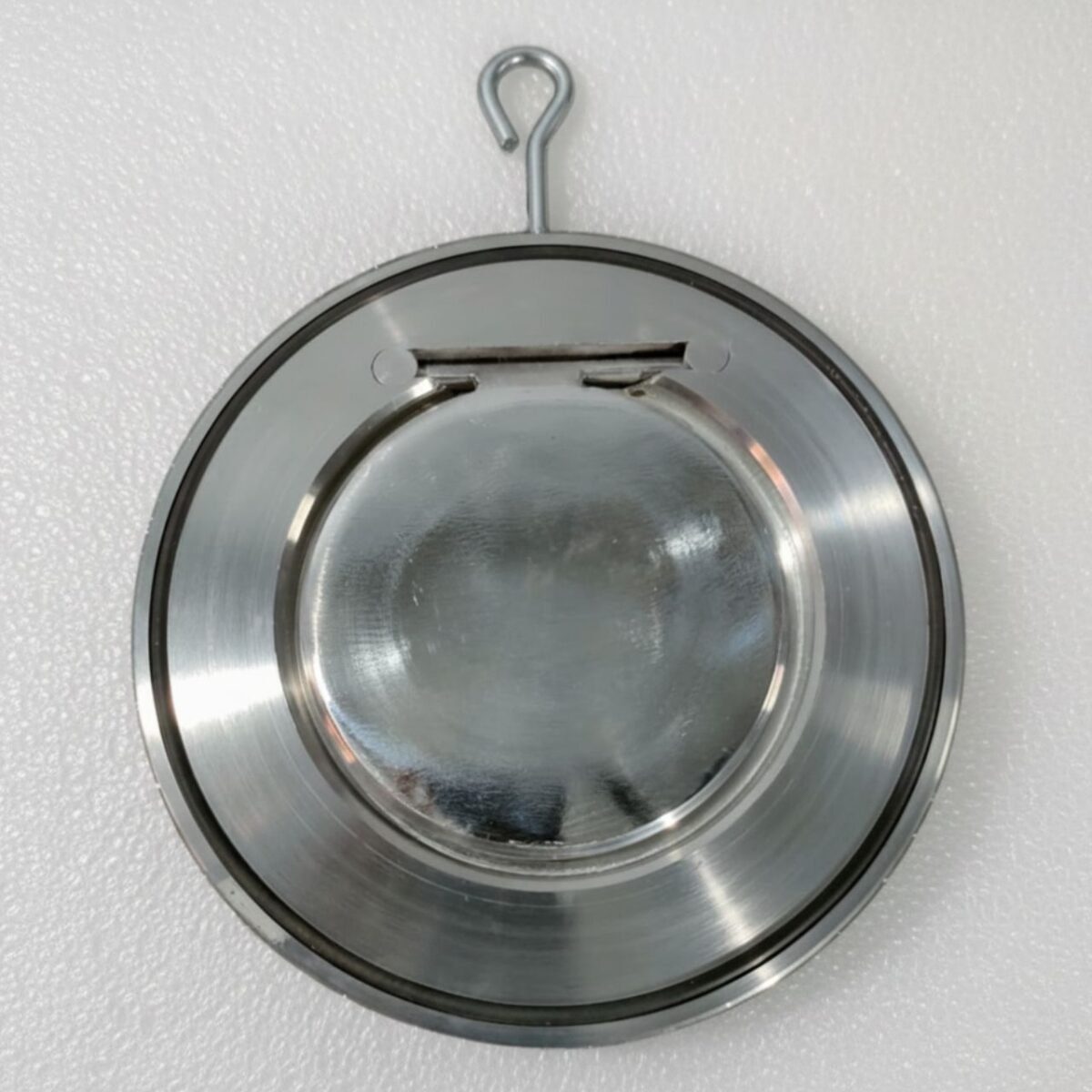
Why SS316 Molybdenum Content is Critical for Marine Applications ?
In marine, desalination, and chemical processing environments, chloride-induced pitting and crevice corrosion are the main reasons valves fail early.
Standard SS304 (CF8) doesn’t have the right elements to handle these conditions.
SS316 (CF8M) includes 2–3% molybdenum, which changes the protective layer on the steel surface, making it much more resistant to chloride damage.
For EPC contractors and plant engineers, using SS316 (CF8M) isn’t just an improvement—it’s necessary for reliability in seawater intake, reverse osmosis (RO) brine lines, and chemical dosing systems.
Engineering Specification Tip:
For sour service environments (H₂S present) or extreme offshore chemical exposure, always specify NACE MR0175 / ISO 15156 compliance in your purchase order.
KELOR can supply SS316 (CF8M) valves with certified NACE-compliant materials and hardness testing to make sure they work safely in sour gas and highly corrosive chemical plants.
Desalination & Chemical Processing Applications
- Seawater Reverse Osmosis (SWRO): Used in high-pressure pump discharge and brine reject lines.
SS316 (CF8M) with Viton or PTFE seats stops chloride pitting and ensures no backflow, protecting expensive RO membranes and high-pressure pumps. - Chemical Processing & GIDC Estates: Used in acid, alkali, and solvent transfer lines in chemical hubs (Ankleshwar, Vapi, Dahej).
PTFE-seated SS316 valves offer general chemical resistance and help prevent dangerous backflow in important process loops. - Offshore & Marine Platforms: Used in firewater systems, seawater cooling loops, and ballast systems.
The compact wafer design saves space and weight on offshore platforms, while SS316 resists constant saltwater exposure. - Thermal & Nuclear Power Cooling: Used in condenser cooling water circulation and auxiliary chemical dosing.
Lug-type configurations make it possible to safely isolate cooling pumps for maintenance without draining the entire seawater intake system.
Seat Material Selection for Aggressive Media
In corrosive environments, the seat material is just as important as the metal body.
Using an incompatible elastomer can lead to swelling, hardening, or breaking, which causes big leaks.
- PTFE (Teflon): Works well with almost all acids, alkalis, solvents, and oxidizers.
Best for chemical dosing, RO brine lines, and high-purity processes.Max Temp: 180°C. - Viton (FKM): Works well with hot seawater, oils, hydrocarbons, and strong acids.
Best for cooling systems in the sea, chemical plants that handle hydrocarbons, and steam systems.Highest temperature it can handle is 200°C. - Metal-Seated (SS316): Does not react with chemicals at all.
The rubber parts won’t break down.Best for high-heat situations, places with rough mixtures, and fire-safe setups.Can handle temperatures above 450°C.
Technical Specifications & Dimensions
- Valve Type: Dual Plate Wafer / Lug Check Valve (Non-Return Valve)
- Design Standard: API 594 / ASME B16.34
- Size Range: From DN50 (2 inch) to DN600 (24 inch)
- Pressure Rating: PN10 / PN16 / Class 150 / Class 300 (can be requested)
- Body & Disc Material: SS316 / CF8M (ASTM A351)
- Spring Material: SS316 (special Inconel spring options are available for tough conditions)
- Face-to-Face Distance: ISO 5752 Series 19 / MSS SP-144 (very compact)
- Testing & Inspection: API 598 (tests for shell and seat leaks), NACE MR0175 (available on request)
- Flow Direction: Prevents flow in two directions (arrow is cast on the body for installation)
Why EPC Contractors Choose KELOR for Marine Projects
- Material Traceability: Each valve comes with EN 10204 3.1 Material Test Certificates (MTC), confirming the CF8M composition (including verified molybdenum content) meets strict marine project quality requirements.
- NACE & API Compliance: Made and tested under ISO 9001:2015 quality systems.
Full API 598 hydrostatic test reports are provided.NACE MR0175 compliance is available for sour service and offshore applications. - Export-Ready Packaging: Valves are cleaned, treated to prevent corrosion, and packed in moisture-proof, fumigated wooden boxes with silica gel to keep them safe during shipping or long storage.
- Specialized Chemical/Marine Support: Our technical team understands the details of seawater reverse osmosis, chemical dosing, and offshore standards.
We help confirm seat material compatibility and pressure ratings before you place an order.
Pricing, Lead Time & Documentation
Order & Supply Framework:
- Minimum Order Quantity: At least 10 valves per size and configuration
- Standard Lead Time: 7–12 working days (for DN50–DN200)
- Large Bore / NACE Lead Time: 15–21 working days (for DN250–DN600)
- Invoicing: GST invoice with E-Way bill (GSTIN: 24AKLPP6499B1ZT)
- Quality Documentation: MTC (EN 10204 3.1), API 598 Test Report, PMI Report (available on request)
- Third-Party Inspection: We can coordinate with TUV, Bureau Veritas, or Lloyd’s Register if needed
- HSN Code: 84813000
Secure Your Pipeline with Marine-Grade Reliability
Don’t risk chloride corrosion with poor materials.
Provide your P&ID details, size list, and seat preference.Our technical sales team will respond within 2 hours with a compliant, competitive offer.
Contact Us:
- Email: sales@kelorvalves.com
- Phone/WhatsApp: +91 93135 43530
Related Engineering Solutions
- Pharma-Grade SS316L Butterfly Valves: Electropolished, USP Class VI-approved valves for high-purity water and GMP process systems.
- SS316 3-Piece Ball Valves: Fully open, fire-safe ball valves for handling aggressive chemicals and hydrocarbons.
- Complete Check Valve Hub: Explore swing, lift, wafer, and lug check valves in various materials, pressure classes, and standards.
- Stainless Steel Grades Guide: Detailed comparison of SS304, SS316, SS316L, and Duplex stainless steel for process engineering.
Frequently Asked Questions
Material & Corrosion Resistance
Q: Why is SS316 (CF8M) used in desalination and chemical plants?
A: SS316 (CF8M) has 2-3% molybdenum, which gives great resistance to pitting and crevice corrosion caused by chlorides, seawater, and harsh chemicals.
Standard SS304 doesn’t have this protection and will quickly degrade in marine or high-chloride areas.
Q: Are your marine-grade check valves NACE MR0175 compliant?
A: Yes.
Our SS316 (CF8M) check valves can be supplied with NACE MR0175 / ISO 15156 materials and certifications upon request, making them suitable for sour service and strongly corrosive offshore oil, gas, and chemical work.
Seat Materials & Configuration
Q: What seat materials are suitable for aggressive chemical environments?
A: For harsh chemical and marine settings, we recommend PTFE (Teflon) or Viton (FKM) seats.
PTFE resists a wide range of chemicals up to 180°C, while Viton is great for hot seawater, oils, and strong acids.
Q: Do you supply lug type check valves for pump discharge?
A: Yes.
While wafer type check valves are commonly used for in-line service, we offer lug type dual plate check valves designed specifically for pump discharge applications.
These valves allow for the pump to be isolated and maintained without affecting the downstream pipeline.
Ordering & Delivery
Q: What is the lead time and minimum order quantity for marine-grade SS316 valves?
A: The minimum order quantity is 10 units per size.
Standard SS316 wafer check valves (DN50–DN200) are shipped within 7–12 working days.Larger sizes (DN250–DN600) or custom NACE-certified configurations take 15–21 working days.We offer packaging suitable for use across India and for export.
Request a Technical Quotation
Send your valve schedule, material specifications, and delivery location to our dedicated sales team.
- Email: sales@kelorvalves.com
- WhatsApp: +91 93135 43530
Engineered for Corrosive Environments :
Protect your critical infrastructure with certified, traceable, and thoroughly tested marine-grade valves.
- SS316 (CF8M) Molybdenum-Enhanced
- PTFE / Viton Aggressive Media Seats
- EN 10204 3.1 MTC & API 598 Certified
- NACE MR0175 Compliance Available
- Export-Grade Moisture-Sealed Packaging
Contact Sales: sales@kelorvalves.com | Call: +91 93135 43530