
Introduction
In modern flow control systems, butterfly valves play a critical role across water treatment, oil & gas, chemical processing, HVAC, power generation, and general industrial piping. When selecting the right butterfly valve, engineers and procurement managers often face a crucial decision between unidirectional butterfly valves for industrial flow control and bidirectional butterfly valves for high-performance pipeline applications. Understanding the structural, operational, and performance differences between these valve types is essential for ensuring system efficiency, safety, and long-term cost optimization.
As India’s biggest manufacturing, supplier, and exporter of industrial valves, KELOR delivers both unidirectional and bidirectional butterfly valves engineered to international standards and trusted by global B2B buyers. This article provides a detailed, technical, and commercial comparison to help decision-makers choose the most suitable valve for their specific application.
What Is a Butterfly Valve?
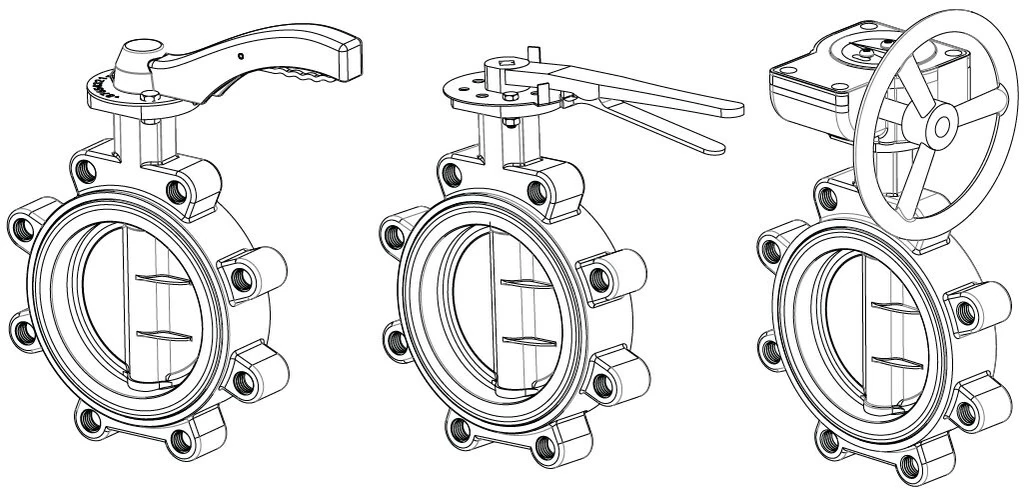
A butterfly valve is a quarter-turn rotary valve used to regulate, isolate, or control fluid flow. It consists of a circular disc mounted on a rotating shaft. When the disc rotates 90 degrees, the valve transitions from fully open to fully closed.
Key Characteristics of Butterfly Valves
- Compact and lightweight design
- Fast operation (quarter-turn)
- Low pressure drop
- Cost-effective compared to gate or globe valves
- Suitable for large-diameter pipelines
Butterfly valves are categorized based on flow direction capability, leading to unidirectional and bidirectional designs.
Understanding Unidirectional Butterfly Valves
Definition
A unidirectional butterfly valve is designed to handle fluid flow effectively in one specified direction only. The valve body and seat geometry are optimized to seal properly when pressure is applied from the designated upstream side.
Design and Construction
- Asymmetrical seat design
- Pressure-assisted sealing mechanism
- Flow direction arrow marked on valve body
- Typically metal-seated or PTFE-lined
How It Works
In unidirectional valves, upstream pressure pushes the disc against the seat, enhancing sealing performance. Reverse flow may reduce sealing efficiency or damage the seat.
Advantages of Unidirectional Butterfly Valves
- Excellent sealing in designated flow direction
- Lower operating torque
- Suitable for high-pressure and high-temperature applications
- Longer service life when installed correctly
- Cost-effective for directional flow systems
Limitations
- Cannot be installed arbitrarily
- Incorrect installation may lead to leakage
- Not suitable for reversing flow systems
Understanding Bidirectional Butterfly Valves
Definition
A bidirectional butterfly valve allows flow in both directions while maintaining effective sealing performance. These valves are commonly used in systems where flow direction may change.
Design and Construction
- Symmetrical seat design
- Elastomer-lined or resilient seated
- Uniform sealing on both sides
- No mandatory flow direction
How It Works
Bidirectional valves seal equally well regardless of flow direction. The seat material provides uniform compression against the disc from either side.
Advantages of Bidirectional Butterfly Valves
- Flexible installation
- Ideal for reversing flow systems
- Simplified piping design
- Lower risk of installation errors
- Widely used in water and wastewater industries
Limitations
- Higher torque compared to unidirectional valves
- Limited suitability for very high-pressure services
- Elastomer seat wear over time
Unidirectional vs Bidirectional Butterfly Valves: Technical Comparison
| Parameter | Unidirectional Butterfly Valve | Bidirectional Butterfly Valve |
|---|---|---|
| Flow Direction | One direction only | Both directions |
| Seat Design | Asymmetrical | Symmetrical |
| Sealing Performance | Excellent in one direction | Uniform in both directions |
| Operating Torque | Lower | Moderate |
| Installation | Direction-sensitive | Flexible |
| Pressure Rating | Higher | Moderate |
| Maintenance | Lower if installed correctly | Moderate |
| Typical Standards | API 609, ISO 5752 | API 609, AWWA |
| Cost | Slightly lower | Slightly higher |
Performance Considerations in Industrial Applications
Pressure Handling
Unidirectional butterfly valves outperform bidirectional designs in high-pressure systems, especially in oil & gas and steam services.
Temperature Resistance
Metal-seated unidirectional valves handle higher temperatures compared to elastomer-seated bidirectional valves.
Leakage Class
- Unidirectional valves often achieve ISO 5208 Rate A
- Bidirectional valves typically meet Rate B or C
Application-Based Selection Guide
When to Choose Unidirectional Butterfly Valves
- Oil & gas pipelines
- Power plants
- Chemical processing units
- High-pressure steam lines
- Directional flow systems
When to Choose Bidirectional Butterfly Valves
- Water supply networks
- Wastewater treatment plants
- HVAC systems
- Fire protection pipelines
- Low to medium pressure services
Materials Used in Butterfly Valves
Common Body Materials
- Cast Iron
- Ductile Iron
- Carbon Steel
- Stainless Steel (SS 304, SS 316)
Disc Materials
- Stainless Steel
- Duplex Stainless Steel
- Bronze
- Nickel Alloy
Seat Materials
- EPDM
- NBR
- PTFE
- Metal-to-metal
KELOR manufactures butterfly valves in all major material grades to meet diverse industrial requirements.
Manufacturing Standards and Certifications
KELOR butterfly valves comply with:
- API 609
- ISO 5752
- EN 593
- BS 5155
- AWWA C504
- ISO 9001:2015 certified manufacturing
Commercial Considerations for B2B Buyers
Total Cost of Ownership (TCO)
- Unidirectional valves offer lower long-term costs in fixed-flow systems
- Bidirectional valves reduce installation risk and design complexity
Availability and Export Readiness
As a leading Indian exporter, KELOR ensures:
- Bulk manufacturing capacity
- Export-grade packaging
- Global logistics support
- Custom branding (OEM)
Why KELOR Is India’s Biggest Manufacturer of Butterfly Valves
KELOR stands as a trusted name in the global valve industry due to:
- Large-scale manufacturing facility in India
- Advanced CNC machining and testing infrastructure
- Wide product range covering unidirectional & bidirectional butterfly valves
- Competitive factory-direct pricing
- Proven export track record across Asia, Middle East, Africa, and Europe
KELOR is not just a supplier but a long-term B2B flow control partner.
Installation Best Practices
- Always check flow direction marking for unidirectional valves
- Ensure proper flange alignment
- Use recommended torque values
- Perform pressure testing after installation
Maintenance and Service Life
- Regular seat inspection
- Avoid cavitation
- Periodic torque checks
- Replace elastomer seats when required
Proper maintenance significantly extends valve life.
Future Trends in Butterfly Valve Technology
- Triple-offset butterfly valves
- Smart actuated valves
- Low-emission designs
- Corrosion-resistant coatings
KELOR continues to invest in innovation and R&D.
Frequently Asked Questions (FAQs)
1. What is the main difference between unidirectional and bidirectional butterfly valves?
Unidirectional valves seal effectively in one flow direction, while bidirectional valves seal in both directions.
2. Can a unidirectional butterfly valve be used for reverse flow?
No, reverse flow may cause leakage or seat damage.
3. Are bidirectional butterfly valves suitable for high pressure?
They are suitable for moderate pressure but not extreme high-pressure applications.
4. Which valve has a longer service life?
Unidirectional valves typically last longer in directional systems.
5. Are KELOR butterfly valves export compliant?
Yes, all KELOR valves meet international export standards.
6. Which industries use bidirectional butterfly valves the most?
Water treatment, HVAC, and fire protection industries.
7. Do butterfly valves require frequent maintenance?
No, they are low-maintenance when installed correctly.
8. Can butterfly valves be automated?
Yes, they can be fitted with electric or pneumatic actuators.
9. What sizes are available from KELOR?
KELOR offers sizes from DN50 to DN2000.
10. How do I select the right butterfly valve for my project?
Consider flow direction, pressure, temperature, and media type—or consult KELOR’s technical team.
Conclusion
Choosing between unidirectional and bidirectional butterfly valves is not just a technical decision—it is a strategic investment in system performance and reliability. By understanding their design differences, operational strengths, and application suitability, B2B buyers can make informed procurement decisions.
With unmatched manufacturing scale, technical expertise, and global supply capability, KELOR proudly leads as India’s biggest manufacturer, supplier, and exporter of industrial butterfly valves, delivering reliable flow control solutions worldwide.